
Bringing Sustainable Energy to the Developing World

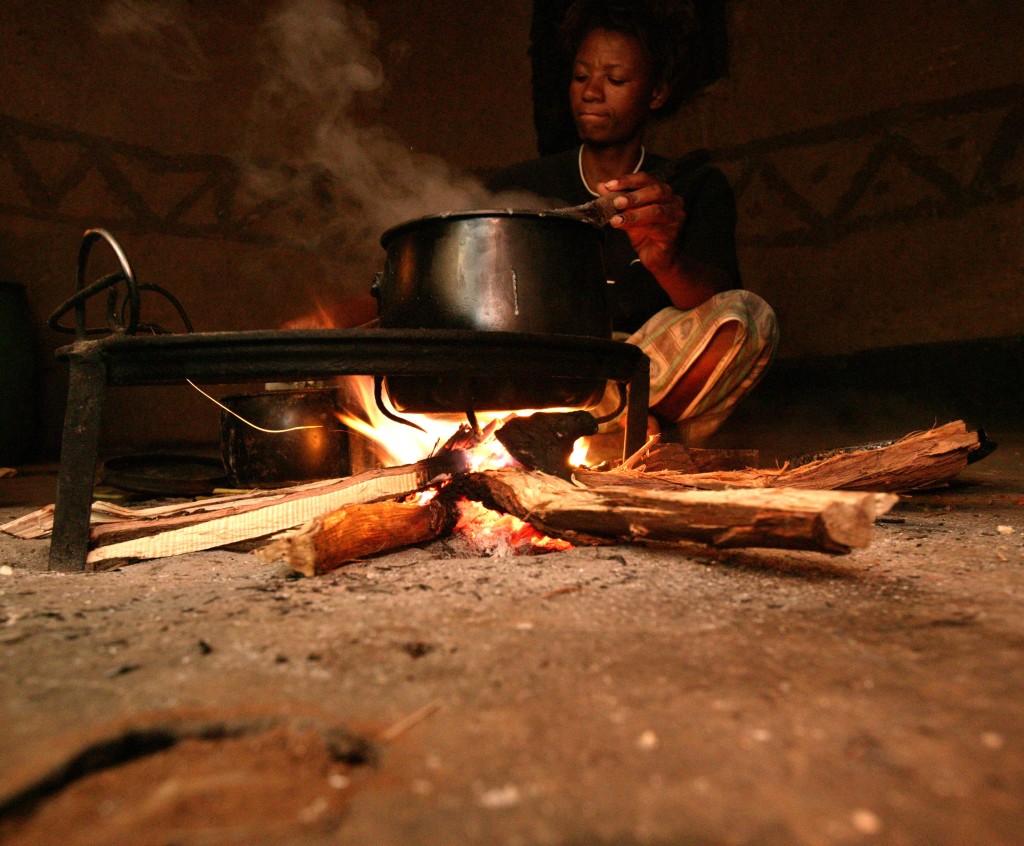 Induction cooking uses the principle discovered by Michael Faraday almost 200 years ago, i.e., that an alternating electrical current induces an oscillating magnetic field, which in turn causes a current to flow in any nearby conductor. In his book, “In Praise of Power,” Kirk R. Smith, professor at UC Berkeley’s School of Public Health, argues that inductive cooking powered by locally generated electricity is the best option for improving health outcomes and reducing pollution in the developing world, where about 2.8 billion people rely on biomass for cooking, a number that has not changed in the last 25 years.
He writes: The consequence of the resulting pollution is an estimated 3.9 million premature deaths annually. Over the decades, development organizations have focused on improving the efficiency of cookstoves that use local biomass fuels, and more recently on trying to reduce the resulting exposure to household air pollution. However, it is extremely difficult to burn biomass cleanly enough to meet guidelines to protect health. To supply the 1.4 billion who do not have access to electricity, most attention has focused on supporting relatively small, albeit critical, household uses, particularly lighting, but there are other important benefits. It is sometimes ignored that electricity is part of the solution for clean cooking.
There is no doubt that the biggest bang for the ecologic buck exists in the developing world, a place bursting at the seams with impoverished people, desperately burning biomass in the dirtiest of fashions to provide light and heat. Here, a tiny bit of clean energy brings with it significant improvements in health, education, prosperity and family planning. The result: stronger, wealthier, and smaller families.
That last consequence, smaller families, is key. Educated women don’t have 10 – 15 children. The best way to reduce human suffering is to manufacture less of it in the first place.


