
Who Needs To Take Responsibility for Environmental Stewardship?

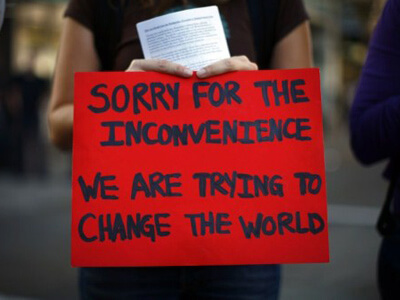 What should happen when we, as a civilization, come to learn that the use of a certain substance represents an unacceptable environmental danger? This is not an idle exercise; in fact, it happens every month or so, and the pace of these discoveries continues to accelerate. 60 years ago it was DDT, 30 years ago it was CFCs, and just recently it was decorative glitter that looks pretty, but poisons and chokes fish and other wildlife.
Once the determination has been made that something needs to go, who’s responsible for eliminating its use? Federal, state and local governments can ban its import and manufacture. Distributors and retailers can refuse to stock and sell it. Consumers can refuse to buy and use it. So what should happen?
Certainly, it’s optimum that such activity happen in the absence of government interference. In other words, if consumers alone would simply stop using glitter, it really wouldn’t matter what the other entities did (or didn’t do). No consumer demand means no retailer supply which means problem solved. It’s also true that no retailer supply means no consumer availability, which also means problem solved.
The problem arises when some blend of ignorance and selfish behavior fails to reins itself in, use of the offending item continues unchecked, and government needs to get involved. Yet, again, this is an imperfect remedy, and it opens up a complete new range of issues:
Controversy: Some people may want single-use plastics or flood-irrigating their polo-field sized lawns, and don’t care that this brings the opprobrium of the people around them.
Cost and visibility of enforcement: No one wants to live in a police state; we want law enforcement when we need them, but we would prefer they remain out of sight otherwise.
Circumvention: New laws mean new ways of getting around those laws.
In any case, don’t look for this issue to go away with the passage of time. If anything, look for the precise opposite as the population swells and resources become more precious.


