
Lithium-Sulfur Batteries To Help Electrify Brazil’s Bus Fleets

 When we think of Brazil nowadays, we tend to think of the oppressive regime of authoritarian, Trump-wanna-be Jair Bolsonaro, and his quest to ruin the Amazon rainforests. Yet Brazil continues to implement a great number of innovative strategies aimed at ameliorating environmental damage.
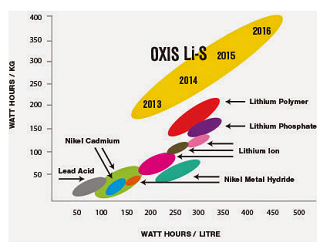
One of these, as explained by CleanTechnica here, is the electrification of many of Brazil’s bus fleets is being enabled by a set of fairly new battery chemistries: lithium-sulfur. Check out the (four-year-old) chart above showing the impressive volumetric and gravimetric energy densities that LiS offers over its competitors.
As the author puts it:
LiS batteries are getting more competitive with cobalt driven lithium-ion batteries. The use of lithium-sulfur chemistries can actually bring down costs and improve the ability to procure minerals needed for very high-volume production of electric vehicle (EV) batteries.
An earlier study by the Rocky Mountain Institute mentioned that lithium-sulfur batteries, in particular, can help electrify heavier mobility applications. CleanTechnica also reported that sulfur is a more plentiful material compared to that of cobalt that could expand EV driving ranges considerably and yet cost less. Lithium-sulfur batteries are also more energy dense, expected to produce around a twofold increase in the battery pack level by the time they reach the market.
This is the singular beauty of clean tech in general: it can only improve in price and performance over time. That means that it will happen, and replace old, dirty technology, whether we care about our environment or not.


