
From Guest Blogger Lizzie Weakly: Six Ways To Help Your Community Get Involved in Recycling

 The overabundance of trash entering the landfills each day is a huge problem for our world and sustainability. While these items decompose, chemicals and toxins are leeching into our underground water system. Some items will never decompose. It is a huge problem for everyone on the planet.
One way to combat this is by recycling. (more…)

 A reader posed a series of questions, to which I respond in italics below each.
 I’ve used quite a few images depicting love over these seven years, and here’s one more, this one from Reuters. The caption: Two activists with the EU flag and Union Jack painted on their faces kiss in front of Brandenburg Gate to protest against the British exit from the European Union on June 19.
 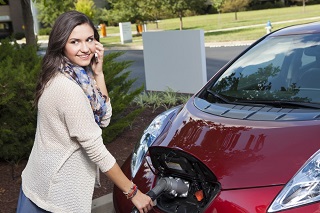 What’s happening in “vehicle-to-grid” (V2G), the concept of using an intelligent, bidirectional flow of electrons between electric vehicles and the power grid? Well, at a macro level, the honest answer is: not much. Pretty much everyone would like to live in a world without gasoline and diesel, where our automobiles–as well as our buildings–are powered by a carefully monitored blend of renewable resources and energy is moved about seamlessly from point to point as required in real-time. But getting there is the ultimate in the chicken and the egg phenomenon, i.e.,
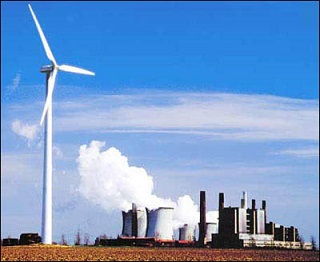 My friend Cameron Atwood and I were talking about energy policy the other night, and I promised to get back to him about the levelized cost of energy (LCOE) and the energy return on investment (EROI) associated with each of the different energy sources. Here’s my response:
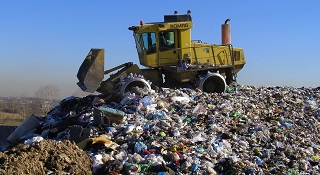 Product packages account for a giant portion of waste that our global capitalist behemoth leaves behind, letting toxic mountains and floating islands roam the nature. In some countries, this part of the supply chain produces one third of the total domestic waste. This trend shows no signs of slowing down or leaving less destruction in its wake.
 2GreenEnergy mega-supporter Gary Tulie provided a major contribution to my last book (


