
Big Money Tends To Work Against Renewable Energy–How Controversial Is That?

 It’s with sadness that one of my readers got really incensed on my post about Big Money and the Republican Party and unsubscribed. He notes: If you don’t like Trump then that’s fine; why don’t you keep it to yourself? (more…)

 Sorry, I don’t know the source of this, but the answer is Reykjavik, Iceland …
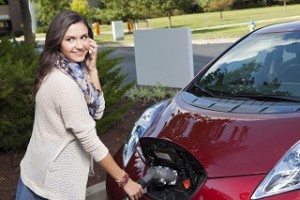 Commenting on my recent post of the electric vehicle market’s being in the tank, a libertarian reader writes a note that concludes: EV’s will continue to improve, but it’s an evolution, not a revolution.
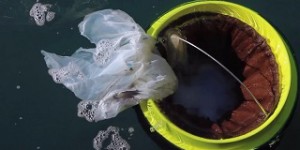 There are many ideas being promoted to clean up the plastic and other garbage from our oceans, but here’s one I hadn’t come across until now. Each could be powered by a piece of solar PV, and could be set in an array to cover huge amounts of surface area.
  As reported by my brilliant colleague Jon LeSage in his
 Island nations generally find themselves in a very interesting position with respect to energy generation. In particular, they certainly don’t want dirty fossil fuel plants, normally burning bunker diesel shipped in at great cost, both financially and environmentally. But their choice of renewables is often constrained by the small and therefore extremely precious land mass.
 “The ideals which have lighted my way, and time after time have given me new courage to face life cheerfully, have been Kindness, Beauty, and Truth.” -Albert Einstein, physicist, Nobel laureate (14 Mar 1879-1955)
 Here’s a great article on the


