For Those Who Hate Big Government….

 Lots of Americans want a smaller government, based on the notion that the public sector is bloated and corrupt. I get that. But our government runs like a Swiss watch compared to the one described here.

Lots of Americans want a smaller government, based on the notion that the public sector is bloated and corrupt. I get that. But our government runs like a Swiss watch compared to the one described here.
 I don’t have a problem with comments on the site that challenge my own bullish viewpoint on renewable energy; in most cases, they provide an interesting counterpoint from which everyone wins as a result. I DO have a problem with folks who present data that’s completely incorrect, like this post from “MarcoPolo” who writes:
But it’s just absurd to claim solar /wind are viable sources of power for industrial societies. Power distribution networks are not designed to cope with intermittent power generation. (Nor can they be), Most renewable power is simply “dumped”. Nor can society be re-organized to function on solely renewable energy. It just won’t happen.
In the first place, very little power from solar and wind is “dumped.” (more…)

You already know the big things you can do to reduce your carbon footprint. Commuting on public transit rather than drive a gas-guzzling SUV to work, recycling, and using energy efficient appliances make an obvious and huge difference in the amount of resources you use. It’s not just the big things that matter though; there are many small lifestyle changes you can make that will also have a significant impact on your carbon footprint. (more…)
 If you needed proof that American consumers really don’t care a whit about the ethical standards of the vendors from which they buy their stuff, here’s further assurance. (more…)
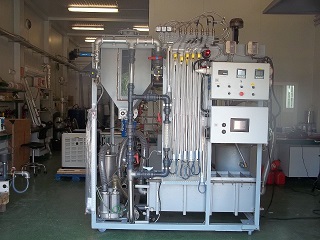 Gasification is a thermochemical process which allows the conversion of materials that are rich in carbon, such as coal, petroleum, or biomass, into carbon monoxide, hydrogen and other gaseous compounds.
The thermal degradation process requires high temperatures (above 700-800°C) in the presence of a sub-stoichiometric proportion of an oxidizing agent, usually air (oxygen) or steam. The resulting gaseous mixture constitutes what is called syngas and is itself a fuel. Gasification is a method of extracting energy from different types of organic materials, and also provides the added benefit of the treatment of waste. (more…)
 On this, the 180th birthday of Mark Twain, it’s hard not to think of the great witticisms for which the great language virtuoso is best known. My favorite: Go to Heaven for the climate, Hell for the company.
Yet it’s always struck me as a weird notion that kind, decent people are thought to be dreary and tedious. Personally, I have no taste for selfish jackasses and scoundrels. I’d far rather take a long walk with the Dalai Lama or Pope Francis than I would Donald Trump. Maybe that’s just me.
 For many homeowners, their utility bill is often one of the highest expenses for the property and can be difficult to afford throughout the year. From the cost of heating the home to using electricity, there are a long list of necessities to keep the property both comfortable and functional. To enhance the home’s energy efficiency and save money, there are a few unique ideas to begin practicing. (more…)
 Have you ever seen a presentation that was so powerful and compelling that you felt a strange impulse to memorize it verbatim? That’s exactly what just happened to me.
Here’s a Ted Talk on the history of the universe (“Big History”) that will leave you with at once a rhapsodic joy and a profound sorrow that it has only 1.6 million views on YouTube, meaning that, tragically, the vast majority of people on Earth don’t really understand this.
 I find all this work I’m doing on Facebook, Instagram, Twitter, LinkedIn, Google+, etc., to be invigorating. Instagram is particularly cool, insofar as it calls upon me to be ever-vigilant for interesting photographs that I can, perhaps, pair up with a helpful hint about renewable energy or the notion of sustainability more generally.
For example, my wife and I are headed out to a wedding in a couple of hours, where I’ll be hard at work looking for visual metaphors that might work: (more…)
 From my feed at Quora.com: Suppose cold fusion (or some other source of clean and abundant energy) was developed by China. How would this affect the current geopolitical status of the world? What would this mean for oil producers? Would USA and Russia try to destroy this kind of technology at any cost? How would this affect everyday life of regular people once the technology becomes publicly available?
Response #1: Since cold fusion is a myth, we might as well call it flubber. (more…)


