Environmentalists here in the U.S. can find it difficult to appreciate humor that depicts an alarming truth: most Americans care very little about all this stuff. In surveys, about 70% say they are willing to pay extra for eco-friendly products, but in practice, only about 1.5% actually follows through.
The “infographic” below depicts this in a way aimed to amuse the viewer. (more…)
Many of us complain bitterly about the U.S. government’s lethargy re: mitigating climate disruption and embracing clean energy solutions. Yet we live with frequent reminders of how much worse it could be.
Take the Land Down Under, for instance. Pictured below are some of the 400 people who protested Australian Prime Minister Tony Abbott’s unwillingness even to discuss the subject of climate change; he’s refused to put it on the agenda of the upcoming G20 summit this weekend. (more…)
I wish I had a dollar for every time I’ve come across the concept in the title of this post. I’ve probably written it more than I’ve read it, but I’m not really sure. It sure is a catchy little son of a gun, isn’t it? Then why does it apply so poorly in today’s world?
Part of the answer, obviously, is partisanship. (more…)
It’s the birthday of Claude Monet, who, according to the Writer’s Almanac, spent his career “exploring the idea that you can never really see the same thing twice.” This, of course, is the notion that guides his numerous paintings of a single haystack, the Waterloo Bridge (pictured), the Rouen Cathedral, and so forth. (more…)
When fossil fuel costs suddenly shot through the roof a few decades back and continued to spiral upwards thereafter, it brought a new consciousness about the need to reduce dependency on the fast depleting fossil fuel reserves. The need for conservation was also given a boost with the growing realization that many of the problems faced by our planet were due to indiscriminate consumption of fossil fuels and the resultant pollution. The car industry all over the world has been putting in a lot of effort in the technology, design and manufacture of eco cars that are more efficient and reduce environment-damage. (more…)
My learned colleagues who advocate for advanced nuclear are quite passionate about what they’re doing, largely on the basis that the ever-growing CO2 levels in our atmosphere are causing climate disruption and ocean acidification. While I doubt we’re as close to a “ready for prime time” implementation of, say, liquid fluoride thorium reactors as they do, I completely support them in principle.
Here’s the bad news: their current plan is to approach Jim Inhofe’s (R-OK) staff, and set up a round of presentations on the subject. (more…)
Thanks; this is interesting. However, from the standpoint of energy and the Brazilian economy, I would be thinking as follows:
• Hydroelectricity doesn’t really compete with the availability of potable water. This is largely true of hydroelectric dams, and it’s even more clear in the case of run-of-river hydro, where a portion of a river’s water is redirected temporarily, and then allowed to rejoin the main flow almost immediately.
• The southern part of the country seems to have plenty of water, and that’s where almost all the energy demand is.
• Now, obviously, if the government is essentially anti-business and the entire economy is going to hell in a hand-basket, energy demand will fall, as will prices, providing a significant challenge to developers of energy generation projects. However, many observers don’t seem convinced that this is truly the case.
In the past few years, a lot of interest has grown regarding solar energy. This is the result of an increasing awareness about climate change and the consequent boom of renewable sources of energy. However, there is still a lot of people that are hesitant about investing in heat pumps, solar panels, or other domestic renewable sources of energy. (more…)
When I wrote a piece a month or so back lamenting U.S. president Barack Obama’s “all of the above” energy strategy, senior energy analyst Glenn Doty commented that I need to keep things in perspective, that things could be a lot worse, and, in fact, that things will indeed soon be much worse if the midterm elections wind up packing the key environmental committees with climate change deniers and other anti-science whack-jobs (my words, not his).
The bottom line here is that the fossil fuel industry has, in effect, lost the battle. The exact time of its demise can be debated, but it’s certainly far closer than most people imagine. The issue, of course, is the concept of the “Tipping Point” that author Malcolm Gladwell popularized in his 2007 best-seller of that title. As you look through the graphics in the article linked above, try to imagine the scale we’re talking about here: enormous volumes of manufacturing capacity that are growing at a compound annual growth rate of 66%.



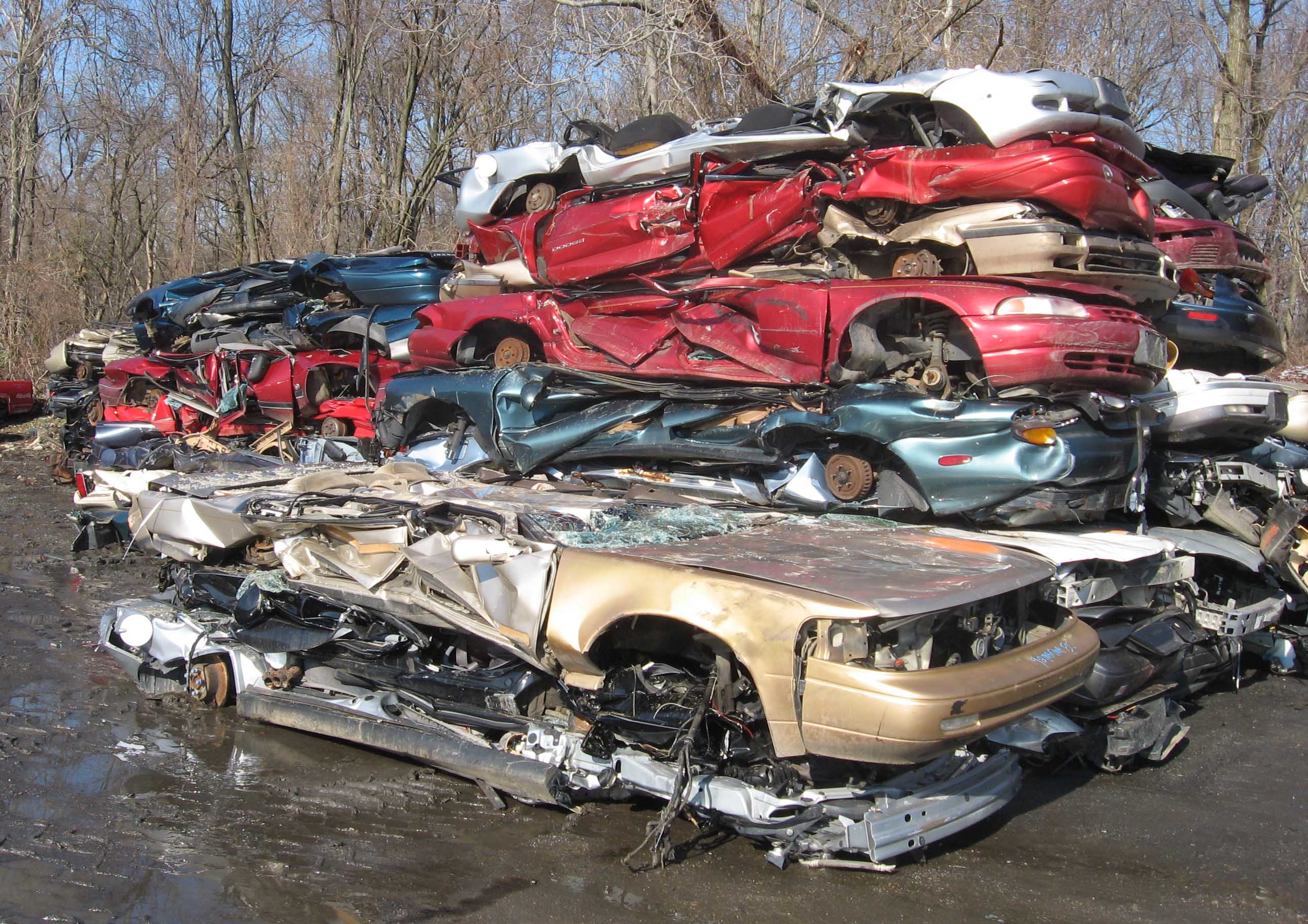 When fossil fuel costs suddenly shot through the roof a few decades back and continued to spiral upwards thereafter, it brought a new consciousness about the need to reduce dependency on the fast depleting fossil fuel reserves. The need for conservation was also given a boost with the growing realization that many of the problems faced by our planet were due to indiscriminate consumption of fossil fuels and the resultant pollution. The car industry all over the world has been putting in a lot of effort in the technology, design and manufacture of eco cars that are more efficient and reduce environment-damage.
  My learned colleagues who advocate for advanced nuclear are quite passionate about what they’re doing, largely on the basis that the ever-growing CO2 levels in our atmosphere are causing climate disruption and ocean acidification. While I doubt we’re as close to a “ready for prime time” implementation of, say, liquid fluoride thorium reactors as they do, I completely support them in principle.


