Note that it echoes a bunch of the argumentation you’ll find here at 2GreenEnergy. For instance, while it’s true that there are unknowns surrounding the exact details of the effects of climate change, i.e., what precisely will happen where and when, this hardly justifies inaction. (more…)
When we think about the ultimate consequences of climate change, we think immediately about the loss of farm land to desertification, but we also think of sea-level rise. As the major ice sheets melt, e.g., in Greenland, and the coastlines retreat accordingly, what will life be like?
The short answer is that no one knows, but part of the long answer is that there are some strange complexities, like the one here that suggests that “Warming May Not Swamp Islands,” due to the counter-intuitive notion that certain atolls will rise at the same rate as the sea-level rise. Sadly, the same doesn’t apply to the low-lying cities on our continents.
The other day, I was lucky enough to have connected with a group of a few dozen extremely senior scientists whose main beliefs I would summarize as follows:
• The damage being wreaked upon Earth from fossil fuels, principally in the form of anthropogenic climate change and ocean acidification, are realities that will completely overwhelm this planet in the coming few decades if humankind can’t or won’t do something to mitigate it. (more…)
The solar energy adoption in relation to energy needs is a crucial theme. Indeed it’s not a big secret that the explotation of non-renewable resources, like burning fossil fuels as oil or gas, has huge consequences like climate changing, pollution, resource deplation.
On the other hand, solar energy, is an infinite source of energy, and it is clean, green and environment-friendly.
With the help of a photovoltaic panel system, it is possible to convert solar energy into electricity, and consequentially to produce it directly by the sun. (more…)
How can anyone can look upon the work of Elon Musk and not be blown away? For a moment, ignore his other ventures and consider the astonishing success of Tesla Motors alone—a start-up a few years ago that in very short order has stood the auto industry on its ear. (more…)
Have you ever wondered why the far right wing tends to support fossil fuels and fights against renewable energy? They don’t have children—or bronchial tubes? They hate trees, clean air, and oceans that support life?
Some speculate that the phenomenon is this: if liberals like something, they feel they’re somehow forced to hate it. I honestly don’t know. It’s a mystery, to be sure, one that may never unravel.
Yet I’m wondering if the far right isn’t starting to come around on this, rendering the entire discussion moot. Here’s news that dealt a crushing blow to Big Coal: the rejection of a permit for a coal export facility in the Pacific Northwest of the United States. Yes, it’s good news for those of us with lungs—and, what’s even better, the rejection was supported by a huge variety of people with an enormous range of political views.
It’s not easy being green sometimes. Even the most well-intentioned eco-warrior can let their priorities slip once in a while, and as the colder half of the year comes round the corner we’re all guilty of ‘forgetting’ our principles on occasion in the face of warmth and coziness. Let’s face it: when you come in from work and can’t feel your fingers there’s nothing better than curling up with the radiator on full blast; and when it’s pouring with rain outside and you’ve got somewhere to be, who would honestly rather huddle under an umbrella or get drenched dashing for the bus than travel in the cozy comfort of their own car? (more…)
Here’s a good article on waste to energy with an accompanying video that was created by my colleague at Renewable Energy World, Jennifer Runyon. Quite appropriately, Jennifer emphasizes that this project, which happens to feature methane digestion as a technology to transform some of the chemical energy in municipal solid waste (MSW) to electricity, effectively “kills two birds with one stone,” generating a bit of power in an area that needs it desperately, while disposing of a huge amount of MSW, which is an enormous problem in Lagos, Nigeria, a city of 20 million people.
Fortunately, there are technologies that more efficiently extract the energy from our waste streams, e.g., gasification, that figure prominently into a couple of our clean energy investment opportunities, for example, this one in Bangkok, Thailand.
Our civilization certainly has its problems vis-à-vis sustainability—whether we’re talking about energy, food, water, social justice, law-making, or any number of other important arenas. But at the same time, we’re addressing these issues with enormous volumes of intellectual horsepower.
Case in point: university programs addressing Corporate Social Responsibility (CSR), Impact Investing, and Social Enterprises. Check out the huge rate of growth in the popularity of these programs in the leading business schools, e.g., The Wharton School of the University of Pennsylvania, NYU Stern, Kellogg School of Management, The University of Chicago Booth School of Business, etc.



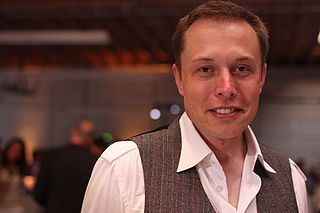 How can anyone can look upon the work of Elon Musk and not be blown away? For a moment, ignore his other ventures and consider the astonishing success of Tesla Motors alone—a start-up a few years ago that in very short order has stood the auto industry on its ear.


