If you don’t mind taking a 36-minute-long drink of water from a fire hose, here’s the most visible spokesperson for the thorium nuclear reactor, Kirk Sorensen, speaking a few years ago at Google. The essence of his talk is the history of nuclear power, and one leaves the talk with an extremely good and balanced overview of the subject. (more…)
Of the 3734 blog posts I’ve written here since 2GreenEnergy’s inception in 2009, only a few contain references to religion. This is not an accident. I figure I alienate enough people with my condemnation of the fossil fuels industries, the war mongers, the corrupt politicians, and the far right wing generally; I see no need to expand this list even further. But here’s something that I find really noteworthy, and unequivocally positive: Pope Francis is obviously an extremely intelligent man with a sincere passion for many humanistic and environmental causes—and he’s not exactly a wallflower in terms of voicing his viewpoints.
He sure didn’t mince words here, where he points out that causing global climate change is a sin. To those of us outside the Catholic Church, this statement may seem self-evident, but let’s give credit where credit is due. Nice going, Your Holiness!
Jesse Berst of Smart Grid News fame is one of the good guys. He’s smart, level-headed, and always working hard to improve the industry overall. In this article on PNM, the power utility that serves New Mexico, Jesse points out that this is an all-to-rare example of a utility that – whether you agree with them or not—is at least honestly communicating its position vis-à-vis renewable energy. I have to admit: that’s a lot better than what we often find elsewhere, i.e., silent, stone-cold obstructionism, or, even worse, a happy PR line from a glib, insincere spokesperson. (more…)
As this article suggests, there is no reason in theory that this can’t be done, since, apparently, durability isn’t an issue. And obviously, there is a lot to like about the idea, especially that it’s a fabulous use of already-dedicated public space, i.e., there are plenty of roads in sunny climates that would make excellent candidates for such an enterprise. Also, as noted in the caption under the photo here, they claim to keep themselves free of snow, though, when you think about it, this can’t possibly be true. What happens when they get two feet of snow between dusk and the following dawn?
That, of course, is a nit. I would suggest that the author, Douglas Elbinger, needs to focus on two major areas: (more…)
I haven’t been involved in a super-abundance of protest marches through the years, though I did carry a sign calling for the end of the war in Vietnam in the early 1970s, and, last summer, I took my wife and daughter downtown with me for a demonstration against the Keystone XL pipeline. In any case, I’m considering joining this one: Bill McKibben, who leads the environmentalist group 350.org, has invited you and me to “A Call to Arms: An Invitation to Demand Action on Climate Change” to be held in New York City next September 20/21. I can’t think of a place I’d rather be.
The U.S. and Europe have a special link; the role that these two entities have played toward each other over the course of history is strong. France with Lafayette helped the U.S. to become independent and the U.S. helped Europe during the First and Second World Wars. Right after 1945 and the abolition of Nazism, when much of Europe lay in ruins, the Marshall Plan gave the Continent the funds it needed to rebuild. (more…)
Our wonderful French intern, Olivier Goavec, is in the process of finalizing an article called “Europeans and Americans Have Different Perceptions on Climate Change.” I thought readers might be interested in the comments I just wrote back to him during the editing process. Fearing that Olivier might by hesitant to write about Americans with a level of brutal honest, I respond:
Whatever you do, don’t worry about insulting Americans. I agree with everything you said, and I think you’re exactly correct about the fact that we have the resources, which we think entitles us to use them. So simple, and so correct.
Personally, I think you could be even more condemnatory about American vs. European sensibilities generally. (more…)
A few months ago I had dinner with a climate scientist at JPL (Jet Propulsion Laboratory, in Pasadena, CA) whose job is using cutting-edge technology to measure the size and health of the Greenland Ice Sheet. In keeping to my policy in such situations, I did very little talking, and a great deal of listening. (more…)
I was a WSJ subscriber for many years when I was younger, but I cancelled about 10 years ago when I realized that essentially everything I was reading there carried a certain slant, which I would characterize as follows: (more…)


 If you don’t mind taking a 36-minute-long drink of water from a fire hose, here’s the most visible spokesperson for the thorium nuclear reactor, Kirk Sorensen, speaking a few years ago at Google. The essence of his talk is the history of nuclear power, and one leaves the talk with an extremely good and balanced overview of the subject. (more…)


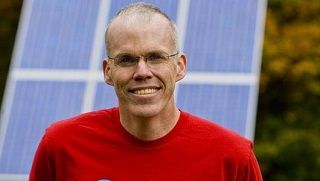 I haven’t been involved in a super-abundance of protest marches through the years, though I did carry a sign calling for the end of the war in Vietnam in the early 1970s, and, last summer, I took my wife and daughter downtown with me for a