See, there are conservatives (like me) who are concerned about climate change. 🙂
Yes, Inglis is a man among men, in my book. I’ve written quite a few posts on him, as, in my opinion, his getting tea-partied out of Congress for standing up for his belief in science was one of the saddest, most disgusting thing that’s ever happened in Washington – and that encompasses some really nauseating events.
One of the most common ways to create an energy efficient house is by sealing it so that air can neither come in or out. This way, heaters or air conditioner won’t work as hard to either warm or cool the house and energy consumption is minimized. Proper insulation will make your home more energy efficient.
However, sealing a house is not the only way to lessen your home energy expenditures. Some people fail to see the important role water conservation plays when it comes to saving energy. Regular maintenance of water systems can help you avoid spending too much on water and energy bills. Here are some great ways you can do so that your house can conserve water.
1) Remove Sediment in Water Heaters
Ideally, you need to clean the tank of your water heater at least twice a year. If the mineral content of the water in the area you live in is high, you should drain the sediment more often. You don’t need to hire professional service as you can perform this yourself. Regular removal of sediment will increase the efficiency of your water heater. Sediment consists of minerals and other debris that come with the water you store in the tank. Minerals are separated from water when heated. Debris is then left at the bottom of the tank and will eventually build up every time you use the heater.
The mineral deposits left behind will then serve as insulators for the tank. This will make it harder for the heating element to heat up the water in the tank completely. This means you have to keep the fire or electric elements of your burner on for longer periods of time for the water to be heated. Once you remove the sediment layer at the bottom of the tank, you won’t have to worry about this problem.
To remove sediment, just attach a short standard garden hose to the drain valve installed on the exterior of the water heater tank’s jacket. Once you open the valve, point the free end of the hose to a floor drain or a large bucket and let about five gallons of water flow out. This will drain the water at the bottom of the tank together with the sediment in it. Doing this will increase the energy efficiency of your water heater and help in extending its life.
2) Install Faucet Aerators
A faucet aerator is usually attached to the tip of modern indoor water faucets. Without an aerator installed, about three to five gallons of water per minute flows out of regular faucets and most of that water is wasted. Faucets that have aerators reduce the rate of water flow from about half up to one gallon per minute in bathrooms and between one and two gallons per minute at the kitchen sink.
3) Insulate Water Pipes
When you insulate your pipes, heat will be maintained so hot water reaches the faucets at a faster rate. This also reduces the amount of water needed in order for hot water to reach distant faucets. The water left in the pipes remain hot for longer periods so there’s a big chance that the next time you turn on the faucet the water will still be hot. This will reduce the need to reactivate the thermostat and heating elements in order to reheat the water inside the tank.
It’s not only the hot water pipes that you need to insulate. It’s better if you insulate both the cold water pipes and the water service entry pipe from a municipal supply as well. This will minimize the transfer of heat up the pipe from the tank of the water heater. Moreover, water that passes through these pipes is cold especially during winter and spring. If it becomes humid, there’s a big chance of condensation forming outside the pipes which will not only cause rusting but will also cause drips to carpets and furniture. Foam can be used to cover these pipes to avoid any condensation from forming.
In the past, insulating water pipes took a lot of time and effort. A large roll of fiberglass material is required for insulation and you need patience because you have to measure and cut these yourself. Unfortunately, this is still not enough as the material used is too thin so it isn’t doing enough for your pipes.
Good thing closed cell foams may now be used for pipe insulation. You can purchase these at any DIY centers or plumbing supply stores. They provide better insulation and are much easier to install than the fiberglass rolls. They can be easily cut according to the shape and size so you can attach them to the pipes.
About the Author: Jove Arthur writes for different home improvement and construction websites. He believes that each one of us can make a contribution in protecting our environment. He is working at Door Emporium, which delivers stylish exterior wood doors, including mahogany doors and knotty alder doors.
With grim predictions of global warming now a regular feature in daily news reports, pressure is mounting on each one of us to seek ways to lead greener lives. Being eco-friendly starts at your doorstep. From recycling to replacing old appliances, minor changes at home can add up to real benefits for the planet, not to mention your health and happiness. Here are some cool ideas on how to make your home a little greener.
Replace your old appliances
Get rid of your appliances that are more than 10 years old. Replace them with energy-saving models that carry the “Energy Star” logo. Such appliances consume 10%- 50% less energy and water than usual models. According to the Environment Protection Agency, if just one in ten homes used energy-star qualified appliances, it would seem as though they are contributing to 1.7 million new plantations.
Use a programmable thermostat
Heating and cooling systems consume more of electricity at home. Check the temperature and set the thermostat as required. A programmable thermostat will note the changes in temperature and get set automatically. By using it, you will definitely see a steep decrease in your energy bill. Basic thermostats are quite affordable.
Use ceiling fans instead of cooling systems. Inspect the windows and doors in your home regularly. If they are not sealed properly then there will be some amount of energy wasted in unnecessary cooling and heating.
Use healthier paints
Regular paints contain unhealthy ingredients such as solvents and toxic compounds that can cause ozone pollution and health problems. While painting your walls, try water based, lead free paints or zero VOC paints which are more eco-friendly than usual paints.
Make the best of waste
Try to have two dustbins in your house. Collect organic waste (kitchen waste) in one and use it for recycling. Keep another for collecting non-organic waste. Use the organic waste as compost for your garden. The non-organic waste such as paper, tins and cans are actively being collected by the waste management facilities.
Use environmentally friendly cleaners
When it’s time for a little spring-cleaning, do you reach for common household cleaners? Harsh chemicals used in most of these products do not completely dissolve in water and can have a negative impact on your home- not to mention those living in it! There are many eco-friendly cleaners available at any local supermarkets. Try natural cleansers such as lemon and baking soda to remove grease and tough stains. These products are non-toxic and eco-friendly too.
Install solar panels
Installing solar panels are a great savings to any home. You can choose from a variety of panels that deliver different amounts of power. Solar panels meet 50% of your home hot water requirements. Your power company offers you a discount on your monthly energy bill.
Use motion sensor bulbs
For common areas like staircases, lobbies, etc consider using motion sensor light bulbs. These will keep your pathway illuminated and you need not bother to turn off the lights when you are leaving a room. They save lot of money on wasted electricity. They also act as good burglar deterrents.
Save water
A little care can go a long way in saving water. Never turn the tap on when brushing or shaving. Use bathtub occasionally and opt for a bucket bath instead of a shower. Choose low flow toilet mechanisms. These systems consume less water while still serving the same purpose as regular toilets. Obviously, you will save gallons of water and money on water bills.
Instead of using a hose, clean your car with a wet sponge. Operate your washing machine and dishwasher in quick wash mode. This not only saves electricity but also water. Make sure to use either of them with full load. If you have someone else to do these tasks, instruct them to soak the clothes with a detergent and then wash them. Ask them to follow the same procedure with the dishes in a kitchen sink.
Fix leaking taps if any and use aerosol spray faucets or make adjustments to existing taps. This way it increases the water pressure and at the same time reducing water flow.
Avoid plastic
Wherever you go, carry a jute or cloth bag so that you don’t have to use plastic bags. Plastics are made from petroleum and by burning them you are contributing to global warming. Reduce and reuse the plastics and this is the most effective way to combat global warming.
About The Author: Alia is a writer/blogger. She loves writing, travelling and reading books. She contributes to Bradley Sperling
A young, bright, and extremely respectful friend sent me this video on supercapacitors a few hours ago. And, since he had been very active in communicating with me lately, he wrote, “Tell me to shut up if I get to be a problem.” I respond:
Ha! You’re NEVER a problem. Trust me. I have problems, and you, my friend, are not one of them.
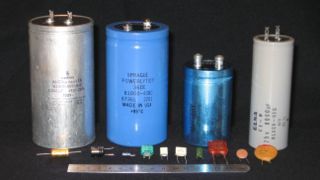
Having said that, supercapacitors are super-hyped, IMO. Yes, the rate at which energy can be charged and discharged (i.e., power) is limited with batteries. But this isn’t the factor that is limiting the success of the technologies that will change our world. Would it be of great benefit if you could charge your cell phone in 30 seconds, or discharge its battery more quickly? No.
When it comes to this subject, there are two issues on a scale that’s of importance to society:
• utility-scale energy storage (which will enable replacing coal, natural gas and nuclear with renewables) and
• electric transportation (which will enable replacing oil with renewables).
Both of these are really about energy, and far less about power, i.e., the rate at which energy is transferred. If you’ve ever sat down behind the wheel of an EV, certainly a Tesla (0 – 60 in 3.9 seconds), but even a Nissan Leaf, you won’t bemoan the vehicle’s sluggishness, because there is none to speak of. I.e., you have plenty of power. You may, however, wish you could drive beyond the vehicles’ range of say, 90 miles. I.e., you may wish you had more energy.
I believe the most important breakthroughs will come in energy density, not power density. As always, I encourage comments.
And again, please, never think that you’re a bother.
When someone sent me this video with tagline “the future of mobility,” I lit into it like a hungry bear going after a salmon. After all, I’m convinced that our civilization is in the process of completely rethinking the concept of personal mobility, and that the paradigm that will win the day of the mid-21st Century will show scant resemblance to the 20th Century concept: big, wasteful hunks of iron parked in our garages during the 23 hours a day they’re not belching toxins into our atmosphere and enriching terrorist regimes.
Though the concept here is hardly persuasive, you can’t fault the purveyors of the idea for making such an assertion. And besides, it’s a neat, well-made video.
The US, even with a “smart grid” isn’t likely to get more than 16 hours of effective solar power in a day. Large successful manufacturers are going to run 24 hours a day and therefore, going to need 24 hours’ worth of power a day. Not to mention the home used power for the idiot box, the stereo, the fridge and the heater when it gets cold that the average American will insist on. Say what you want, the wind isn’t consistent enough to provide adequate power for the entire night. So, what if we used hydrogen gas to power the stand alone power stations that we will inevitably need?
Because the sun’s presence in the sky and human activity are so nicely aligned, there is no reason to store solar energy. Obviously, that wouldn’t be the case if we were going to power the whole world with only solar, but we’re not. However, we will eventually need storage, for example, when we want to integrate a huge amount of wind into the grid-mix.
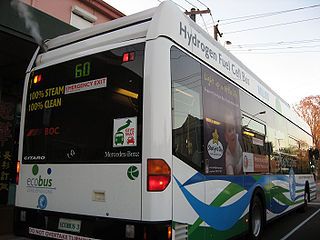
But hydrogen won’t play a role in that. The point of hydrogen is that it’s portable, like gasoline, and like batteries are becoming as we improve their energy densities. But, unlike gasoline in our gas tanks and electricity in our batteries, we do not (and will not) have a fuel delivery infrastructure to dispense hydrogen.
Yes, I did. But “why Honda?” is a good question, I would think. They DO have a battery EV – “The Fit EV,” but they were ridiculously slow in making this happen, and they’re way behind the curve.
I just called a local Honda dealership, and they’re obviously not trying too hard to sell the car. The first salesperson misquoted the MSRP as $17K when it’s actually $36K; she didn’t know the FIT came in an EV version. When I asked for the most senior EV salesperson, I got a kid who didn’t know the difference between range and the MPG equivalent. When I asked about a tax credit that could offset the purchase price, he paused and said, “Yeah, I think there’s one. I’m not sure.”
Yikes. I hate to sound unsupportive, but the last thing I want on that island is a car – of any type. When I have meetings in the surrounding areas of New Jersey or Connecticut that aren’t served well by train and then find myself coming into the city, I reluctantly rent a car. But the very first thing I do when I get through the tunnel is drop that sucker off at the nearest AVIS location — as if it were a hot potato. If there were ever a case of the “wrong tool for the job,” it’s a car in Manhattan.
Thanks! I’ll try to check this out, even though I’m in complete disagreement with the thesis, for two reasons:
1) The idea that “The planetary fossil fuel system will be replaced by a transition to a hydrogen based system” is false. We’re going to retrofit our 3.5 million square miles (of the continental U.S.) with a delivery system for hydrogen? Not in a million years.
2) That the idea is impractical is only part of the problem; it doesn’t make any sense. It’s like saying “we’re replacing gasoline with steam or compressed air.” OK, there is chemical energy in gasoline that can be released, but there isn’t in water or air. Where’s the energy going to come from to evaporate the water or compress the air? If you want hydrogen, where’s the energy going to come from to, e.g., electrolyze water?





 Earlier today I wrote a post in which I pointed out the
  A friend sent me this piece on