Here’s a video that shows where I spent my afternoon: on a tour of the (currently) 2 megawatt solar photovoltaics facility at Fort Hunter Liggett in Central California, now the largest solar array on a military base in the U.S. – and soon to be a micro-grid.  As I took a tour with some colleagues, work was underway for Phase Two, which will add two more MW, and enough battery storage such that the only connection to the larger grid will be to enable the base to sell excess power to the local utility (Pacific Gas and Electric). 

Everything about what I saw was impressive, except the price.  Because the PV canopy serves dual purposes (power generation and a “garage” for many hundreds of enormous pieces of equipment) it’s 18 feet off the ground and built on piers that need to withstand the impact of a tank running into them.  Those piers are a yard in diameter, and 10 feet into the ground – and we’re talking about ground that is super-compacted to withstand the punishment that such equipment will inflict as it moves in and out over the years.  It’s about $8/watt installed.  

 

Tagged with: , , , , , , , ,

My friend Tom Konrad of AltEnergyStocks.com responds to my piece earlier today on the effectiveness of the Sierra Club’s attack on coal.  He writes:

While I strongly support the Sierra Club’s “Beyond Coal” campaign, and feel it has made a difference, they could not have been so effective without the falling price of natual gas and the Obama administration’s moves to increase the regulation of criteria pollutants such as mercury from coal plants.  Both of these had the effect of reducing the relative economic attractiveness of coal plants, so the fall in carbon emission had much to do with Adam Smith’s invisible hand (partly spurred by Obama, partly by the gas drilling boom) pushing in the same direction as the activists.

Yes, Tom, that is exactly right. It’s nice when a few factors come together to give one some tailwind, and there is no doubt that this happened here. (more…)

Tagged with: , , , , , , , , , ,

Here’s an article on the use of natural gas mated with concentrated solar power (CSP).  The central issue facing CSP is achieving temperatures high enough to minimize thermodynamic heat losses, and, for most configurations, that means coupling the troughs and towers with a small amount of gas.  Since using any amount of gas diminishes the plants’ qualifications as “renewable,”  the article contemplates the use of biogas. 

Tagged with: , , , , , , , ,

An old friend writes:

Craig: I filled out my mail-in ballot yesterday, and saw Jill Stein, the Green Party candidate’s name for the first time. Unfortunately, I hadn’t heard anything about her until I saw her on the ballot. Why has the Green Party been so docile through this election cycle? I note that they have become a genuine power in Germany. They’ve also made some progress in the UK. Why not in the US? After Ralph Nader, there has been nothing visible. It seems like California would be the one place in the world where serious energy could erupt. Maybe advocates like you could drive our friend Al Gore to take a shot in 2016. I’m not crazy about Al, but he’s a big name. And he’d probably love the return to relevance.

Or maybe you could run! Not as crazy as you might think. All it takes is a couple of big donors to get the ball rolling. You’ve already got my vote! (more…)

Tagged with: , , , , ,

Howard writes: 

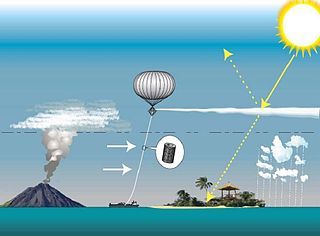
Have you heard of a technology where they simulate a volcano eruption by injecting sulfur dioxide into the sky, in a sense cooling the planet.  I heard about this in the New Yorker magazine, and in a book called “Super Freakonimics.”  

Hello, Howard. 

Yes, there are dozens of international conferences on the subject (“geoengineering”) annually, which I do not attend, though I do try to keep some level of understanding as to what they’re about.  There is no doubt that humankind could, if it chose, use the technology currently available against the specter of global warming. Though this may make sense in the future if more obvious and conventional solutions (like environmentalism) don’t work, I’m not a proponent at this point, as the likelihood of screwing up and causing unintended consequence so greatly outweighs the potential benefit. 

Think of the numerous unanswerable questions that hang in the balance, like, “Who’s going to be in charge of all this?”  You’re going to put a group of people in charge of the Earth’s thermostat?  Who should these people be? 

You’re talking to someone who normally wants to move the decision-making process right along when it comes to climate change mitigation.  Here, for once, I’m glad to see the world is dragging its heels.


Tagged with: , , , , , , , , , ,

One of the things that gives me hope for the world is that the protests of individuals and groups have the potential to be extremely effective.  For example, what the Sierra Club has done with coal is amazing to me.  In a period of a few short years, they’ve completely transformed the awareness of this  issue for the common American; at this point virtually all of us understand the dangers to our health and to the environment that coal represents.

Earth Policy Institute’s Lester R. Brown credits the Sierra Club and other activist groups for creating the conditions under which U.S. carbon emissions have fallen precipitously over the last couple of years – largely due to our new-found distaste for coal. The campaign Beyond Coal has resulted in an environment in which virtually no new coal plants are being built, and the oldest and dirtiest are likely to be decommissioned soon.

Keep up the good work.

Tagged with: , , , , , ,

We often read articles that acknowledge that, while Fukushima was indeed a disaster, that it caused an unwarranted spike in fear of danger of nuclear power, and that this alarmist message was spread by those with an anti-nuclear agenda.  On the other hand, we have pieces like this one that suggest the precise opposite.  I put a great deal of credibility in this latter concept; does it seem far-fetched to anyone that officials would underrate the danger?  I honestly don’t know what to believe, and I’d love to see a few comments on this. 

Tagged with: , ,

I know I’m not the only American who has looked at a political map of the 50 states and wondered, “Wow.  Are there really that many democrats in New Mexico?  Hell, it’s next to Texas!”  The answer, in a word, is Yes.

In fact, here’s a video report on sustainable building that suggests:

New Mexico residents are trying to break free from Los Alamos’ nuclear legacy by creating more environmentally sound ways of living. At the forefront of this struggle is renegade architect Michael Reynolds, creator of radically sustainable living options through a process called “Earthship Biotecture.” Reynolds’ solar homes are created from natural and recycled materials, including aluminum cans, plastic bottles and used tires. These off-the-grid homes minimize their reliance on public utilities and fossil fuels by harnessing their energy from the sun and wind turbines. In Taos, New Mexico, Reynolds gives us a tour of one of the sustainable-living homes he created. 

Tagged with: , , , , , , , , , ,

Yesterday morning I did an interview for a young man in England, James Alcock, who writes for a consumer-oriented website called TheGreenAge.com.  In a period of about half an hour, I answered various questions ranging from electric transportation to fossil fuels to energy storage and renewables.  It’s a delight to get a chance to answer good questions on the subject, as I always leave such discussions with some realizations and new viewpoints.

Here’s something I found thought-provoking: James asked me if I recalled the precise moment that I decided to get involved in renewable energy, and the thoughts I was having at the time.  Eventually we got around to the challenges facing this whole evolution away from fossil fuels, which I summarize as follows: (more…)

Tagged with: , , , , , , , , , , , ,

Here’s what I think is a fair and balanced article that presents the strengths and weaknesses of President Obama’s term in office vis-à-vis climate change.  I like the way the author brings up some interesting and valid mitigating circumstances: notably the recession and the fact that this issue is only one of many with which a sitting president needs to be concerned.  But I also like the way that Bill McKibben puts this into perspective: When we look back on this moment 50 years from now, this will be the key issue that we either addressed, or we didn’t. 

It’s hard for me to get too amped up about a lot of our social woes, when we’re not going to have a civilization here in 50 years if we don’t address what we’re doing to our ecosystem. 

Tagged with: , , , ,