For those of you trying to wrap your wits around the cost of the externalities of fossil fuels, here’s a report by Dr. Paul Epstein, the Director of Harvard Medical School Center for Health and the Global Environment, who has spent the last 20 years trying to nail this down. He and his 11 co-authors peg the cost of coal at $300 – $500 billion per year in increased healthcare costs and long-term environmental damage.
It will be interesting to see how the coal industry responds. Typically, reports that expose the damage done by Big Energy are met with an immediate spate of ads that feature soothing music, pretty scenery, and assuring voice-overs extolling their virtues – just one of the reasons I try to avoid commercial television wherever possible.
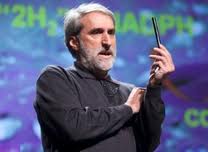
In this short video, MIT Professor of Energy Dan Noceramakes several interesting points about bringing electric power to the third world using solar energy and fuel cells. His analysis of how much energy will be required by the year 2050 is fascinating.
In it, he asks the question: How can we prevent three billion additional babies from being born into poverty? The simple answer: educate poor females. When you do that, the birth rate drops like a rock.
Thus the extraordinary value of organizations like the Turimiquire Foundation, which I hope readers will put on their Christmas giving list; I know it’s on mine.
I’m speaking at an Electric Transportation conference in Los Angeles in a few weeks, in which I’ve been asked to take on the issue of the EV adoption curve – a subject near and dear to my heart. Here’s Boston Consulting Group’s take on the matter, in which they expect to see pure (battery) EV and plug-in hybrids growing 5% globally by 2020. It’s a bit unclear what this means. 5% more EVs on the road than today? 5% of new car sales? 5% of total cars on the roads?
In any case, they’re looking at some of the right variables: oil prices, battery energy densities, consumer willingness to pay a bit more for an eco-friendly car, and improvements in the economy of internal combustion engines. But what they’ve missed is what I would call the “sociological phenomenon” of EVs.
I predict that the power of the “word of mouth” that takes place when we get more than a few hundred LEAFs and Volts on the road (not to mention EVs from BMW, Ford, Chrysler, Mitsubishi, etc.) will be enormous. We’ve seen countless times that consumer demand – even for stupid products – can explode in a short period of time. I predict that in spades for EVs.
Dan Nocera at MIT is amazing, in my opinion. I have written about him before: Dr. Nocera is a chemist and Dreyfus Professor of Energy at Massachusetts Institute of Technology (MIT) also runs the SunCatalytix company. He has been working on the problems of energy for the future, solar power storage, transforming photosynthesis to applications humans can use and more and has made break-through discoveries.
He has a close eye on what the energy problems of today are, and how we are headed to disaster if we don’t address the issues. But he has solutions. However, he is not a “big (more…)
Notice the many different European EV products on the roads. The Peugeot iOn, e.g., is essentially a Mitsubishi i-MiEV, a terrific little commuter car, perfect for urban environments. It’s coming to the US soon (they claim), but there’s no time like the present.
This short piece will certainly not help the reader gain any greater understanding of the United Nations: its strengths, weaknesses, successes and failings. I’d love to get my wits wrapped around the UN, largely regarded, I believe, as insufficiently aggressive in taking action into pressing world affairs, even where it’s clearly and urgently needed. But regardless of one’s opinion of the organization and its shortcomings, I’d have to think that the article it released today should have some level of impact on our thinking.
For instance, is it true, as the report posits, that humanity is near to breaching the sustainability of Earth, and needs a technological revolution greater and faster than the industrial revolution to avoid “a major planetary catastrophe?” That’s pretty strong stuff.
“It is rapidly expanding energy use, mainly driven by fossil fuels, that explains why humanity is on the verge of breaching planetary sustainability boundaries through global warming, biodiversity loss, and disturbance of the nitrogen-cycle balance and other measures of the sustainability of the Earth’s ecosystem.”
and
“A comprehensive global energy transition is urgently needed in order to avert a major planetary catastrophe.”
I would think that this would get people’s attention. But, of course, I’m known to have been wrong before….
My wife points out that perhaps I need to write a few more happy pieces, to counterbalance the tone I often set with my cynical remarks about hypocrisy, corruption and impending disaster.
OK, check this out: Next week, it looks like I’m headed down to San Diego for Storage Week 2011, legitimately my favorite energy storage show. They advertise:
STORAGE IS REVOLUTIONIZING THE GRID!
Market Rules are Changing…
Global Markets are Heating Up…
Storage Costs are Dropping…
& Everyone Wants In.
Hot doggie! Now there’s the enthusiasm we’re looking for!
And there really is a great deal of truth here – especially in the long-term, when the grid mix contains a higher penetration of renewables and the intermittency of solar and wind becomes an issue.
If you’re going to be in San Diego and want to join me for a morning cup of Joe — or an evening martini — please let me know.
Here’s the webinar I conducted on June 29th, 2011, in which I reviewed the results of a survey aimed at renewable energy. We had recently asked more than 500 people to tell us why they thought clean energy was so slow in replacing fossil fuels. The results have surprise you.
I hope you’ll take a few minutes and go through this quarter’s report, linked above. If I could sum it up in a sentence, I would say: the party’s over.
The pure, unavoidable mathematics of the world demonstrates clearly that we cannot continue to ignore our consumption of resources and think that our civilization will continue without consequence. There are policy elements – especially vis-à-vis energy – that we need to have in place. But this is news that we don’t want to hear, and thus our leaders feel they need to avoid. Yet the result of inaction will be dire.
The most interesting thing about this, to me, is that we’re talking about the viewpoints of an unapologetic capitalist. If you were reading this from a left-leaning tree-hugger, you may write it off as liberal blathering. But here’s a guy who manages $107 billion on a minute-to-minute basis. I have to think that counts for something.
In response to a previous piece, AltEnergyStocks analyst Tom Konrad writes:
I’m afraid you’re pretty far off on the likely rise in the price of oil. You may be confusing the direct subsidies (relatively small) with the externalities (much larger) Most of the subsidies are for domestic oil production, but gas prices are mostly the result of the global price of oil. The difference would be measured in pennies, if that…..
Tom then continues with his characteristically solid mathematical analysis, to which I respond:
Thanks, Tom. I was quoting a professor of economics at the Monterey Institute whom I interviewed recently in what I wrote above (not that university professors are necessarily dialed into the truth). I suspect the real issue — in fact, the one that makes this such a difficult subject in the first place — is the manner in which we identify and quantify subsidies. Take this list, for instance:
Construction bonds at low interest rates or tax-free
Research-and-development programs at low or no cost
Assuming the legal risks of exploration and development in a company’s stead
Below-cost loans with lenient repayment conditions
Income tax breaks, especially featuring obscure provisions in tax laws designed to receive little congressional oversight when they expire
Sales tax breaks – taxes on petroleum products are lower than average sales tax rates for other goods
Giving money to international financial institutions (the U.S. has given tens of billions of dollars to the World Bank and U.S. Export-Import Bank to encourage oil production internationally, according to Friends of the Earth)
The U.S. Strategic Petroleum Reserve
Construction and protection of the nation’s highway system
Relaxing the amount of royalties to be paid – apparently, we get about 40% of revenues from oil on public land vs. 60% – 65% in most other countries
And then, as you suggest, how do you deal with our unwillingness to force the industry to deal with the “externalities” – healthcare costs, long-term environmental damage, etc. — costs that are becoming increasingly clear and subject to quantification?
On top of that, you have the controversy about the military, the costs (measured in trillions of dollars) of waging wars in places that have no strategic interest EXCEPT for oil.
So, what do you count? What do you ignore? Unfortunately, it’s almost always a function of what you’re trying to prove, and on whose behalf.