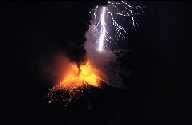
You feel the rumblings of the cleantech revolution reverberating beneath your feet, as if you were standing next to an active volcano that could erupt at any second. You recognize that our world will soon be clamoring for sustainability in all its many forms, as we wake up to the fact that dinosaur technologies: inefficient appliances, gas-guzzling cars and trucks, toxic chemicals, last-century’s lighting and HVAC, coal-fired power plants, etc. are rapidly becoming a thing of the past. (more…)
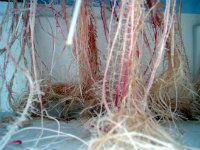
The more I learn about aeroponics (growing fruit and vegetables in a mist of air, water, and minerals), the more I like. Of course, when you look at a piece of plastic with an electrical cord attached to it, you think immediately we’re trading in one set of resource hogs for another. I.e., we’re reducing certain ecologic and financial costs:
• the water for irrigation
• the fossil fuel resources to plant, harvest, process, and transport
• the chemicals necessary to fertilize
• the toxins necessary to kill an ever-evolving set of weeds and insect pests
But, we’re using plastic that comes from petroleum, and we’re using electricity, almost half of which comes from coal.
True, there is no such thing as a free lunch; everything comes with a certain environmental impact. Yet, here we have a method of growing produce that’s many hundreds of times cleaner that farming as it appears on Earth in the 21st Century. The pump in the tower pictured here is rated at 17 Watts, and it’s shut off most of the time; it consumes about a kilowatt-hour of electricity a week. Moreover, future versions of the tower will be made of bioplastic.
At the same time, aeroponics hands you a product that is far higher in nutritional value than what you’re buying through agribusiness. It’s organic – and it’s at your doorstep.
Clean energy is just a part of the overall sustainability movement, yet it stands at the center of so many important issues. For example, the world supply of water and food are dependent on abundant energy, thus our very survival is threatened to the degree that we depend on non-renewable resources for generating energy.
In our webinar this month we will examine the subject of “sustainable food.” We will discuss the direction in which the world agribusinesses are taking us, and explore a cutting edge solution that has the potential to make a big difference here: aeroponics.
My guest will be Rafael Quezada, CEO of Tower Harvest, a leading expert in the deployment of aeroponics. I think you’ll be impressed by how many purely positive effects are created by aeroponics in terms of nutrition and health, energy efficiency, local growing – even job creation.
Investment in alternative energy will remain limited until everyone knows the real costs involved.
All the economics of processes and manufacturing at present are distorted by huge grants, subsidies and the huge amount of pollution and environmental controls, and not to mention all the moral and ethical regulations governing labour employment.
The field that everyone is playing on in the alternative energy market is so distorted (more…)
I just realized I was flimflammed at the Earth Day celebration in Santa Barbara from which my daughter Valerie and I just returned. Val has designs on a hot tub, and was drawn to a booth that offered a product that was there via its claim of super-efficiency.
“Normal tubs of this size will raise your electricity bill by $50 – $100 per month, but you can run this one for a fraction of that, say $10 – $15,” its representative said with a smile. (more…)
I’m delighted to see real progress being made in the public discourse surrounding sustainability. While most people still have the idea that continuing with “business as usual” with respect to our environment is an acceptable strategy, more of us are questioning this concept with each passing month. Here’s an example: a PBS special called The Journey to Planet Earth, featuring one of my personal heroes, Lester R. Brown, environmental visionary and author of “Plan B.”
It also features Nobel Laureate Paul Krugman (oops – Mom’s not going to like this one), Pulitzer Prize winner and New York Times columnist Thomas Friedman, and former Governor and Secretary of the Interior Bruce Babbitt.
I caught the first part of this incredible series last night; it’s beautifully done.
This afternoon I plan to take my daughter and a few of her friends down to the magnificent celebration of Earth Day that the city of Santa Barbara puts together each year. The show grows in scope each year; last year’s boasted many hundred exhibitors displaying concepts in energy efficiency, clean transportation, renewables, and cleantech more generally.
Wherever you are today, I hope you’ll take a few seconds and contemplate what “reduce, re-use, and recycle” can mean to you, your family, and your community.
Just in time for Earth Day, this morning I finished up Beyond the Limitsby Donella Meadows et al. Gosh, I wish there were a way I could get everyone to read this critically important work with its incredibly wide-ranging implications about our future here on this tiny, beleaguered planet.
Gro Harlem Brundtland, Chairman of the World Commission on Environment and Development writes, “This book is essential reading for everybody who is concerned with the central issue of our times: how to achieve a transition to a sustainable global future.”
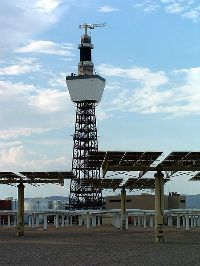
Don’t get me wrong: the task of deploying that much solar thermal is not something that we can do overnight, but it sure provides something to think about. We receive 6000 times more energy from the sun every day than we need to supply all our energy needs. It sure seems a shame that we can’t come up with a way of making this happen, and that, as a consequence, we keep depleting our ever-shrinking supply of fossil fuels, while destroying our natural environment.


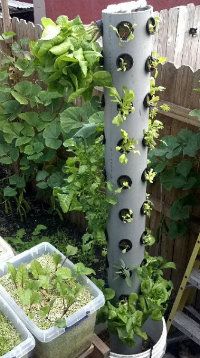 The more I learn about aeroponics (growing fruit and vegetables in a mist of air, water, and minerals), the more I like. Of course, when you look at a piece of plastic with an electrical cord attached to it, you think immediately we’re trading in one set of resource hogs for another. I.e., we’re reducing certain ecologic and financial costs:
 Clean energy is just a part of the overall sustainability movement, yet it stands at the center of so many important issues. For example, the world supply of water and food are dependent on abundant energy, thus our very survival is threatened to the degree that we depend on non-renewable resources for generating energy.


 Just in time for Earth Day, this morning I finished up