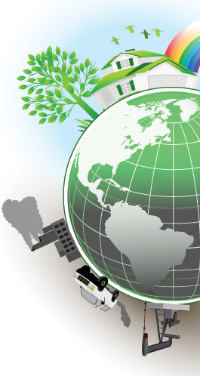
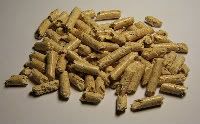
Farming energy is a global reality. While biomass fuel wood is still the energy of peasants, used by nearly 2 billion people living on the planet earth, biological fuel is rapidly becoming popular in the developed countries. Modern agriculture is for food, industrial raw materials for manufacturing consumer goods, biological fuel feed stock and biomass for cogeneration. (more…)
Here’s an item from the file “It would be funny if it weren’t so tragic.”
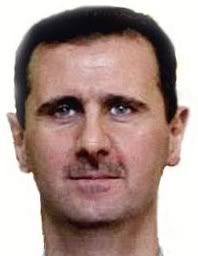
Yesterday, Hillary Clinton told the UN Security Council, “The evidence is clear that (Syrian President Bashar al-) Assad’s forces are initiating nearly all the attacks that kill civilians, but as more citizens take up arms to resist the regime’s brutality, violence is increasingly likely to spiral out of control.”
Isn’t it obvious that, in any situation where a nation’s military is killing its own people that the situation has already spiraled out of control? Is there a sense in which a government’s violence against its own people is “in control?”
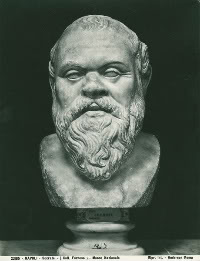
Last week, my son, a college freshman, sat down to his first class in philosophy.
First, can someone tell me why philosophy isn’t taught in high school? Is there some reason we think we need to shelter kids from life’s great questions until they’re older? I never taught the subject formally, though I tutored quite a few undergraduates while I was in graduate school, which often caused me to wonder how I would construct my own “101” course if I happened to be in that position, and at what age group I would present it.
What happened when mankind evolved to the point, about 10,000 years ago, that we had a solid grasp on basic agricultural principles, and so no longer needed to roam, hunting for and gathering food in a nonstop life-and-death struggle? What happened when we started to look up into the heavens — and the questions started to flow: Who made all this stuff? Why are we here? What happens when we die? (more…)
I am not sure why good leaders are not in politics. Possibly good leaders can make lots of money (in the private sector) …
The single best answer I can provide is that the political process as it exists today is utterly repugnant to good people. I’m sure there are many fine people with noble aspirations to make a difference in our world, but they immediately meet with the cruel reality: getting elected and staying in office is about raising money and repaying it in favors, not voting one’s conscience and doing what’s right for the majority of the people. (more…)
A keyword, which tends to have a consistent impact upon our lives today, is indeed ‘Environment’. Not only has it become a topic of extreme contemporary relevance but it has also begun to invade the genres of our regular lives! Right from offices to homes and from parks to restaurants, everything has suddenly gone eco-friendly. This is especially so, in the case of furniture. (more…)
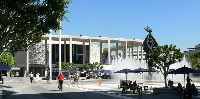
I’m speaking at the “TechBrew MegaMixer” this Saturday afternoon at the Mark Taper Auditorium in downtown Los Angeles. If you happen to live locally and are looking for something to do, please feel free to stop by. There is no charge for admission, and, having attended these events in the past, they’re really pretty cool. The basic concept is getting good entrepreneurial ideas for cleantech products and services in front of potential investors. Sounds like a legitimate concept, doesn’t it?
The event runs from 1 PM – 5 PM; I hope to see you there.
Here’s a good article for those interested in global climate change and the role of government in our lives. Journalist Christian Parenti points out that private sector interests alone will do very poorly in dealing with the enormity of the challenge facing us all in the form of extreme weather events created by global warming.
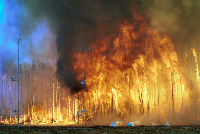
He notes, for instance, that 2011 was the driest year in the recording history of Texas, resulting in wildfires that consumed more than four million acres. He points out that the cost of repairing the damage to the thousands of homes and buildings, and rebuilding the agriculture businesses lost in the fires, is an estimated $5.2 billion—not something that the private sector can easily absorb. And of course, the Texas drought was just one of many individual extreme weather events whose frequency is expected to increase over time.
For my money, Parenti does an excellent job in putting this issue in perspective: it’s fashionable to hate government, but without some teeth in the public sector, our planet will soon lie in ruins.
When my father died not too long ago, he left me some stock in ExxonMobil, which I recently sold. As I wrote to my mother, “I’m happy to report that I’m out of the oil business.”
A few weeks before, a long-long friend who manages a hedge fund wrote me, “Craig! Looks like Israel might attack Iran. Your Exxon’s up big!” I responded, “Yes, imagine my delight, profiting from the prospect of nuclear war.”
I’m so glad I finally got around to Jeremy Rifkin’s masterpiece “The Third Industrial Revolution.” The central concept is this: we’re entering the point in human history where the first and second industrial revolutions and their unintended consequences (i.e., running out of oil and befouling the environment) have forced our civilization to make a great change in course. And it’s good news; in particular, this shift will take us in the direction of clean energy, generated and sold laterally, i.e., peer-to-peer, as millions of us generate our own energy.
This concept of a lateral economy was inspired by the success of the Internet, where hundreds of millions of individual entities found a kind of power that never existed previously. Apparently, a great number of thinkers today believe that this can represent a seismic shift in the coming few decades. Some even point out that the new economic model doesn’t need to be as predatory as the one it will replace, that the “greed is good” is proving untrue and unworkable, and that sharing and cooperation, which are part of our DNA, can play important roles in how we get along with one another.
If this sounds more like a hippie love-in than the ideas of a Ph.D. with 18 best-selling books to his credit, you may want to check it out for yourself.


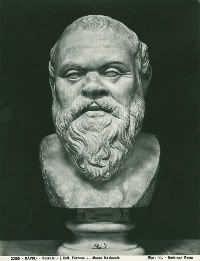 Last week, my son, a college freshman, sat down to his first class in philosophy.