
What the Great Patriots of History Would Say About Our Energy Policy

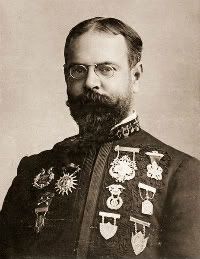
It’s the birthday of John Philip Sousa, the “March King,” born in 1854. Best known for his patriotic music, the U.S. Marine Corps Hymn “Semper Fidelis,” and of course “Stars and Stripes Forever.” Sousa loved a rousing live performance, and generally reviled the phonograph, as he believed that it would result in people’s singing less. In fact, in the late 19th and early 20th Centuries, Sousa performed at Willowgrove Park, a wonderful old amusement park that meant a great deal to me as a boy growing up in the Philadelphia suburbs. (Now, of course, it’s a shopping mall.)
I often wonder what the great patriots of history would say about what and whom we’ve become. Of course, I tend to look at the question through the lens of energy. Thus I ponder what Sousa might think about our de facto energy policy, blithely borrowing an incremental billion dollars a day and sending it offshore to buy another ten million or so barrels of oil, empowering our sworn enemies, and ruining our environment.
If Sousa had trouble with the phonograph, I can’t imagine he’d look on this self-destructive energy policy too kindly.
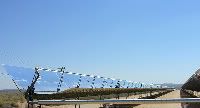 I wrote recently that it’s impossible to predict the ROI associated with solar thermal (aka concentrated solar power or CSP).
 I want to call readers’ attention to the post a few minutes ago by guest-blogger Don Harmon, who I think has nailed the issue.
 Those of us who can’t wrap our wits around the Republican party’s indifference (some might substitute “antagonism”) to the environment need to remember that the GOP didn’t always take this stance. This post on Mother Nature Network documents