I’d like to invite you to our monthly webinar at 2GreenEnergy. The current Topic: Everything You Need To Know About the Electric Vehicle (EV) Business.
As I’m sure you’re aware, there are many reasons that the world of transportation is running hard and fast in the direction of EVs. If we want national security, we need energy security – and that requires that we wean ourselves off of oil as soon as possible. And national security is just the beginning. What about the damage that our dependence on oil is doing to our health, our environment, our economy?
But suppose you’re not a humanitarian, nor an environmentalist, nor even a patriot. Let’s suppose you’re just a frustrated, stressed-out American, looking to profit handsomely as we replace the 300 million cars and trucks on US roads – not to mention the couple of billion that will soon be all over the rest of the planet. You realize that electric vehicles will enjoy a 10% penetration in the US by 2020 – a $250 billion market – and you wonder to yourself: Hey, can’t I fit into that supply chain somewhere? (more…)
With offices in London and Hoboken NJ, CSP Today provides comprehensive, cutting-edge information online and through trade shows on concentrated solar power (aka solar thermal) in all its varieties – and Belén did a great job as a guest.
Although the CSP industry lacks the political muscle of the fossil fuel and nuclear people, Belén remains quite positive about the future. Of all the forms of energy, clean or dirty, safe or dangerous, CSP is the most dispatchable. While PV and wind are intermittent, and coal and nuclear run 24 hours a day, CSP, with low-cost energy storage in the form of molten salt, can be turned on and off by grid operators when needed.
As I’ve said hundreds of times, if I were king of the world, we’d be doing solar thermal in a very big way.
If you’re interested in their free newsletter, I encourage you to sign up (like I did) on the website: CSP Today.
My thanks to Belén for her terrific job on the show, and for her continued work to bring about a healthy, safe, and sane world.
You’ll find the presentation quite upbeat. In fact, Pawlyn notes, “Far too much of the talk about the environment uses negative language; here it’s about synergies, possibilities, and abundance.”
I’ve noticed that virtually all articles on cold fusion that appear online attract the same set of comments.
First, you have the supporters. These tend to be a combination of optimists, blended with those who believe that big oil is putting the kibosh on research into competitive energy solutions. (The latter is true, btw, but the fact that it’s true doesn’t imply that cold fusion is real.)
Then you have the detractors. I have less insight into the mentality of these folks, other than, as noted above, i.e., big oil, coal, and nuclear really are doing what they can to maintain their monopolies. Nay-sayers are also joined by those who think along the lines of the 1899 US patent office spokesperson who famously predicted that the number of patents would diminish rapidly over time, as virtually everything of importance had already been invented. In addition, these people also tend to ignore the idea that many scientists demand the opportunity to review claims before they’re released to the media, and tend to rip up ideas that don’t go through that process.
As for me, I note that there are many credible scientists who study the subject seriously, and that these folks are achieving laboratory results that drive their own conviction in its validity. As long as that’s the case, I’m more than willing to keep an open mind. It’s hard for me to imagine why anyone would feel differently.
I’m in the process of writing my next book — this one on the practical realities of clean energy — which has brought me to a study of the nature of the playing field on which renewables competes with fossil fuels. This, of course, is critical. No one can expect capital formation for clean energy as long as the alternative is made artificially inexpensive with government subsidies that have been in place since the early 20th Century, and which, many people believe, are a permanent fixture in our national budget.
Of terrific help in helping me understand this is the Research and Policy division of the Environmental Law Institute, a non-profit in Washington DC, which endeavors to unravel the twists to get at the full truth of the relationship between government and energy.
I have to say that I was impressed with most of the speakers at the EV Update show in San Diego last week.
Frankly, I didn’t expect to be. In the trade shows I frequent, I’m often shocked at how many presenters abuse the platform to promote their company, or the basic business concept that the company supports, while carefully ignoring or underplaying the competing forces. They appear to have not gotten the memo: The audience came in the hopes of learning something of value, not to have its head filled with your propaganda.
That was almost entirely absent here, I’m happy to report.
Oliver Hazimeh, a management consultant from PRTM did a great presentation with his overview of where EVs are headed and why. Of course, it’s easy to like people who agree with you. Like me, he sees at least 10% penetration of plug-in cars (plug-in hybrids and full battery electrics) by 2020 – a $250 billion industry built over this fairly short period of time. And we both put similar valuations on the potential of the adjacent pieces of that market: generating the electricity, figuring out the charging schema, integrating the billing, etc.
I was also intrigued with the comments of the Ecotality spokesperson, whose message was that the electric vehicles adoption curve is “about lifestyle.” His point was essentially that just as Starbucks addressed an unmet need for good coffee served in a space conducive to the lifestyles of a large consumer segment, EVs will do the same. Though they’re not for everyone, they will address a sizeable swath of the American market.
First of all, let’s acknowledge that he’s 100% correct that consumer acceptance is of paramount importance. And I have to agree that the consumer piece of this is, to some degree, “about lifestyle,” whatever exactly that means. Yes, there will be people who reject this idea until their dying day; yes, they’re not for everyone.
But I’m not sure how many people will hold out due to this lifestyle thing. Imagine a time (is it hard?) when gas becomes even more obscenely expensive than it is right now, and your EV-driving neighbor, who’s long-since forgotten the location of the gas station he used to frequent, pulls up in his driveway. How long do you think it will be before you ask, “Hey, Bob. Tell me about that…”
I have a feeling that this very phenomenon of word-of-mouth promotion, along with our growing awareness of what Big Oil has done to every single one of us — will transcend whatever we mean by the word “lifestyle” — our politics, our taste in music or film, and even our standing as technology early-adopters or laggards. Electric transportation is a concept that simply make sense for the vast majority of us — and is becoming an even better fit with each passing day.
In the role I play as focal point for hundreds of cleantech business ideas, I act as an arbiter of the plans’ value and soundness. Needless to say, this frequently puts me in an unpleasant position: that of explaining to people that I see insufficient merit in their business idea, i.e., that their “baby is ugly” – something no one wants to hear.
Part of the issue here, is that there are just so many good ideas.
We don’t need dozens of start-up neighborhood electric vehicle companies run by people with no real background and experience, assembling Chinese-made parts and selling them into gated communities in the US. We don’t need – and will not have — three or four different infrastructures for delivering liquid fuels to vehicles. Conversely, we do need – and will have – a highly efficient and eco-friendly way of converting the waste stream of used tires into energy, carbon black, and recycled steel.
When I told a friend that I didn’t think the hydrogen economy would come about, he asked, “Why? Is it impossible?” he asked.
“No, it’s perfectly possible,” I responded, “but it’s impractical, just like growing plants indoors, pulling all the hydrogen sulfide out of the Black Sea, or any of the other concepts that I see every day that will simply never happen. What makes it a bad idea isn’t that it’s theoretically impossible; it’s that there are far better ideas that compete against it. If you could get all the gold out of a cubic mile of seawater, you’d be rich,” I reminded him. “But it’s just not a practical thing to do.”
Most of the business plans I review fall into this category to one degree or another. They are visions of a world that I believe will never exist.
Could I be wrong? Of course. But I’m obligated to make the call, and promote only the ideas I believe have real merit.
I can see that the process of learning more about the world of energy and transportation is making me a bit cynical. But virtually everywhere I turn, I see so little emphasis on the truth, and so much posturing to forward whatever agenda the speaker/writer is paid to promote.
Of course, a lot of this comes from the fossil fuel and nuclear industries, both of which work so tirelessly to discredit renewables. Climate change denier Art Pope’s John Locke Foundation is pouring tons of cash in their effort to repeal or gut SB 3, a landmark 2007 North Carolina law aimed at making utilities buy renewable energy. Pope and the Koch-backed “Americans for Prosperity” spent millions of dollars during last year’s elections, winning the General Assembly for Republicans.
And I was amused to learn yesterday that the nuclear industry begins to influence voters long before they’re old enough to cast their first ballots; they’ve worked feverishly to ensure that our children’s middle school textbooks include the “hard cold facts” that nuclear power is perfectly safe and cost-effective.
While I find all this nauseating, I need to point out that the art of politicking is not lost on the clean energy and electric transportation people, either. A good example is the EV Infrastructure show I’m attending down here in sunny San Diego, CA. Many of the show’s “speakers” are essentially hucksters, twisting the facts to convince the audience that their approach to whatever (vehicle charging, energy storage, predicting the EV adoption curve, etc.) is the only one that makes sense. “As you can see from this chart, Level 1 (110V) charging is too slow, and we really don’t need – and can’t afford — Level 3 (480V).”
Now let me guess. You don’t happen to sell a Level 2 (220V) charging system, do you?
I wish we could all cut the crap. But I don’t see that happening.
Great day today. Drove down to play some paddle tennis with Tom Blakeslee of the Clearlight Foundation. There may be finer, smarter, more enlightened people on this planet, but I sure haven’t met many.
From there it was a straight shot down the California coast to San Diego where I’m attending the EV Infrastructure Show. Just got here, but the end-of-day reception was very warm and cozy. Good series of meetings tomorrow.
In 2010, the U.S. installed only 15 MW of geothermal (in Nevada) and that plant will actually have a total 25 MW capacity when finished in 2011. However, more than 500 MW of projects are under development in the U.S. and will come online in 2011 and 2012 – not counting projects that may begin work in 2011.
According to a report “The Future of Geothermal Energy“ written by an MIT panel in the fourth quarter of 2010, total generating capacity of energy sources in the U.S. are currently as shown in the chart below (statistics sourced from EIA in 2004). As gas and coal deplete over time, the capacity of those sources will reduce. (more…)



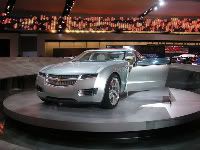 I’d like to invite you to our monthly webinar at 2GreenEnergy. The current Topic: Everything You Need To Know About the Electric Vehicle (EV) Business.
 This morning, I recorded next week’s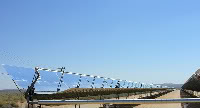
 I got a great deal of really good feedback on some of my previous posts about


 I’m in the process of writing my next book — this one on the practical realities of clean energy — which has brought me to a study of the nature of the playing field on which renewables competes with fossil fuels. This, of course, is critical. No one can expect capital formation for clean energy as long as the alternative is made artificially inexpensive with government subsidies that have been in place since the early 20th Century, and which, many people believe, are a permanent fixture in our national budget.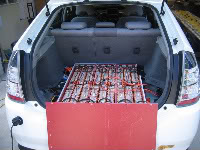

 In the role I play as focal point for hundreds of cleantech business ideas, I act as an arbiter of the plans’ value and soundness. Needless to say, this frequently puts me in an unpleasant position: that of explaining to people that I see insufficient merit in their business idea, i.e., that their “baby is ugly” – something no one wants to hear.
![[The Vector] On Geothermal](https://www.2greenenergy.com/wp-content/uploads/2011/02/us-energy-capacity1.jpg)


