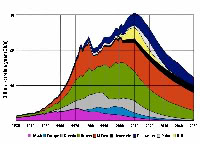
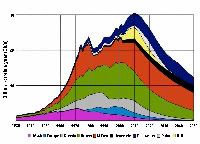
I’m hoping that readers of my upcoming book on renewables will enjoy my conversation with Matt Simmons, arguably the loudest voice on the issue of peak oil. And, although the subject remains controversial, it’s probably a good deal less so today that it was last week, now that two extremely senior automotive industry executives have come out with statements that support it.
In particular, note the recent comments of GM’s Bob Lutz, global climate change skeptic, who is nonetheless a strong proponent of the Volt and the electrification of the automobile. Lutz argues that continued dependence on oil as demand inevitably increases will simply exacerbate boom and bust economic cycles. He notes that, in 20 years the China auto market will equal the rest of the world combined and adds, “At that point we have to have alternative drive systems, which to me have to be electric.”
And check out the remarks of Jim Lentz, President and COO of Toyota Motor Sales. He apparently stunned his interviewer during a recent Commonwealth Club event, in which he stated unequivocally that Toyota believes that peak oil will occur sometime in the later half of this decade.
Peak oil – just one of the many reasons for the rapid migration to renewable energy.
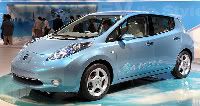
Nissan is taking care of this for EVeryone with their new Nissan LEAF. It’s made in the far east, Smyrna Tennesse …. They are much safer that gas cars; you don’t die from fires when gas explodes or burns after an accident…
Jim: I’m with you all the way.
I was down in Santa Monica a couple of weeks ago interviewing Rick Sikes (their fleet manager) for my book on renewables. If you didn’t know, Santa Monica is an extremely progressive city in a lot of ways – and one of them is the city fleet, which is 87% alternatively fueled.
In any case, I saw all those tanks of CNG, propane, and hydrogen, and I asked about safety. In his answer, which I found more than satisfactory, he pointed out that, on average, 6 people burn to death in gasoline-powered vehicle fires every day. It’s a phenomenon so common that we don’t even report it — like cats getting stuck up in trees.
The other day I wrote a post on my Renewable Energy World blog which garnered a number of interesting comments that I thought I’d pass along. I began the post by indicating that important events in the world generally happen because powerful people make them happen, and that these actions tend to be indifferent to the wellbeing of the vast majority of the world’s population. As an example, I cited George W. Bush’s fixation on removing Saddam Hussein from power and how, in the process, the real threat to world peace and our national security that was developing next door in Afghanistan and Pakistan went unnoticed.
I pointed out that, according to this theory, that although the migration to renewable energy will happen – it will occur for reasons that have essentially nothing to do with the health and safety of our planet, of our nation, and of its people. I provided short explanations of what I see the true drivers: peak oil, public outcry, corporate embrace of renewables, the advent of the smart grid, increases in efficiency of mature clean energy technologies, and the maturation of new technologies.
Of 20+/- comments, most were quite positive. But I was amused by a commentor who wrote:
Do you lefties have to be such drama queens and continue to bring up G.W.? Some of us would like to forget his nonsense. It’s not really much different than what the far right did to the Clinton presidency. Besides, is continuing to make RE a political topic really going to help?
The answer, as I told him, is yes, renewable energy is, in its very essence, a political topic — quite independently of whether he or I want it to be. As I’m fond of saying, the moment you take away the subsidies and force everyone to pay the true cost of the energy they’re producing and consuming, you’ll have ubiquitous clean energy in about 10 minutes.
I thought it might be a good idea to make a list of the types of activities that have been most helpful to our clients in renewable energy and electric transportation. At the top of that list is market research.
As I’m fond of saying, “It doesn’t matter what you think, or what I think; we’re not buying the product or service. What matters is what the market thinks.”
Let me ask you ten quick questions:
1. What market segments have the most intense demand for your product or service?
2. What are the gut-wrenching emotional issues that keep your prospects up at night?
3. What sources of information do they trust most highly?
4. What price-points are most attractive for what you’re offering?
5. What positioning statements communicate an instant understanding of — and attraction for — your product or service?
6. What are the most critical frustrations in your prospects’ professional (and private) lives that motivate them to take risks and make big-dollar commitments?
7. How do your prospects see themselves? What is their self-image, and how does that affect their decision-making?
8. What are your prospects’ key aspirations that drive their purchasing behavior?
9. Through what sales channels are your target market segments most likely to purchase?
10. What would motivate channels partners (reps, dealers, distributors, OEMs, etc.) to embrace a partnership agreement with your company?
If you have airtight answers to these questions, that’s great. But if you’d like to discuss a rigorous and disciplined yet low-cost way to derive rock-solid data points on these and other strategic business issues, please let us know. CONTACT us here.
Do you have something you’d like to say to the thousands of people who visit us here at 2GreenEnergy? Would you like to write on the technology, the business, or the political aspects of what is arguably the most important issue of our time?
Let me invite you to be a guest blogger.
For one thing, it’s fun. When I start my day every morning, one of the things I most look forward to is reading the comments that have gone up in response to the various posts I’ve written. There are some extremely insightful viewpoints — some of which align with my thinking, where others are in pretty hostile disagreement. But “it’s all good,” as my son would say.
If anyone reading this would like to speak with a louder voice — as a guest blogger — I hope you’ll write in and let us know. We’d be thrilled to have more divergent perspectives here — and we’re sure readers would like that as well. Click here to CONTACT us.
I have to laugh. Yesterday I happened to mention campaign finance reform, hoping, in my boyish naivete, for a miracle that would somehow enable our leaders to push for legislature that favors people, rather than corporate interests. But what happened today? We received news of the precise opposite.
The US Supreme Court announced this morning that it has found major provisions of campaign finance reform to be unconstitutional, paving the way for corporate and union money to mute the voices of individual citizens like you and me.
Corporations, defined under law as “fictitious persons,” are given enormous power to achieve their only goal: making profit. Human beings on the other hand, i.e., voters, are given no special powers outside of life, liberty and the pursuit of happiness, and have a multitude of interests and duties. We’ve now granted corporations, on which the law has conferred these unnatural profit-making powers, the right to exert extreme pressure on the political process — at the expense of human voters.
ExxonMobil made $85 billion last year. I wonder if they’ll be able to use some of that money to influence legislation in a way that further tilts the playing field in the direction of fossil fuels. Hmmm. Let me think about that one….
I’ve promised myself that I’ll no longer procrastinate on my book on renewables. In truth, I’ve been pretty good about conducting the interviews and sending them off for transcription. But the sheer volume of words to process and edit has been a bit hard for me to deal with, considering the travel and all the other things going on here. This morning after breakfast, I spend three solid hours going through one eight-page interview — and that’s only one of 25 or 30.
Fortunately, it’s deeply rewarding work. The interview in question was conducted a couple of months ago with the Scripps Institution’s Dr. Greg Mitchell, one of the world’s most well-respected researchers on algae. The process of reviewing his thoughts on the biology and economics surrounding the subject was a learning experience, and it re-enforced some of the themes that were common to a great number of these conversations.
In particular, the single most frequently voiced point is the lack of congruity between our political imperatives and our true needs as a civilization. For something to make sense to a politician, it needs to show demonstrable results in 2 – 3 years; if it doesn’t, he’ll be looking for another job. By contrast, most of the changes that we need to make as a society require a longer-term focus — at least 10, and in some cases 20+ years.
And algae may be the textbook example. Algae and cyanobacteria (photosynthetic bacteria) produce biomass 10 – 50 times more efficiently than any terrestrial plant: corn, soy beans, etc. If you look at the economics of algae, you’re going to get almost 40% biofuel molecules from the original biomass. And what’s the other half or so? It’s protein — that can be used to feed animals far for efficiently that the way we’re going about it today. The whole subject shows incredible promise.
But where are the jobs — today — for algae? How long would a politician last who suggested diverting funds into an area that didn’t offer massive amounts of employment in the very short term — especially in his home state?
It’s a very difficult situation, which, to me, gets back to campaign finance reform. Until we have leaders who can do what they think is right, we’ll continue to have boondoggles like bridges-to-nowhere, corn ethanol and other obvious rip-offs.
An important component of last week’s trip to New York City was a set of meetings with a few key players in clean energy content. As an example, I had the privilege of meeting Dr. Rona Fried, 14-year veteran of one of the most solid Internet “properties” in the industry: SustainableBusiness.com.
Perhaps it’s naivety on my part, but I don’t feel at all antagonistic to the people who, on the surface, appear to be direct competitors of 2GreenEnergy. Each of us have good reason to support one another, insofar as we are all rising together as the world catches onto the growing importance of the industry, and realizes the impact that is being created by the migration to renewables, energy efficiency, sustainable products, and environmentally friendly ways of life.
When we sat down, Rona asked with a wry smile, “Why are you here, Craig?” I felt like I was Kevin Kostner’s character in Field of Dreams, as I replied with words like, “I’m not sure. I just feel I’m supposed to meet you.” Three hours went by in the space of what seemed like 15 minutes. Rona was kind enough to take me to JFK; I almost missed my plane because I didn’t notice the time going by.
We’re working out a host of collaborative relationships that I know will bear rich, ripe fruit. I’ll write more as they develops.
I spent a bit of time on the website of the Bureau of Labor Statistics in preparation for today’s post, looking at some numbers surrounding employment in the US. Here are a few approximate numbers that I feel are relevant:
Unemployed people looking for work with skills appropriate to (or who could be easily trained for) designing and building renewable energy systems: 3 million
Highschool and college graduates entering the workforce over the coming five years with these skills who will find it hard to find work given the current and foreseeable economic climate: 12 million
People working in fossil fuel industries, e.g., coal miners, who may be well advised to look for work elsewhere as the world moves — at whatever pace — to clean energy: 2 million
Total of above: 17 million
Now, let me offer this high-level summary of the subsidies bestowed onto Big Energy in the US. It is estimated that the US oil and gas industry receives anywhere from $1 billion to $35 billion a year in subsidies from taxpayers. What, you ask? Don’t we know that number with any greater degree of accuracy? No. The exact number is extremely hard to nail down — even for those who try to do it honestly and objectively — given the 10-or-so different programs (loans, deliberately lax legislation and enforcement, tax breaks at many different levels, etc.) that could be referred to as subsidies for fossil fuels. But it’s substantial by any account.
And in some cases it’s more egregious than others. For example, we taxpayers pay up to 90% of the cost of building nuclear power plants; the nuclear industry couldn’t stand on its own for a nano-second. And to me, the mega-billion dollar subsidy for corn ethanol is even more galling. As I’ve written abundantly elsewhere, corn ethanol will down in history as one of the biggest rip-offs ever perpetrated on the American public.
So here’s a simple suggestion: if we’re going to subsidize something, why can’t it be something that contributes to the public good? Why does it have to cause cancer, jeopardize national security, promote terrorism, stimulate global warming, or cause a dangerous waste situation that will last hundreds of thousands of years?
Why not consider this: PULL the subsidies for oil, coal, corn ethanol and nuclear. Create a level playing field, and see how long fossil fuel businesses last in a fair, competitive environment (about 10 minutes).
Or, if you want to do something progressive, direct that money to renewable energy. Where do you think we’d be right now in the maturation of — you pick it — solar thermal, hydrokinetics, wind, etc. – if we had had the wisdom and the courage to send that money into research and development of those technologies, as opposed to merely making Big Energy even Bigger?
Let’s make a change here. Per the numbers above, there are 17 million people who will thank us immediately — not to mention the billions of other people on earth today — and those of future generations — who will be beneficiaries as well.
As part of my travels to New York City and Bermuda last week I had the pleasure of meeting clean energy stock legend Bill Paul. There were so many interesting facets to that meeting that I won’t even try to list them. But one thing that struck me hard was his advice that 2GreenEnergy work harder at “thinking globally.” The reference here was not the global impact of renewable energy or electric transportation, which is obvious; Bill was saying the the financial world outside the US is much more important to the migration to clean energy than than the workings of Wall Street.
“Do you know what’s happening in the stock markets of Algiers or Tripoli?” he asked without expectation, as though the answer might be yes. I wasn’t anxious to appear an ignoramus, but to be honest, I didn’t even know there were stock markets in those places; I guess I thought local commerce was limited to cous-cous, exotic rugs, and trinkets for tourists.
Bill went on, “Do you realize that the northern Sahara is the site of what will be the largest solar thermal operation on earth?” That actually came as no surprise; I’ve seen numerous presentations in which a tiny square of the desert will someday generate the power for the entire European continent.
In any case, as I mentioned in an earlier post, 2GreenEnergy is actively developing a tight relationship with Bill which will, if nothing else, provide more insight into the working of renewables outside the confines of the US. Stay tuned.


 I’m hoping that readers of my upcoming book on renewables will enjoy my conversation with Matt Simmons, arguably the loudest voice on the issue of peak oil. And, although the subject remains controversial, it’s probably a good deal less so today that it was last week, now that two extremely senior automotive industry executives have come out with statements that support it.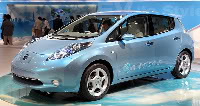
 Jim Stack writes in:
 The other day I wrote a post on my
 I thought it might be a good idea to make a list of the types of activities that have been most helpful to our clients in renewable energy and electric transportation. At the top of that list is market research.
 Do you have something you’d like to say to the thousands of people who visit us here at 2GreenEnergy? Would you like to write on the technology, the business, or the political aspects of what is arguably the most important issue of our time?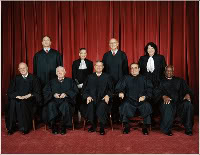
 I have to laugh. Yesterday I happened to mention campaign finance reform, hoping, in my boyish naivete, for a miracle that would somehow enable our leaders to push for legislature that favors people, rather than corporate interests. But what happened today? We received news of the precise opposite.
 I’ve promised myself that I’ll no longer procrastinate on
 An important component of last week’s trip to New York City was a set of meetings with a few key players in clean energy content. As an example, I had the privilege of meeting Dr. Rona Fried, 14-year veteran of one of the most solid Internet “properties” in the industry: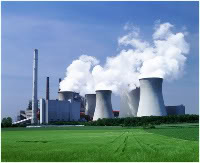
 I spent a bit of time on the website of the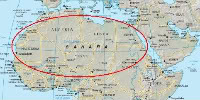
 As part of my travels to New York City and Bermuda last week I had the pleasure of meeting clean energy stock legend


