
Solyndra – Renewable Energy Cinderella Story

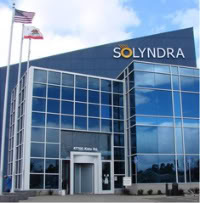
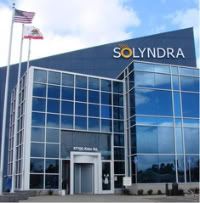 Dr. Kelly Truman was good enough to update me on what I have to call a textbook success of the business he started with his partner CEO Chris Gronot. Solyndra, a venture-capitalized photo-voltaics company, is based in Fremont, CA — and seems to have done essentially everything right. And that starts with the company’s proprietary PV technology, using cylindrically shaped elements coated with the semiconductor copper indium gallium (di)selenide (or CIGS), which is perfect for large, low-slope roofs, and is targeted mainly to commercial buildings.
There are several features of this technology and its implementation that have come together to form a highly differentiated product that is making a real name for itself around the world in a period of time that is, relative to other similar ventures, unbelievably short. First, because wind blowing through the elements tends to hold the installation on the roof (rather than blow it way) the system can be put in place very easily, quickly, and inexpensively with no penetration of the rooftop itself. Also, CIGS deployed in cylindrical elements results in 25% to 100% more power than conventional thin-film technology installed onto equivalent roofs.
As a business consultant, I’ve lived through dozens of stories of venture-capitalized start-ups, and I have to say that Kelly’s narration of the company’s history makes it sound – to me at least — like one of the smoothest in VC history. The company received its initial venture funding in 2005 and went about the business of building prototypes, working with the National Renewable Energy Laboratory (NREL) which provided the equipment and technology for deposition. Soon the technology was demonstrated, the technical milestones were reached, beta customer feedback was positive – and actually serendipitously helpful; customers would often provide constructive input that none of the principles had thought of — e.g., “Do you realize that this could be used for — (some new application)?”
But the good news goes on: Solyndra took over a facility that Seagate (the hard disk-drive manufacturer) had abandoned when they took their operations overseas, and smoothly completed its third-party testing, validating not only the energy efficiency of its products, but also their seismic and wind readiness. By mid-2008 the first volume customer shipments were coming off the loading docks, and the company has grown in revenue in every subsequent quarter.
Looking for some plot twist or at least some conflict to make this story more interesting, I asked if investors getting antsy for a liquidity event, like an IPO on an acquisition by a publicly traded company. “No,” Kelly says, “They’re wonderfully patient. They know we’re in this to make a real difference against the reality of global warming, and that will require some time for growth. To give you an idea of their patience, we received a nine-figure from the DoE which required us to put up 27%. Even in this financial climate, our investors made sure this happened.”
Kelly Truman and I don’t know one another outside of this one-time encounter, and so I didn’t feel it was my place to ask anything else. When the interview was over, I politely thanked him and hung up. But I have to admit that I was wondering: Do his kids have naturally straight teeth? Are they headed for Ivy League colleges on full academic scholarships? I somehow feel that I want to hang out with Kelly, as he’s obviously doing a great number of things right.
I’m kidding here, of course. What I really mean is this: congratulations.
 Since we at 2GreenEnergy are about to begin interviewing a number of eminent climatologists re: global warming, let me go on record and predict what I believe we will find. I believe there is no way to be certain what elements of global climate change are manmade vs. naturally occurring, since there is no way to model the melting of the ice shelves of western Antarctica, etc.
 I’m in the process of putting the finishing touches on our new report providing business tips to renewable energy companies, one of which I call “Swing for the Fences.”
 I’m thrilled to report that I have an interview scheduled with one of the most eminent climatologists on our planet:
 Robin Murphy, Vice President for External Relations at the
 As I continue to learn and write about the energy industry I feel a growing need for fairness. Anyone can sit on the sidelines and throw stones. And Lord knows, there are plenty of great targets for stones when you look at where the oil and coal companies have taken us over the last century. But here, I provide a brief examination of the need for fairness in reporting on the subject.


