
Uptera? Aptera? How Would I Know?

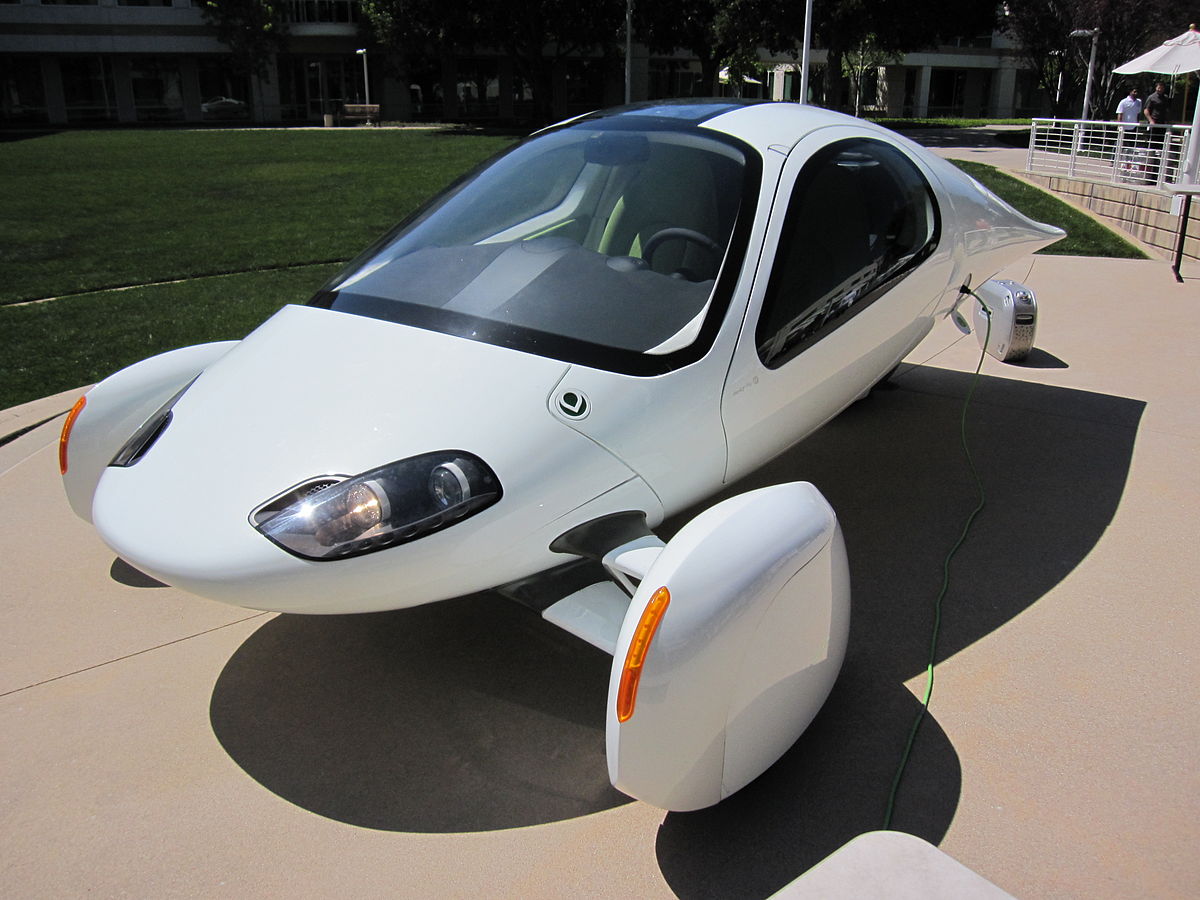 A couple of things look a bit strange about this piece, supposedly from CBS News on the three-wheeled EV for which the company has been raising capital from investors since 2025 without a single car ever to see the road:
The name of the company and its car, Aptera, is consistently misspelled and mispronounced “Uptera.” Does that sound like a mistake that CBS and its gaggle of editors, proofreaders, and fact-checkers would be likely to make?
I’d also like to know why we’re still, after close to 20 years, interested in a manifestly unsafe vehicle with a range of 40 miles (if the sun’s shining). Does that sound like something that American drivers want?
Another thing about American drivers: they don’t want to look like freakish morons. Does the design shown above seem like something that someone (anyone) would like to be seen piloting around town?
If the investors who kicked in their dough in the year in which GW Bush beat back John Kerry to go into his second term had made a single dime, or could be honestly predicted do so at anytime in the future, this whole enterprise might have a bit of credibility.
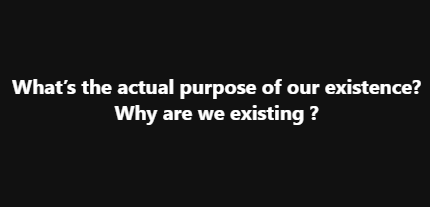 Philosophers have posited that there are aspects to our lives and the universe around us that are unknowable, e.g., the immortality of the soul and the existence of God. That seems to apply to the meme here.
 It’s possible that American democracy will not survive (at least) four more years of Trump, given the way he is consolidating power around him.
 Americans need to face the truth about the 2024 election: half of us voted for a man with zero integrity, whose only loyalty is to himself.
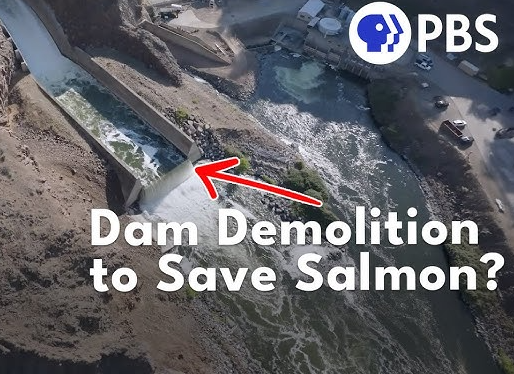 The removal of dams is a good thing environmentally, but only if there is a low-carbon way to offset the loss of that clean energy onto the grid.
 Let me first point out that there is no such rule prohibiting ending a sentence with a preposition. Anyone who asks, “For what are you looking?” as opposed to “What are you looking for?” is a fool.
 Here’s an example of the sad fact that any idea can be introduced to the American public without an iota of truth, and will be immediately adopted as fact by a significant number.
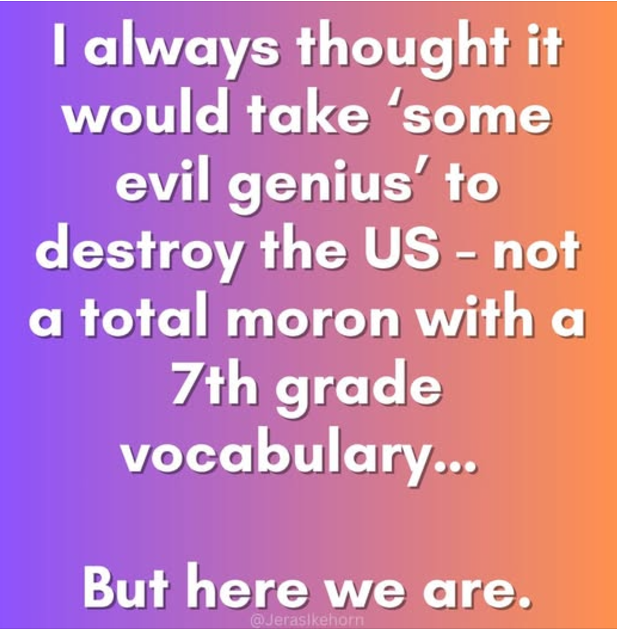 The author of the meme here poses an interesting question, but I honestly don’t believe it has a straightforward answer.
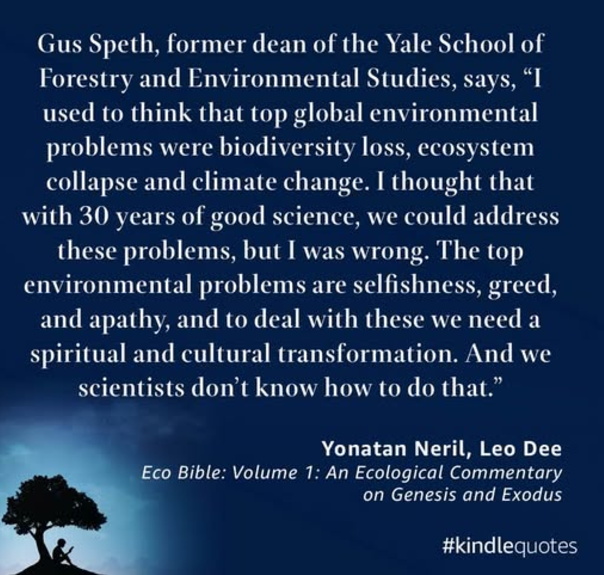 As this fellow notes, we’ve long since passed the point of developing the technology required to address environmental issues like climate change and the loss of biodiversity.
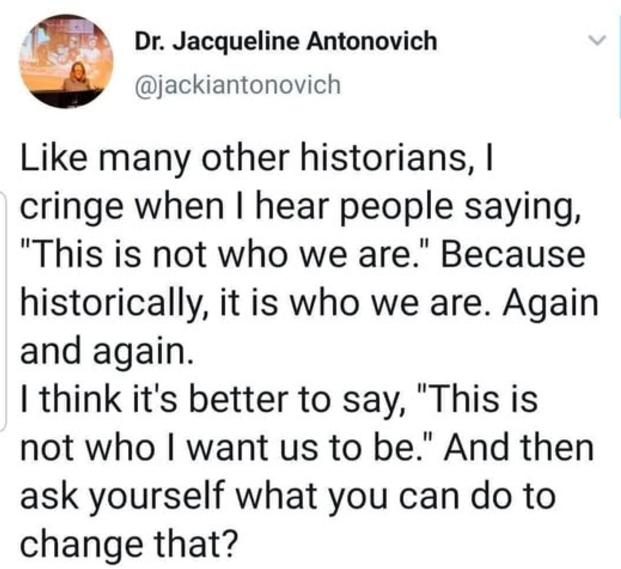 I agree with this woman 100% (though I point out that her last sentence here is a statement, not a question).


