
Hydrogen and Battery Electric Vehicles

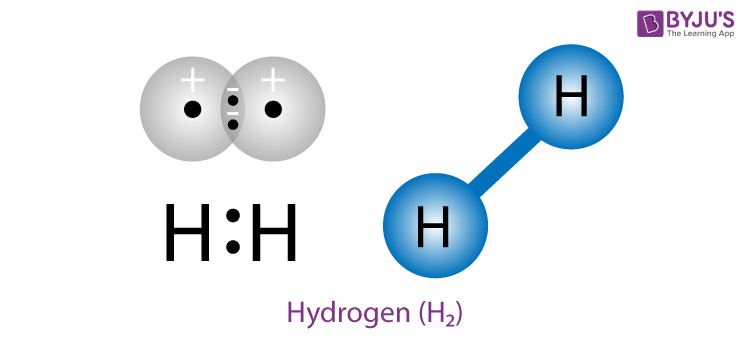 Here’s conclusion from a recent report from my colleague Renaldo Brutoco on battery EVs (BEVs) and hydrogen fuel-cell EVs (FCEVs):
As we continue to advance towards a low-carbon future, both BEVs and FCEVs will play pivotal roles. By embracing both technologies, we can ensure a smoother transition to sustainable mobility, effectively mitigating the environmental impact of our transportation needs while satisfying the diverse requirements of consumers and industry. This dual approach not only maximizes the benefits of each technology but also exemplifies the innovative strategies needed to overcome modern energy challenges.
I respectfully disagree. Eventually, the winner will win and loser will lose. And, in particular, hydrogen will lose out, even though BEVs, as Renaldo correctly indicated in his piece, have challenges.
We’ve been talking with great enthusiasm about hydrogen since I was a teenager in the early 1970s, but with virtually no progress over the intervening period. At stake is the cost of producing H2 from the electrolysis of water or the reformation of methane, the cost and fragility of fuel cells, and, most importantly, the absence of a fuel delivery infrastructure and the enormous economic and logistical challenges associated with overcoming that issue.
What will eventually happen with hydrogen in transportation is exactly what happened to wave energy, ocean current energy, run of river hydrokinetics, biomass, and geothermal in renewable energy. Outside of niche applications, they all lost as the technology of solar and wind matured and the costs fell precipitously.
I know Renaldo is a huge fan of hydrogen, but it’s time to say goodbye.
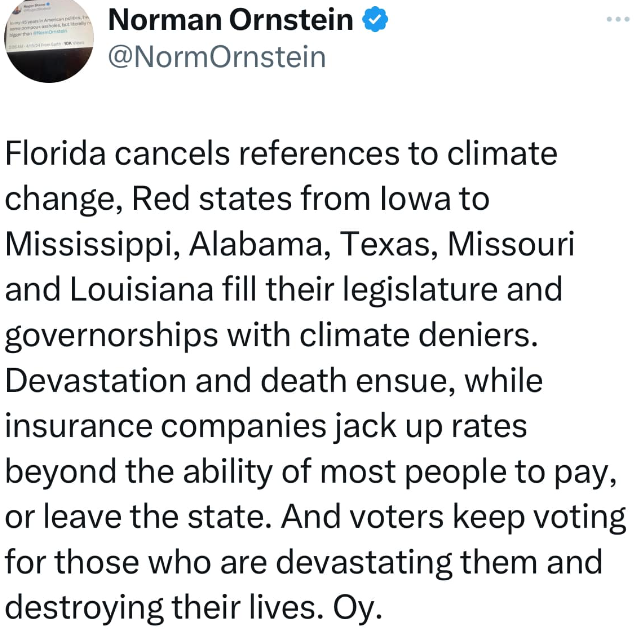 This from Norm Ornstein, emeritus scholar at the American Enterprise Institute (AEI), a Washington, D.C., conservative think tank.
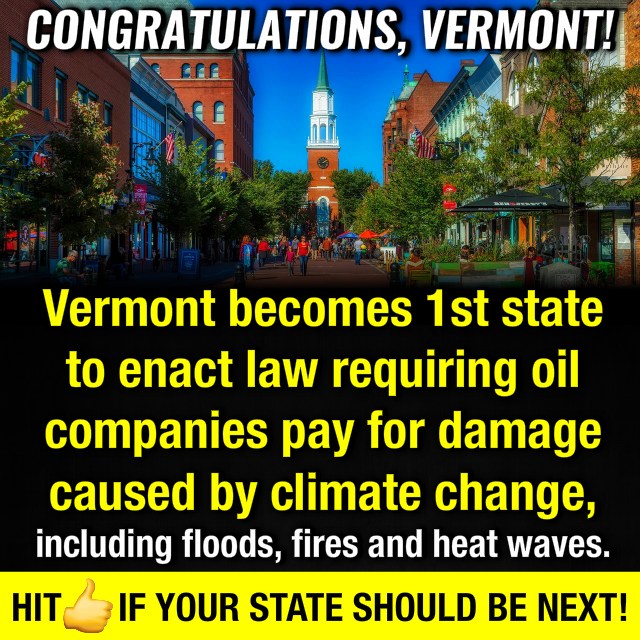 Will the oil companies attack the living hell out of Vermont’s new law? Of course. Will the legislation survive the onslaught of law suits that Big Oil brings against it? Probably not.
 In our media, the decision re: what to cover is just as important as how to cover it.
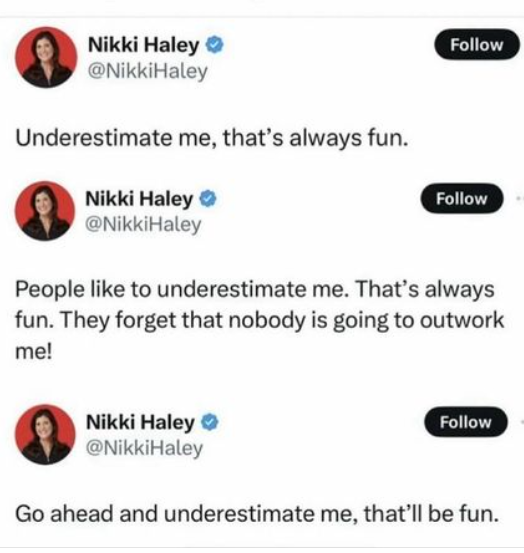 A reader notes: I’ll be honest. I feel like I overestimated her.
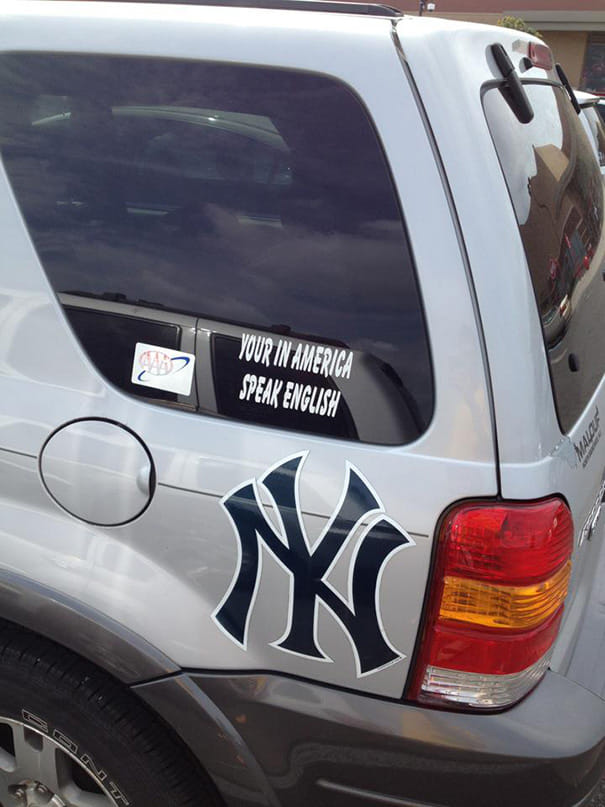 I listened to a Ted Talk the other day that was given by a linguist and university professor of English, whose point was that the language is always changing, and that we shouldn’t be so rigid in our interpretation of others’ speech and writing. As an example, she said that a few hundred years ago, the word “lollygag” meant to make out / kiss.
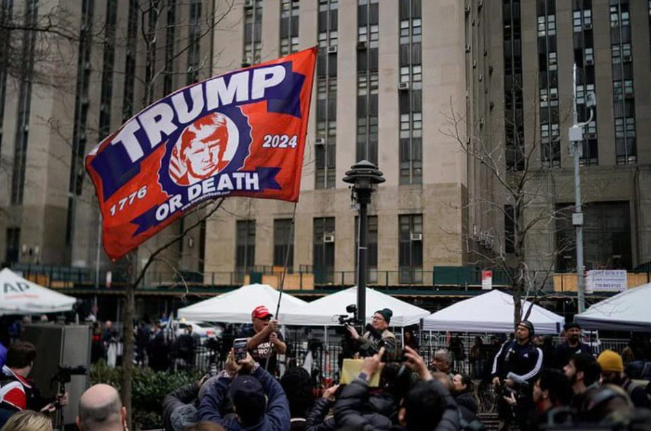 As an advocate of free speech, I have no problem with this display outside the courtroom during the jury’s deliberation on the 34 felony counts of election interference, better known, albeit erroneously, as the “hush-money” case.
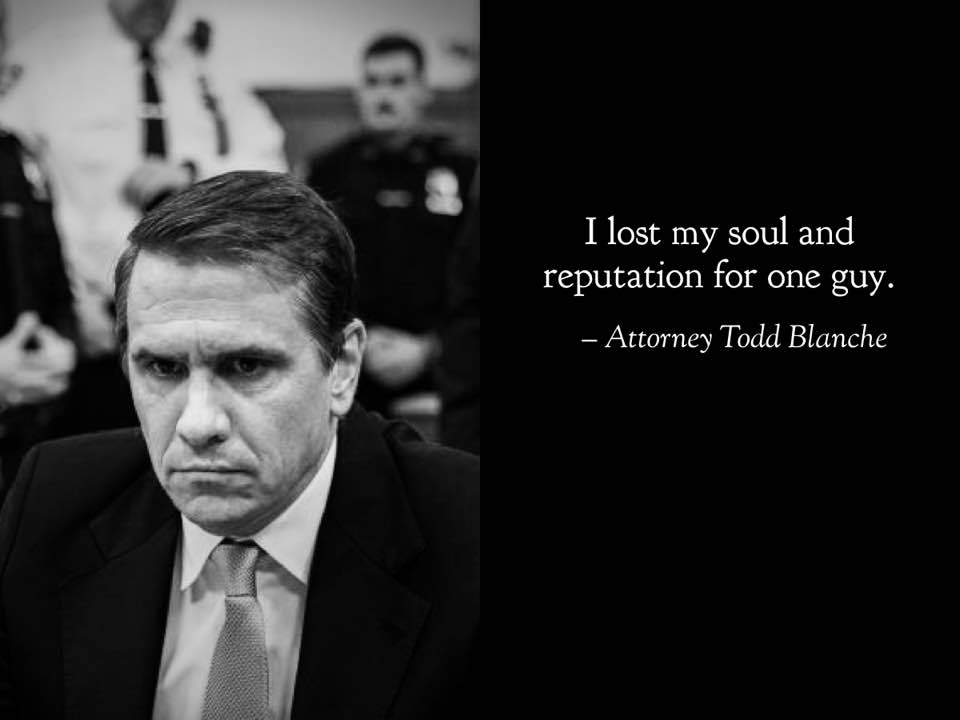 Todd: If it makes you feel any better, you’re far from the first, and you won’t be the last.
 A reader offers this:
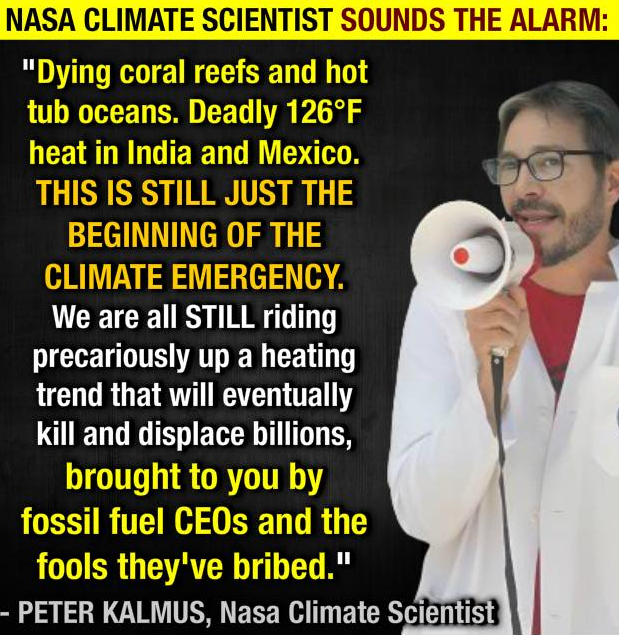 A reader notes: The climate crisis is here, no matter what the paid shills at Fox say.


