
Scripps Institution on Global Climate Change

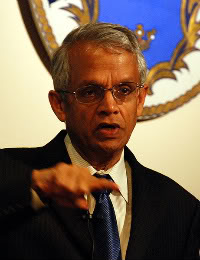
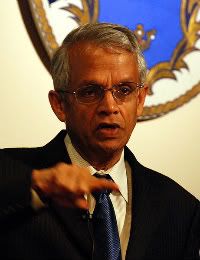 Yesterday, I conducted an interview with Dr. V. “Ram” Ramanathan of the Scripps Institution. In the course of the talk, I asked Ram if he would comment on the likely outcome of the upcoming conference in Copenhagen — which he’ll be attending and the world will be anxiously watching. In particular, I wanted to know if a rational person should hold out hope for any substantive agreements and subsequent changes of behavior with respect to global climate change — arguably the world’s thorniest problem. Though he didn’t come out and say it, Ram didn’t appear optimistic.
He explained his concern in much the same way we hear the subject reported in the press: The developing nations say, “You caused the problem; you fix it.” But the developed nations refuse to control emissions if the developing nations refuse to do so as well, as a large and growing contribution to current emissions is coming from these developing nations. This standoff appears unlikely to resolve itself in Copenhagen — or anytime in the near future.
As always, the full interview will occupy a critically important chapter in my book on renewables. Suffice it to say that Ram, the man who was part of the team that discovered the phenomenon of global climate change in the 1970s, had plenty of insight into this matter — as well as many specific suggestions on renewable energy.
There is true concern and sadness in his voice. “I’m not concerned about getting attacked by the oil companies,” he said when I asked him about that. “I simply feel sorry for the planet. We’re coming ever closer to the precipice.”


[…] by 2020 is virtually meaningless – even if it actually occurs. It’s a small fraction of what climate scientists have called for in their peer-reviewed studies on global warming. This carefully contrived, last-minute decision to send Obama was made with the proviso that it […]