
Climate Change and Killer Heat

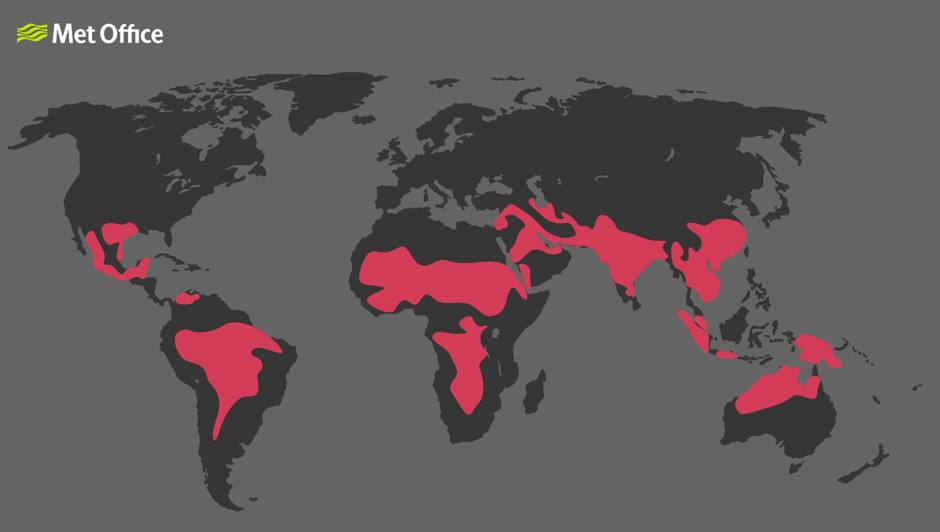
This map shows areas where a wet-bulb temperature (see explanation below **) greater than 32.0°C (89.6°F) occurs for more than 10 days per year at 4.0°C global warming. Such a temperature rise could see nearly half of the world’s population (4 billion) living in areas potentially affected by killer heat.
One billion face heat-stress risk from a 2°C rise.
Note that these areas are, generally, the poorest on the planet. Rich people can afford to avoid being subjected to misery. This is just one of dozens of examples of how climate change is causing the world’s poor to suffer disproportionately.
** Wet-bulb temperature is defined as the temperature of a parcel of air cooled to saturation (100% relative humidity) by the evaporation of water into it, with the latent heat supplied by the parcel. In other words, some of the heat in the air goes into cooling the air via evaporation, up to the point of 100% relative humidity, at which point no more evaporation can take place. This is why people in Arizona say, “At least it’s a dry heat,” meaning that their sweat is readily evaporated, cooling the body.


