Long-time subscriber “Russ” writes: I think Bill Gates is onto something with his desert community; too bad everyone else doesn’t seem to feel the same way. Any thoughts on that subject? It’s at its infancy.
Sorry to be argumentative, but here are mine: (more…)
As the old saying goes, “Businesses are like babies: fun to conceive, but hell to deliver.” And in cleantech, there’s an excellent reason this is true, according to best-selling author, business consultant, and investment coordinator, Santa Barbara, CA-based Craig Shields. “Almost all business concepts in this space are deeply flawed, and for a single reason: they seek to offer something that sounds good…until you realize that it couldn’t possibly be offered at a competitive price, given the trends, some obvious, others hidden, that exist in the market today.”
Technology is steadily making our lives healthier and more convenient, and it holds the promise to help us deal with existential threats like climate change, ocean acidification, loss of biodiversity, and shortages of food and water. But technology that isn’t affordable is of no value at all.
“Take renewable energy. If you don’t care what you pay for it, I’ll find you all the clean energy you want,” quips Shields. “The problem, of course, is that we care very deeply about what we pay for it. What this means is that technologies like run-of-river, tidal, wave, and ocean current hydrokinetics, biomass, and geothermal are now relegated to niche applications, where solar and wind are constantly expanding at utility-scale.”
When asked for a specific example of the so-called “cost-barrier,” Shields points to biofuels. “First of all, let’s throw out everything but algae, since even the best terrestrial plant carries 30 – 50 times less energy density than algae, and it can be grown in non-arable land with non-potable water. But then look at the core challenges: moving water to the desert, the technical challenges of filtration, of contamination with other species, and the balancing of sunlight. OK, so how serious are these issues? Well no one has gotten photosynthetic algae-oil for less than ~$5000/gallon. Do you know anyone who gets excited about fuel at $5000/gallon? Even if this changes, which I can’t really imagine, electric transportation will soon be extremely inexpensive and user-friendly. If there ever was a window for algal biofuels, it’s most certainly shut at this point.”
Cherry-Picking the Best Cleantech Business Plans, By Evaluating Them Free of Charge
It’s logic like this that makes Shields’ job relatively easy. “I’ve received over 2000 business plans since my website, 2GreenEnergy.com, opened in 2009, largely because I’ve offered to review them at no charge. I make the offer as a way to stay connected to the widest possible range of thinking in clean energy, efficiency, storage, smart grid, electric transportation—and everything else that comes under the banner of cleantech: sustainable ag, and the water-energy nexus. This enables me to cherry-pick the few really good ideas that come into my inbox as targets for investment.”
Shields continues, “If I had no understanding of the ever-changing market trends that affect the potential for success in each of the hundreds of sub-disciplines that comprise cleantech, I couldn’t possibly process this volume of information, or, even if I could push myself, I’d probably start making mistakes. As it is, I have plenty of time left over for writing, helping my clients, and working to find investment capital from angels, VCs, private equity firms and family offices for the very best cleantech business plans.”
Shields majored in physics as an undergraduate, and, after graduate school, went on to a career that spanned 35 years in delivering marketing consulting services to a client base that included most of the Fortune 500 tech companies, including IBM, AT&T, H-P, Microsoft, FedEx, ABB, Sony, Panasonic, Mitsubishi, Magnavox, Penske Logistics, Deloitte Consulting, Unisys, Oracle, Philips Electronics, 3Com, CSC, National Semiconductor, and Fujitsu, as well as dozens of lesser known enterprises.
Now, he stands ready to help the cleantech business community save enormous amounts of time and money, avoiding fruitless investments and concentrating in areas that hold the most promise.
“The word ‘sustainable’ implies ‘profitable,” Shields reminds us. “There is no such thing as a good idea in sustainability if it doesn’t enable somebody somewhere to generate a profit. That’s the reality in which we live, and unraveling the implications of that reality is the precise value I bring to the table.”
In some parts of the world, winter is coming to an end, while in other parts it is yet to come and bring colder temperatures. However, no matter on which hemisphere you live, it’s always good to know some heating tricks that will warm up your home and save you some money in the process. So, here are the easiest and most efficient ways to cut your home’s heating bill. (more…)
There are about 8,000 blog posts here and about 19,000 comments on them, some of which get pretty far out into the weeds. Accordingly, now and then it may be a good idea to discuss the simplest, most basic concepts that are affecting our society vis-a-vis environmental protection. (more…)
2GreenEnergy super-supporter Cameron Atwood writes: “As a species, we do a fairly good job of cultivating and harvesting grain energy to distribute as food. In your estimation, what are the core technical factors are that currently prevent the scale up of algae fuel production?” I respond: (more…)
Plastic waste is killing our environment one day at a time. Right now in the U.S. alone, we have over 2,000 active landfills, and the average American throws out about four and a half pounds of garbage each day. Did I mention most of the garbage thrown out is plastic waste? However, this isn’t just a national problem, it is an international problem. (more…)
We all know that one of the major sources of expenditure for every homeowner out there is electricity bill. Still, many people believe that lowering their electricity bill takes a lot of money and effort. They couldn’t be more wrong since there are plenty of simple ways to do this. We’ve come up with 5 of these that have proven to do the trick for many Australians and might be exactly what your household budget needs. (more…)
If I weren’t so frugal with both my money and my time, I’d probably go to this conference on biofuels. I’m curious to know how far this subject has come.
It’s good that the focus is still on algae; if there is a path towards full-scale commercialization of biofuels, which I doubt, algae is the only conceivable way to make this happen, given that it has 30 – 50 time more gravimetric energy density than any terrestrial plant, and that it can grown on non-arable plant with fresh or salt water. (more…)
Living in a sustainable house is the goal of any modern homeowner, as sustainability reduces utility bills and is good for the overall health of the planet. (more…)


 Long-time subscriber “Russ” writes: I think Bill Gates is onto something with his desert community; too bad everyone else doesn’t seem to feel the same way. Any thoughts on that subject? It’s at its infancy.
 As the old saying goes, “Businesses are like babies: fun to conceive, but hell to deliver.” And in cleantech, there’s an excellent reason this is true, according to best-selling author, business consultant, and investment coordinator, Santa Barbara, CA-based Craig Shields. “Almost all business concepts in this space are deeply flawed, and for a single reason: they seek to offer something that sounds good…until you realize that it couldn’t possibly be offered at a competitive price, given the trends, some obvious, others hidden, that exist in the market today.”

 In some parts of the world, winter is coming to an end, while in other parts it is yet to come and bring colder temperatures. However, no matter on which hemisphere you live, it’s always good to know some heating tricks that will warm up your home and save you some money in the process. So, here are the easiest and most efficient ways to cut your home’s heating bill.
 There are about 8,000 blog posts here and about 19,000 comments on them, some of which get pretty far out into the weeds. Accordingly, now and then it may be a good idea to discuss the simplest, most basic concepts that are affecting our society vis-a-vis environmental protection.

 Plastic waste is killing our environment one day at a time. Right now in the U.S. alone, we have over 2,000 active landfills, and the average American throws out about four and a half pounds of garbage each day. Did I mention most of the garbage thrown out is plastic waste? However, this isn’t just a national problem, it is an international problem.

 We all know that one of the major sources of expenditure for every homeowner out there is electricity bill. Still, many people believe that lowering their electricity bill takes a lot of money and effort. They couldn’t be more wrong since there are plenty of simple ways to do this. We’ve come up with 5 of these that have proven to do the trick for many Australians and might be exactly what your household budget needs.
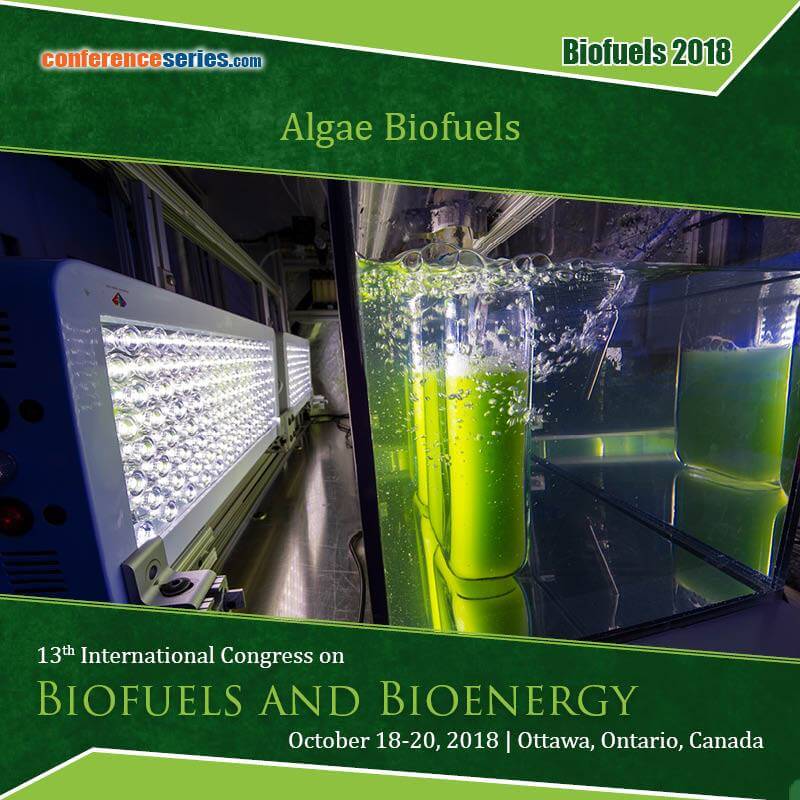 If I weren’t so frugal with both my money and my time, I’d probably go to this

 Living in a sustainable house is the goal of any modern homeowner, as sustainability reduces utility bills and is good for the overall health of the planet.
 Question: How much money in US dollars have the world’s auto OEMs invested in EVs? What percentage of that comes from Germany alone?


