
Making Fossil Fuels Obsolete

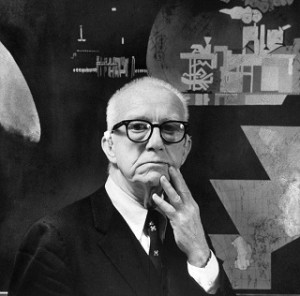 This morning I explained to a friend that, in my estimation, Buckminster Fuller was a super-human engineer, architect, author and visionary. He’s perhaps best known today for some terrific quotes he made during his long and rich life, including my favorite: “You never change things by fighting the existing reality. To change something, build a new model that makes the existing model obsolete.” (more…)
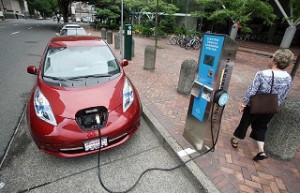 Even though the delivery of Tesla model 3 vehicles might be two to three years off, getting lines longer than when Apple rolls out a new phone, and 198k reservations, set up a realization for the world that a new reality is being forged, and it has legs. For example, the lines were up to 500 people in San Diego, but a similar phenomenon was going on all over the place, and online. The car is good looking and has great specs. Now the firm just needs to execute, which is no easy challenge.
  “Breath on the Wind” writes on my post: “
 In connection with my post, “
 It’s the birthday of the father of modern philosophy, Rene’ Descartes, who began his professional life as a prominent mathematician and scientist in 17th Century France. His much better-known explorations into philosophy came as an accident, when he realized that doubt was a requirement to the scientific method. Famously, he called everything he knew into question, but then began to fear that perhaps there was nothing we could know with any certainly about ourselves and the world around us.
 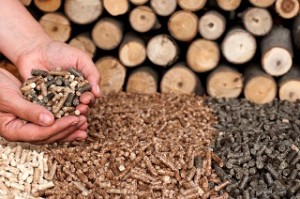 A colleague in the southeastern part of the US has a huge and rock-solid fuel supply of wood to make into pellets, and, on the basis of that feedstock agreement, I’m trying to help him raise a significant amount (nine figures) of
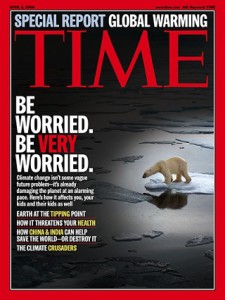 It’s the tenth anniversary of the Time Magazine article “