
Quantifying the Consensus on Anthropogenic Global Warming in the Scientific Literature

 Here’s a very scholarly publication documenting a broad consensus on AGW (anthropogenic global warming) in scientific literature. Maybe it’s just a personal thing, but I’ve always hated articles like these. An article about articles? A “meta-article,” I guess it could be called? Eww.
In addition to not liking overly academic treatments of any subject, I point out that, even though there is very clearly a consensus in the subject, I’m not sure what that means. When Copernicus published his work on heliocentrism in 1514 there was consensus that the Earth was the center of the universe; the fact that Copernicus was the sole dissenter didn’t mean that he was wrong.
Having said that, the evidence surrounding AGW is overwhelming, and we’re certainly not doing ourselves any favors by pretending the matter is in doubt.
 Here’s an article that suggests that a
 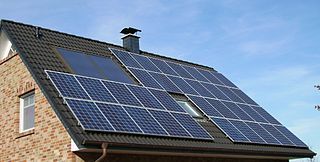 Now more than ever, individuals and businesses alike recognize the importance of reducing the amount of energy we consume on a daily basis in order to better maintain our global environment. Engineers and researchers have discovered that one of the most effective ways to do so is by changing the way we construct our indoor environments. According to the Center for Climate and Energy Solutions, our everyday use of buildings accounts for 39% of total U.S. energy consumption and 38% of carbon dioxide emissions.
 Here’s an
  I just spent an hour doing something I normally skip: I participated in a comprehensive webinar from
  2GreenEnergy supporter Cameron Atwood sent me this
 Denmark is held up as one of the great success stories when it comes to wind power – and it is. Half of Denmark’s electricity consumption will be generated by wind power in just seven years time. But Denmark has other lessons for those interested in wind power. It illustrates how effective – or ineffective – government support for renewables can be.
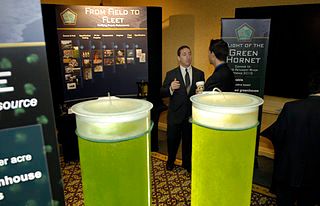 As fossil fuels become scarcer and more expensive, research continues to discover a means of producing energy from renewable sources. One challenge in this quest is devising a means to create sustainable energy in large enough quantities and economically enough to make sustainable energy sources a financially feasible option. While some alternative energy sources, such as solar energy and geothermal energy have already begun to enter the general marketplace, other promising sources of energy are still in the early stages of development.


