A shell and tube heat exchanger (pictured here) is one of the most common type of heat exchanger that you will find used in various industrial sites such as oil refineries and chemical processing plants.
They are popular applications for a good reason, it is an efficient way to conserve energy and this will also help to reduce your maintenance costs as well. (more…)
Unfortunately, I won’t be able to make this lecture on a local professor’s new book: Let It Shine: The 6000-Year Story of Solar Energy. But I feel like I learned a lot just reading the abstract, e.g., the work the early civilizations did with passive solar. Dr. Perlin asks:“If years ago people successfully harnessed the sun’s energy, can’t we, with a far superior tool kit, do better, using their work as our foundation?”
The response is complicated by the fact that the world’s population is 35 times what it was during the Roman Empire, and the power consumed per capita in the developed countries is 110 times what it was back them; together; that’s huge. But the ultimate answer is yes. We do have the capabilities to become what physicist Michio Kaku refers to as a “Class One Civilization,” i.e., one that reaps its energy from its star, which requires that we find a way to harvest only 1/6000th of the total radiant energy we’re receiving from the sun — a formidable but accomplishable task.
These people are off base here. Because of the high correspondence between the presence of the sun in the sky and humankind’s need for energy, this will be a terribly cost-inefficient idea.
I’m really surprised to hear this; I know I’m not the only person in this state who understands this stuff.
Leaky windows make your home drafty and send your home heating and cooling costs through the roof. The obvious leaks will catch your attention, but it’s the hidden ones that can sap the heat and cold air from your house and dollars from your wallet.
A professional home energy audit costs money, but it’s a financially sound investment if it lowers your energy bill. Your decision to take a do-it-yourself approach depends on your energy savvy. (more…)
I did a radio show yesterday on an ultra-right-wing talk program whose host wanted to explore the issues of new energy, climate change, etc. The guy, a gentleman by the name of Charles Heller, did a really good job, but the experience served as a reminder of a profound truth: people gravitate to sources of information that tell them what they want to hear.
But let’s be honest: Who can object to that? Or, more importantly, who can escapefrom that? I don’t spend a lot of time watching Fox News, and trust me, the radio station that hosted yesterday’s show made Fox News look like a bunch of Marxist pot-smoking hippies. (more…)
I thought I’d pass along the status of my new Nickel/Iron batteries. They have arrived from China and passed through customs and are now on a truck from Colorado to my house. Arrival is expected on Thursday. I am really looking forward to this and hoping these batteries are all that I have been led to believe they are. I will post about them again after I have them installed and operating.
Consumers often consider disposal, rather than repair, when faced with a broken appliance. Many of these consumers are not considering the costly implications of disposing of appliances. Yes, eventually all appliances break and must be replaced. However, as consumers purchase more appliances, they spend more money and increasingly contribute to environmental destruction. (more…)
Here in the United States, we burn approximately 28 billion gallons of diesel per year, the equivalent of 42,000 Olympic-size swimming pools; this is 31% of the world’s total, and results in the emission of 311 million tons of CO2 into the atmosphere (not to mention an array of different toxins). What if there were a quick and easy way to get rid of one-third of this horrific byproduct of trucking our cargo around? (more…)
This afternoon I was reminded of an important fact: the promotional work that authors of renewable energy books do isn’t always relaxing, fun, and productive. I (foolishly?) had agreed to do an hour-long ultra-right-wing talk radio show in Tucson, AZ. The conversation with the host, Charles Heller, was completely civil, though we really didn’t agree on too much.
It got more interesting when we took calls from listeners, who, as one can only imagine, are apparently all climate change denier zealots, and trust me, they didn’t cotton to me. One guy was so angry with me I could almost see his clenched fists trembling; in fact, he was so enraged he could barely speak, but eventually made a statement that he finished up by calling me a “cockroach.” (more…)


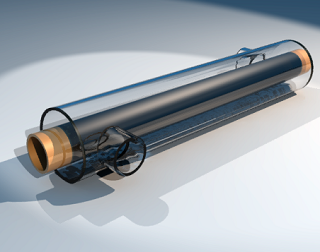 A shell and tube heat exchanger (pictured here) is one of the most common type of heat exchanger that you will find used in various industrial sites such as oil refineries and chemical processing plants.
 Unfortunately, I won’t be able to make this lecture on a local professor’s new book:
 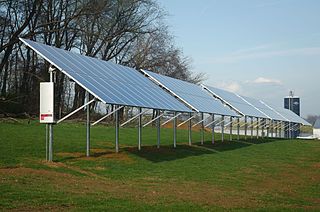 Here’s an interesting article that talks about the need to
  Question: What percentage of Curitiba, Brazil uses public transportation?
 Leaky windows make your home drafty and send your home heating and cooling costs through the roof. The obvious leaks will catch your attention, but it’s the hidden ones that can sap the heat and cold air from your house and dollars from your wallet.
 I did a radio show yesterday on an ultra-right-wing talk program whose host wanted to explore the issues of new energy, climate change, etc. The guy, a gentleman by the name of Charles Heller, did a really good job, but the experience served as a reminder of a profound truth: people gravitate to sources of information that tell them what they want to hear.
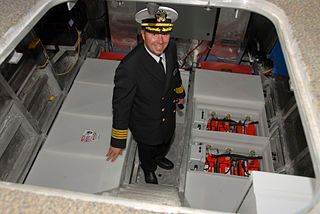 I thought I’d pass along the status of my new Nickel/Iron batteries. They have arrived from China and passed through customs and are now on a truck from Colorado to my house. Arrival is expected on Thursday. I am really looking forward to this and hoping these batteries are all that I have been led to believe they are. I will post about them again after I have them installed and operating.
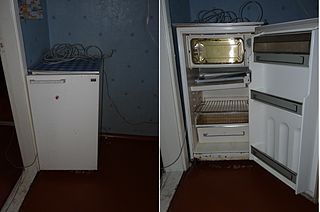 Consumers often consider disposal, rather than repair, when faced with a broken appliance. Many of these consumers are not considering the costly implications of disposing of appliances. Yes, eventually all appliances break and must be replaced. However, as consumers purchase more appliances, they spend more money and increasingly contribute to environmental destruction.
  Here in the United States, we burn approximately 28 billion gallons of diesel per year, the equivalent of 42,000 Olympic-size swimming pools; this is 31% of the world’s total, and results in the emission of 311 million tons of CO2 into the atmosphere (not to mention an array of different toxins). What if there were a quick and easy way to get rid of one-third of this horrific byproduct of trucking our cargo around?
  This afternoon I was reminded of an important fact: the promotional work that authors of renewable energy books do isn’t always relaxing, fun, and productive. I (foolishly?) had agreed to do an


