I just had a conversation with a college engineering student looking to do an internship at 2GreenEnergy. I sure hope this works out, as it’s a terrific “win-win-win,” as I like to call it: a) 2GreenEnergy gets more high-quality content, b) the intern learns a great deal about a certain area and develops better writing skills, and c) the world benefits from more information on an important topic.
Here’s what I wrote in response:
Per our talk on the phone just now, we at 2GreenEnergy.com would be very happy to have you perform an engineering-related internship, whose concept is researching and reporting on the current and future breakthroughs in the various “flavors” of renewable energy. Of course, a great deal of this work is secret – or at least not fully disclosed to the public. However, there are a great number of sources that can be tapped to understand the current focus for work in photovoltaics, solar thermal, wind energy, biomass, biofuels, hydrokinetics (tidal, ocean current, run-of river), geothermal, OTEC, etc., as well as energy storage: advanced battery chemistries, pumped hydro, advanced rail, etc.
In particular, you could look into the content available from NREL and the other national laboratories, as well as the private sector. For example, some of the world’s largest oil companies are hustling to re-position as “energy companies.” What exactly are they doing to make this happen?
I would personally direct you in your research and writing, and we’d all love to have you aboard.
Sometimes we hear calls for presidential mandates or other forms of governmental intervention from the least likely sources. For example, I would have bet that General Motors Chairman and CEO Daniel Akerson would have thought the private sector and the free market was more than capable of working out the correct mix of transportation fuels. I would have wagered that Mr. Akerson and his $11.1 million annual compensation plan would have been at the top of the list of voices decrying government’s “picking winners” in the marketplace.
“Why can’t we get natural gas refueling stations at one out of four gasoline stations?” He added, “If you really want to take advantage of a gift, you have to change your infrastructure.” Akerson explained that he would like to see a presidential mandate that would develop and integrate an energy plan, seemingly one that would include some sort of incentive for these refueling stations.
When I come across paradoxical stuff like this, I often wonder: OK, but why fossil fuels? If the government is going to favor a certain energy/transportation technology, what’s the matter with electric vehicles powered by wind or solar? Personally, I have no problem with the concept of government’s supporting technologies in pursuit of a social good, like a low-carbon versus carbon-intensive future. But why use tax-payer money to drive “more of the same?”
Evidently, the Big Divorce (i.e., the break-up between Big Auto and Big Energy) didn’t happen as some people may have thought.
• No one who understands the problem at hand thinks that PV is a good idea for 100% of the world’s energy needs, and
• Speaking on confusions, the graphs in the article break out energy sources that include oil, natural gas, coal, electricity, etc. Electricity is a separate “source?” Wrong. Electricity is a form of energy that comes from a chemical source, like coal or gas, or a mechanical source derived from the sun, like solar, wind, or hydro, or from something else, e.g., nuclear, etc.
The article makes the excellent point that three billion people cook by burning biomass, especially animal dung, and that this practice is horribly damaging, both to the biosphere and to human health. It is for this reason that I make such a big deal out of bringing renewable energy to the third world.
I plan to attend the annual Storage Week conference in Austin, TX, April 2 – 4; this will be my third consecutive year for this conference, and I have to say that they are terrific, in terms of both content and networking opportunities. In fact, I approve of what these guys are doing to such a degree that I’ve signed up 2GreenEnergy as a “media partner” for the event.
Storage at the grid-scale is a real conundrum, as it’s of great value to all energy stake-holders in a ton of different ways. In particular, storage:
• Mitigates the need to build fantastically expensive power plants to address peak loads that exist, at most, 100 hours per year.
• Provides a cost-effective way to deal with voltage regulation and wave-form issues.
• Enables the integration of solar and wind energy, both of which are, by their nature, intermittent.
• Sees its cost coming down every year as the (numerous) technologies that relate to it continue to improve and achieve economies of scale.
• Is a natural component of smart-grid — a direction which the world is clearly headed.
But getting utilities and the bodies that regulate them to understand all the related implications – and to take action in a world full of political lawyers and lobbyists – is no walk in the park. As a friend of mine just wrote: “I’ve been involved in Energy for a long time. Direct and indirect barriers often guarantee that the best never gets to the starting line. The good news is that opportunities exist in other parts of the globe.”
Personally, I haven’t lost confidence that the U.S. energy market is ready for a seismic shift, and that storage can play a huge part.
As always, I encourage anyone in that part of the world who wants to meet me for coffee during the day to contact me in advance. Or we can make it a beer in the evening; Austin is a city that knows how to party; I’ve had four or five clients there over the years, and yes, it really is the “live music capital of the world.”
A Question of Correlation: Does a Higher Price Tag Indicate a Superior Product?
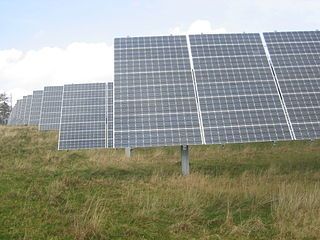
Like many consumer goods and commodities, a higher price tag does not necessarily indicate a “superior” product. Rather, a higher cost might be a reflection of the uniqueness of an artisanal product, high demand combined with low availability or even a higher price associated with a fashion, trend or novel product. When discussing photovoltaic (PC) modules, however, this question is based on two assumptions. First, that higher-priced PC panels are American-made as opposed to the common less-expensive Chinese products flooding the market and second, that the more expensive panel produced in the US is more reliable, efficient and technologically superior to its Asian competitors. As the reader will discover later in this article, these second questions are not as straightforward as they appear either.
What Are PV Solar Panel Prices?
As PV Panel Guide indicates, overall PV prices have generally decreased — and technology has improved — since the Sharp Corporation of Japan developed the first “viable” solar panel in 1963. There have been hiccups. Last year, ThinkProgress.org’s website Climate Progress published an article bemoaning the falling prices of PV panels. The article’s author explained that the price for photovoltaic panels had continued to decrease even as the US and some European countries put trade controls — such as tariffs and fines — into effect against the nation serving as their primary manufacturer, China. An accompanying graph showed a decrease in the price of c-Si PV prices from $2.75 per watt during the first quarter of 2009 to approximately $1.00 per watt in the third quarter of 2012. However, PV-Magazine now proclaims “the end of photovoltaic module price declines” based partially on a higher demand for PV modules with the most advanced technologies. There is no differentiation in the prices of US versus Chinese modules.
What Factors Determine PV Solar Panel Prices?
According to the PVPanel Guide, panel prices are determined by many factors with the following considered the most influential:
Their Power Rating Output in Watts with a strong positive correlation to price.
Their Efficiency Ratings, noted as 11 to 21% for domestic panels, with a positive correlation to price
Their Manufacturer with the larger multinationals’ mass production capacities with a strong negative correlation to cost.
The technology upon which a PV module’s construction is based. Essentially, the customer pays more money for the best energy efficiency.
Four common photovoltaic technologies:
Single Crystalline – The oldest, most efficient and most expensive technique with an average module efficiency of 10 to 12 percent.
Polycrystalline (or Multicrystalline) – Less expensive to manufacture with a lower conversion efficiency of 10 to 11 percent.
String Ribbon Solar Cells – This is an even less expensive technique to produce than polycrystalline with an efficiency average of seven to eight percent.
Amorphous or Thin Film – Silicon vapor is applied to modules in a thin film, making this technique the least expensive of all types and providing an efficiency of five to seven percent.
Does a Higher Price Indicate Greater Efficiency?
Higher priced solar PV modules do provide increased efficiency as a function of their production type, which varies by company, and not necessarily the country of origin.
Does a Higher Price Tag Indicate Greater Reliability?
There is no real correlation between the cost of a PV solar panel and its reliability as reported in the literature. As PhotovoltaicModules.org indicates — although details vary — solar panels are made to withstand the elements. Many modules are said to come with guaranteed warrantees for an “electrical production for 10 years at 90% of rated power and 25 years at 80%.” Further, regardless of the country of origin, most retailers of PV modules and domestic installation companies offer warranties through their US outlets.
A Question of Correlation: Does “Made in the USA” Mean American-Made?
Purchasing the most expensive solar PV modules does not guarantee that the module is American-made or even that it was assembled within the United States. According to Green World Investor, a Solar Panel can be labeled as “Buy American” if a “substantial portion” of its manufactured value takes place in the US. What constitutes a “substantial portion” is not explained. Moreover, even “the most successful US Solar Companies — First Solar and Sunpower (now Total) – have always had the majority of their production outside the US in Asia.”
About the author: Renewable Energy Corporation is a residential and commercial solar panel installer serving the Mid-Atlantic region of the United States. Visit Renewable Energy Corp’s website to learn more about American-made solar panels and the cost of switching to solar.
In this piece I just wrote on economic incentives for wind, I suppose I should have pointed out this obvious fact: most of the people calling for an end to the subsidies for wind are, in one form or another, rooted in the vast profit structure of the fossil fuel industries. The energy policy they support is not the fair-minded, market-driven approach I discussed, in which the externalities (damage to human health and the environment) are “priced in” to what we are paying for electricity from, for instance, coal-fired power plants. In fact, it’s the opposite; in the main, they are bitterly refusing to deal with, or even acknowledge, the catastrophic effects of their operations.
First, turning these incentives on and off, and the uncertainty that this process breeds, is a huge deterrent to the capital formation necessary for a profitable and efficient wind industry. But at least as damaging to the overall benefit of wind is the fact that the grid’s ability to accept more energy from this source varies hugely from one location to another. The idea that bureaucrats will come up with a plan that will provide sane, long-term incentives for the wind energy industry to do the right thing is fanciful at best.
This serves as another reminder of the value of letting market forces work themselves out. Imagine a truly market-based approach:
Want to burn coal? No problem, just pay the full costs, including the damage to our lungs and natural environment. If that’s unacceptable, don’t burn coal. It’s the same thought process that we use when we buy a new car or a bottle of wine: if the price is too high, we look elsewhere.
Want more nuclear reactors? Fine, but don’t ask the tax-payer to subsidize them by paying the insurance premiums, dealing with the waste for the next 500,000 years, and covering the many other costs that come as a direct result.
Pretty soon (i.e., immediately) the cost of solar and wind – as well as geothermal, biomass and hydrokinetics) look quite attractive. Having said that, don’t look for government support if you want to build wind farms in Oregon, where the availability of hydro is enormous and the cost of base-load and dispatchable energy for peak conditions is very low.
It would be interesting to see Adam Smith’s “invisible hand” at work in the energy markets, in a world without artificial supports.
When we look at the people whose life’s work revolves around improving conditions for humankind, we observe that most of these individuals are not wealthy. Not only are their endeavors not focused on profit, but in many cases, their efforts actively fly in the teeth of the most profitable industries on the planet – whether that means Big Energy, Food, Pharma, Medical, etc.
That’s what makes Elon Musk’s story so remarkable. As you listen to this interview, which he did last month for one of the fabulous “Ted Talks,” note the thinking that motivated all this: “While I was in university, I realized that sustainable transportation and energy was the biggest problem we need to solve in this century.”
Here’s a guy who’s taken on humankind’s greatest need (ironically, one whose importance it greatly underestimated) and has created some extremely successful businesses built around solving it. I’m hoping there’s a lesson to be learned here for all of us: “doing the right thing” and “making a buck” are not necessarily mutually exclusive.
Here’s a terrific piece on climate change, which contains a very powerful infographic, and makes the point that it’s wrong to include this phenomenon as an “environmental problem.”
Say what?
Unlike other pollutants, e.g., particulate matter that falls out of the atmosphere in a period of weeks or months, carbon dioxide stays in the atmosphere for decades or centuries. We’re not talking about “additive,” but about “cumulative” effects.
I’m reminded of a high school biology paper I wrote on noise pollution, in which I concluded that this was a negligible issue, since it would cease to be a problem the very second that we stopped creating it. My teacher found my reasoning to be cavalier — but I still maintain that I had a decent point there.
The real issue with CO2 in the atmosphere is that bringing its concentration down to 350 parts per million, i.e., where scientists say it needs to be if we are to avert catastrophe, requires both aggressive reductions in fossil fuel consumption (which accounts for 80% of the contributions) as well as a significant amount of time.







 A Question of Correlation: Does a Higher Price Tag Indicate a Superior Product?