After a terrific presentation by my friends at the Eleos Foundation yesterday, I met a gentleman who helps small companies get off the ground by pre-selling their products into the market.  Now there’s a kindred spirit.  In my experience, too many newly formed companies sit around whining about the lack of investor support and engagement, then haphazardly enter the market with no real-world testing of their business concept.  This gentleman (and I) recommend killing both these birds with one stone.

Get out there and sell!

Here’s a conversation I often have with my clients:

If I told you that you could have either a) $5 million in investment capital, at the expense of 70% equity in your company, and a venture capitalist breathing down your neck until the exit strategy materializes, or b) $5 million in purchase orders from credit-worthy customers, while retaining 100% equity in your company, and garnering precious insight into your marketplace, which would you choose?

It really is the ultimate no-brainer; it just takes a little hustle.  Please let me know if I can be of service here.


Tagged with: , , , , , , ,

I have a warm spot in my heart for almost all the clients I had as a marketing consultant, and I always smile when I come across a client company that has been awarded a nice new contract.  Here’s an article that describes ABB’s (an old market research client) 145 kilovolt, 100-mile-long undersea cable. Unfortunately, the electricity (up to 55 megawatts) is going to power an oil and gas field. 

Oh well.  If you’re going to be in the oil and gas business anyway, transmitting electricity from the grid is actually better for the environment than generating it on site.  And maybe next time their customer will be in some other, more benign industry.  

Tagged with: , , , ,

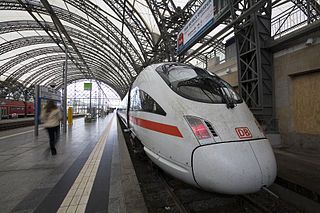
Here’s an article co-written by environmentalist superstar Bill McKibben that speaks to the need for better public transportation.  The authors point out that transportation generally contributes 27% of the total greenhouse gas emissions.  Since transportation is 98%+ based on gasoline and diesel, it comes with a huge price tag in terms of not only CO2 but damage to our lungs and our ecosystems, and carries threats to our national security as well. 

The article argues for a 3-step mass transit program to “help our communities thrive, protect our climate, and promote human health.”

But what about the cost of a massive improvement in public transportation?  Who’s going to pay for this?  Isn’t it common knowledge that our government is broke?  (more…)

Tagged with: , , , , , , , , , , , , , ,

Here’s a preview of an interview with Bernie Sanders on the subject of media consolidation.  Our Federal Communications Commission (FCC) is in the process of further loosening the regulations that surround cross-ownership of various media types: radio stations, television channels, newspapers, etc.   The result will be tighter control and greater homogeneity of everything we Americans hear, see and read.  (more…)

Tagged with: , , , , , ,

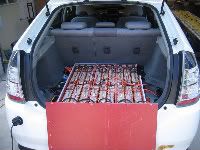
It’s good to see the public and private sectors working together.  Here’s a story announcing the U.S. Department of Energy’s five-year, $120-million award for a team of 14 companies, universities and national laboratories.  The project will be led by Argonne National Laboratory, and will aim to develop advanced battery packs for electric vehicles.

Having next-gen batteries for electric transportation will be nice, but the key from an environmental perspective will be figuring out how to charge them without burning coal.  Of course, if the project is successful and develops a solution whose cost is sufficiently low, the packs can be used to store off-peak wind and solar.  That will be a happy day for humankind. 

Good luck to the team; I hope the relationship will be cooperative, amiable and productive. 

Tagged with: , , , , , , , , , ,

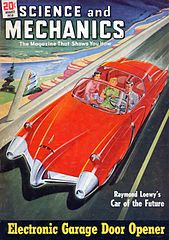
Here’s a neat infographic that presents these folks’ idea of the car of the future.  No doubt there are some good, futuristic ideas here that differentiate this thing from what we have now, but I don’t believe this is the direction we’ll be taking.

In particular, this follows the auto paradigm of the 20th Century: a big heavy and bulky box on four wheels.  I envision a wholesale shift in paradigm, where car ownership becomes far less prevalent, and is replaced in the main by a network of transportation solutions: mass transit, car sharing, ride sharing, e-bikes, ultra-small vehicles for urban commuting and package delivery, etc.  Note that a few of our listings in our cleantech investment opportunities centers around transportation.

I also predict that, despite the stranglehold that the oil companies have on us, we will eventually break free.  The concept that the car depicted in the infographic runs on gasoline refined out of gooey, planet-killing tar sands seems absurd.

Tagged with: , , , , , , , ,

As we frequently discuss, the real low-hanging fruit when it comes to greenhouse gas reduction lies more in energy efficiency than it does in renewables.  Efficiency invokes largely proven and inexpensive technologies, and holds the promise of putting many millions of people to work deploying them. 

To make all this even more exciting, the modern Internet-driven world is making the results of these efficiency solutions more striking by the day.  This is largely a product of the use of information technology: sensors to gather data, and software to analyze it and make decisions based on it.  Sensors in our roads, appliances, cars, power generation equipment – in essentially every physical object in our daily lives — all collect data, the net effect of which is reduced power consumption. 

Here’s a good article describing GE’s transformation away from gadgetry and into analytics


Tagged with: , , , , ,

I just participated in a real-time webinar, a live broadcast from the COP-18 meetings in Doha, Qatar.  Here are my notes:

• In the past few years, over 30,000 peer-reviewed papers have been published on global climate change, only 24 of which challenged the notion that human activity is causing this phenomenon.

• We have seen substantial progress in renewable energy.  In 2006, only 3.5% of the world’s energy came from renewable resources; now that figure is 20%.

• We can and must embrace a low-carbon economy, putting people to work in building and deploying solutions in energy efficiency, clean energy, alternate fuel transportation, etc.  Certain industrial giants, e.g., GE and Siemens, are actively embracing this change.

• The world needs a vision of a future in which we consume 0% fossil fuels.  (more…)

Tagged with: , , , , , , , , , , , , , , ,

Here’s an interesting (albeit disappointing) article predicting a slowing in cleantech investment in 2013.  On the bright side, it points to a number of areas of growth, for example, agriculture: 

Big ag steps up and cleans up: …. after evaluating hundreds of companies around the world, we found and profiled 57 with important new clean agricultural science (more…)

Tagged with: , , , , , , , , , , , , , , , ,

Fans of highly efficient internal combustion engines will be interested in this: a modern-day variant on a Wankel rotary engine of 50 years ago.  By firing 16 times per revolution, it achieves extremely high torque in a very small volume; thus the name “MYT” or “Massive Yet Tiny.” 

Tagged with: , , , ,