
NRDC Has a Good Feeling About New U.S. Energy Secretary

 Ever since I interviewed Natural Resources Defense Council (NRDC) ace Johanna Wald for my first book (Renewable Energy – Facts and Fantasies), I’ve had only fond respect for what these fine folks do: use the legal process to protect the natural environment. And of course, this often takes the form of building a level playing field on which renewable energy can compete fairly with fossil fuels.
Here’s an article by Peter Lehner, Executive Director of NRDC, which suggests that the new Energy Secretary, Ernie Moniz will be terrifically effective at promoting energy efficiency and renewables in President Obama’s second term. He mentions that, despite the politically-motivated rancor around the failure of Solyndra, the Department of Energy has a 98% track record of success in backing efforts in clean energy, and should be supported and expanded.
 Here’s an
  Hurricane Sandy was one of the deadliest and costliest hurricanes to ever strike the United States. Images of flooded subway tunnels, destroyed boardwalks, and millions without power will not soon be forgotten. The storm was also a reminder for people all over the United States, but particularly along its Atlantic and Gulf coasts, of the terrible impact a storm like Sandy can have on properties. Because of Sandy’s unique combination of damage from both wind and water, homes suffered massively, which helped make Sandy the second costliest hurricane in United States history. Here we will take about how wind and water are a double-threat to homes in any major storm’s path.
  Here’s a very scholarly publication documenting a
  Here’s an article that suggests that a
 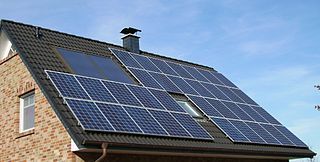 Now more than ever, individuals and businesses alike recognize the importance of reducing the amount of energy we consume on a daily basis in order to better maintain our global environment. Engineers and researchers have discovered that one of the most effective ways to do so is by changing the way we construct our indoor environments. According to the Center for Climate and Energy Solutions, our everyday use of buildings accounts for 39% of total U.S. energy consumption and 38% of carbon dioxide emissions.
 Here’s an
  I just spent an hour doing something I normally skip: I participated in a comprehensive webinar from
  2GreenEnergy supporter Cameron Atwood sent me this


