With more homeowners subscribing to a green lifestyle, finding an eco-friendly home isn’t nearly as difficult as it once was. While few homes can claim a zero carbon footprint, many factors will keep a house low-impact. When house hunting, here are some factors to consider.

1. Location, Location, Location

Location isn’t just about being able to stamp a flashy ZIP code onto envelopes. Location says a lot about lifestyle, and environmental impact as well. Cities, for instance, are often lauded for their strategic use of space, and many boast leading green initiatives, such as rooftop garden projects.

The same mentality can be applied to homes in the suburbs. In rural areas, seek relatively dense neighborhoods with smaller homes. Large yards allow residents to plant sustainable gardens. Look carefully, at the aspect of a home– the way a home is positioned on its plot of land. Nearby trees on the sunny side of the house help shade the house in the summer, thereby lowering cooling costs. To source the best house location, use an online property search site, which can give you a good sense of location details before you set foot on the property.

2. Energy Star Appliances

The biggest energy costs inside a home are often attributed to its appliances. In fact, refrigerators, microwaves, air conditioners, heaters and dishwashers alone account for more than half of the average family home’s energy costs per year.

The U.S. Environmental Protection Agency (EPA) provides an excellent online resource for identifying energy-efficient appliances. The agency also applies Energy Star labels directly to approved energy-efficient appliances to assist buyers with their purchases. Look for their seal of approval on appliances during open houses, ask sellers directly about Energy Star status or jot down names and model numbers to research them later online. Note that not all appliances are sold with a home, but terms can be agreed upon during negotiations.

3. Strategic Heating and Cooling

Together, heating and cooling are two of the biggest contributors to a home’s footprint. Buyers looking for a home that heats and cools in a sustainable fashion should consider these three contributing features.

Energy-efficient windows. Double-paned windows are no longer the best on the market. The EPA now recommends low-emittance(low-E) windows, which are coated with a thin metallic glazing to prevent radiative heat flow, i.e., the loss of heat in either direction. When house hunting, look for low-E windows and avoid homes with single-paned windows.
Eaves. For hot climates, look for homes with eaves that cover any parts of the home that face the sun, effectively working much like shading trees.
Insulation. Many homes do not have proper insulation, primarily in the roof, where the majority of a home’s heat is lost. A green home will also have insulation in the walls.

4. Alternative Energy Sources

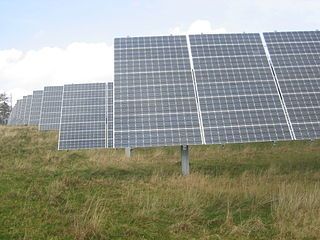
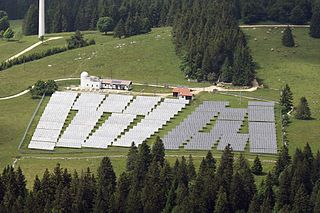
Purchasing a home with solar panels is a BIG bonus.. Solar panels can entirely green a home’s powering and become a revenue source. In sunnier climates, homeowners may be able to sell extra energy back to the grid. While solar panels are becoming more popular, they’re still not all that common. Throughout the house hunt, look for flat, unobstructed places on a home’s roof where panels could be installed at a later date. The cost may be significant upfront, but homeowners will see a significant return on their investment. Expect years of energy savings and government (local, state and federal) rebates and incentives.

5. Savvy Use of Water

The way in which a home uses water plays a key role in determining its green status, particularly in drought-prone areas. A few things to consider:

Low-flow toilets, shower heads and faucets. Toilets alone account for around 14 percent of an average home’s water usage. Look for low-flow toilets that rely more on gravity than water for flushing. Use faucets and shower heads with EPA WaterSense labels to significantly reduce consumption.
Rain barrels and grey water systems. Truly green homes use rain barrels in the yard or grey water irrigation systems to redistribute excess water from showers and laundry cycles to outdoor plants.
Solar hot water systems and heat pumps. From hot showers to sanitizing dishwashing cycles, electric hot water systems contribute as much as 20 percent to a home’s carbon footprint. Look for a passive or active solar hot water system, which uses the sun’s power, panels and evacuated tubes to heat water, or geothermal heat pumps.

Takeaways

There are countless ways that a home can be “green.” When house hunting, focus on homes with green potential rather than green perfection. Buyers should ask sellers about the environmental footprint of the home. Some homes are LEED-certified upfront.. Don’t forget to bring along a green professional to check on the seller’s claims. Consider these tips when house hunting for the ideal green home.

Author Bio
Luke Clum and Tali Wee collaborated on the above article. Luke works as a designer and writer in Seattle, Washington. Tali blogs in the northwest and handles Miami community outreach for Zillow.

 

Tagged with:

Have you ever honked at that guy who seems to just inch idly towards a red light, or who takes their time to accelerate once the light turns green? What about that jerk who seems to drive on the side of the road, never breaking the speed limit, despite cars whizzing by all around them? If so, then you might have just given your stamp of disapproval to what is known as a hypermiler — someone who is simply trying to do their part for the earth, stretch their gas usage, and save A TON of money in the process.

According to Mother Jones News, hypermiling can help you achieve 40 percent more miles per gallon than you would normally, allowing devout hypermilers to produce even less of a carbon footprint than many hybrid drivers.

How Low Can You Go?

Wayne Gerdes is held as the messiah, of sorts, to the hypermiling community. Having coined the term, he steers the helm of hypermiling community news, tips and training. Gerdes currently holds the record, having driven 1,445 miles on a single tank of fuel in a 2010 Ford Fusion Hybrid. At 81 mpg, he more than doubled the 39 mpg EPA rating. While he may be an extreme case, if everyone made a painless effort to adopt some of his techniques, the environment would applaud and our reliance on foreign oil would be lessened significantly. “Hypermiling not only makes you a more aware driver, but it also produces fuel savings that few other methods or practices ever will,” remarks Gerdes in Mother Jones article.

Nationwide hypermiling practices could not only reduce gas costs and reliance, but it would also create less toxic soil and air. According the the EPA, there are over 1,066 toxic chemical sites in the U.S., and over 11 million people are exposed to them. Companies like Sevenson Environmental carry the burden of cleaning up the worst of them through remediation, but lessening everyone’s toxic burden should be something we all strive to do.

Maintenance & Minimizing Mass

Every little bit helps. Scheduling regular maintenance for your car is of the utmost importance when it comes to saving gas. Low tire pressure can increase the resistance of your car by 1.4 percent for every 1 psi drop in all four tires. Using low weight motor oil and monitoring engine function is also an essential part of keeping your car primed. Jettisoning any excess weight also helps, from your camping chairs to your equipment racks, the lighter you make your car, the more it will thank you.

Stop and Go

Perhaps the practice with the most impact: learn to stop and go with ease. Because speed increases wind resistance, taking off like a bat out of hell causes your engine to work excessively harder, burning gas needlessly. The same goes for braking. Braking should be done with extreme ease. Every time you brake you’re wasting some of the gas you used to to accelerate. Improper braking alone can reduce your gas mileage by up to 33 percent. Yikes!

Don’t Be an Airhead

Reducing air conditioning usage can increase fuel efficiency by up to 25 percent, as the air burns gas like a brush fire in a match factory. Gerdes recommends cracking the driver’s window in front and the rear passenger’s window on the opposite side, which causes less drag. For high speeds he recommends closing the windows and using the fan/ventilation system.

Hypermilers definitely have something going for them — the savings are monumental and it’s probably one of the easiest things you can do to make a substantial environmental impact, advancing yourself into the realm of “true” environmentalist and retiring your armchair status.

Tagged with: , , , ,

I just published a short post on the article: U.S. Air Force Report to Congress Bashes Navy’s Biofuels Program in which I mentioned that I find the people who presume to tell the U.S. Navy how it should be planning to defend our country 30 years hence to be “sadly comical.”  

Having said this, I will be surprised if biofuels has a long-term future. Helping my son with his botany this semester has reminded me how little of the energy a plant absorbs from the sun can be made available for human benefit.  I predict that PV, CSP, and wind, which are more direct and efficient ways to capture solar energy will win the day. 

To the degree we need liquid fuels, I believe that synthetic fuels will emerge to make this happen.  And coincidentally, I had an email exchange with Dr. Doty (the developer of WindFuels – syn fuels from off-peak wind) earlier today.  I remain bullish on what he’s doing. 

Tagged with: , , ,

Frequent commenter Tim Kingston sent me this piece: U.S. Air Force Report to Congress Bashes Navy’s Biofuels Program and notes:

Interesting commentary from Robert Rapier on a new report written by a navy captain absolutely savaging the navy’s Green Fleet program in particular and biofuels in general.

Thanks, Tim.  Yes, Robert’s a good guy; I’ve enjoyed our conversations through the years — and this is a hot issue.  That these people presume to tell the U.S. Navy how it should be planning to defend our country 30 years hence I find sadly comical.  Yet there is nothing even remotely funny about the  fact that the leading Congressional opponent to the Navy’s effort was elected almost exclusively with money from the oil companies.   

Thanks for the note. 


Tagged with: , , , ,

My 14-hour work day consisted mainly of a drive to and from the San Francisco Bay Area for three key meetings, the content of which I’ll share briefly. 

I attended several sessions at this year’s Green Grid conference, which focuses on reducing energy cost and eco-impact of large data centers.  The most impressive presentation for my money was delivered by Google.  To put the whole thing into perspective, here’s a company that indexes 30 trillion URLs, delivers the results of 3 billion search queries per day, and does all this and so much more with 100% carbon neutrality.  What they’ve done in reducing energy consumption and sourcing renewable energy is truly inspiring. 

For lunch, I met my colleague Rich Breitbarth, COO of Resource Recovery Corporation; the company specializes in a variety of cutting-edge renewable energy technologies including a unique approach to the thermal anaerobic gasification of biomass.  I’ve introduced Rich/RRC to five parties over the couple of years we’ve known one another, and they’ve  gained significant levels of traction with three of the five; I’m confident that at least one of these deals will materialize over the next few months.  Exciting stuff.  We ate here; how this place only gets 3.5 stars on Yelp is beyond me; I thought it was incredible.  Perhaps the comments that warn: “Don’t go during prime lunch hours because the line is out the door” are telling; yes, the place actually is packed, but that’s a good sign. 

On the way home I went to visit my much-respected friend Jeff Brothers at his new offices in Carmel.  Jeff”s company Sol Orchard is a savvy solar energy developer of significant proportion, and I always learn a great deal from our talks.  This quote from his website speaks to his down-to-Earth pragmatism and good sense:

Global capacity for solar panel production has increased dramatically in the last three years, bringing panel prices down by over 40%. The combined effects of increased tax incentives, decreased costs, and rising concern over global warming have created a “perfect storm” of opportunity to build and finance cost-effective solar power projects.

Three good meetings, but a fair chunk of driving.  Happy to be home.  


Tagged with: , , , , , , , , , , ,

We hear a lot about grid parity, don’t we?  That’s the point at which the cost of energy generated by solar, wind, and other renewables is the same as that generated from conventional sources.  The author of this article on Sharp Electronics new 43.5%-efficient solar cell writes:  “Sharp shattered the efficiency record with its concentrator triple-junction compound solar cell, which uses a lens-based system to focus sunlight directly onto the cells in order to generate electricity.”  Then he adds, “This latest breakthrough puts solar power one step closer to grid parity.”

I’m not complaining, btw.  The mere fact that the term is rapidly becoming a part of the world’s everyday lexicon is proof that more people are tuning into this important discussion.

And let’s not ignore the elephant in the room:  In energy, cost is a very big deal.  2GreenEnergy Associate Dr. Peter Lilienthal, whose software is used to integrate renewables onto grids in more than 80 countries, once told me, “If you don’t care how much you pay for it, I’ll find you all the clean energy you could use in a thousand lifetimes.”  The guy has a way with words.

In any case, grid parity here we come.


Tagged with: , , , , , , , , , ,

Here’s an extremely bullish report on the future of the solar industry from Deutsche Bank, suggesting that the PV industry will be able to stand and grow solely on its own (without government support) by 2014.  Such growth, in the face of continuing price declines in modules and balance-of-system will soon put solar at grid-parity, the point at which an incremental megawatt of solar comes at the same price as a megawatt from other forms of electricity generation in the region. 

Of course, “grid-parity” is a mercurial concept.  So much depends on the region of the world in question; we’re already at grid-parity in certain nations whose energy pricing is high and competitive resources are low. 

In any case, this extremely upbeat report is at odds with the viewpoints of Esplanade Capital’s Shawn Kravetz, whom I interviewed for our recent 2GreenEnergy.com webinar on the solar industry, during which he expressed cautious optimism, as certain factors begin to revert from the precipitous decline the industry has experienced of late.   Of course, Shawn is conservative in the extreme.  To quote what he told me when I challenged him on a certain issue, “I get paid to be pessimistic.”


Tagged with: , , , , , , , , , ,

For people who wish to live greener and be less financially dependent on society, the American market at least gives people the advantage of many options. A person living in many areas can choose who provides their electricity. If there are several power plants around, then customers can decide who they want to spend their money on. Just as people listening to music can sponsor one artist over the other, electricity consumers can decide to patronize greener solutions.

Some Energy Sources Pollute More than Others

Human beings have found many creative ways to make electricity, ranging from dams to coal plants and nuclear plants. Each leave their footprint on the earth, although most people figure they cannot live without power. Electricity runs our modern appliances and also keeps us warm in cold weather. In comparison, our recent ancestors had to burn wood or coal in their homes to provide warmth. This released soot and fly ash into the city. Modern coal plants pump out large amounts of carbon dioxide, but the soot and fly ash are scrubbed out and even recycled as a building material. Many power plants burn petroleum, adding to our dependence on fossil fuel.

 Why Nuclear Power is Not Perfect

For a long time, energy advocates promised that uranium and plutonium could eliminate the need to burn coal. Nuclear power plants need large quantities of water, but do not release any carbon dioxide. There is no fly ash, because the only thing coming out of the wide smoke stacks is water vapor. While nuclear plants eliminate the mass release of toxins into the environment, plutonium and uranium eventually get too hot to be used. They must go through an expensive cool down cycle that can last for years. If spent nuclear fuel is not cared for, it can release radioactive particles into the environment. Compared to coal, the cost of operating a nuclear plant is enormous.

Dams are a Mixed Case

Many regions use hydroelectric dams to provide electric power. A handful of dams such as the Hoover Dam provide two thousand megawatts of power each. Dams do not need any specific resources except for a continuous supply of water, and they have the side benefit of creating wetland habitat and controlling flood water for people. They require less maintenance and less money than most other ways to generate power, but they are not problem free. Dams can create a great deal of organic matter which releases carbon dioxide. Dams block rivers and silt accumulates over time. If the water of a dam drops down too low, then it cannot generate power.

Solar Power and Wind Turbines

Some cities are experimenting with alternative energy. They take advantage of solar energy and wind turbines, exploiting the natural windiness of their area. Places with high elevation or near the sea can expect a steady stream of wind. This is sufficient for towns, and wind turbines can supplement the electric need of metropolitan areas. Solar panels take a lot of energy to make, but new ideas such as mirror arrays are creating new potential.

Putting It Together For You

Whether an energy source is good or bad for the environment depends on the practices of the company. Some coal plants do a lot to keep their act clean while some electric dams disregard wildlife. In areas where multiple sources of power are available, it pays to do research and see what company practices are. If none of them work for the consumer, then it is always possible to take charge and generate at home. The law allows this, and many power companies will actually pay people who run a surplus.

Author bio

Natasha Risinger blogs about energy. Her articles appear on various sites including business related blogs and eco blogs. Visit http://www.texaselectricityproviders.com/business-electricity-texas/Texas/for business electricity rates.


Tagged with: , , ,

Often times the high investment costs with going solar deter people from making the switch.  Now, however, there are alternatives that do not require the initial lump sum payment.  For example, solar system leasing and Power Purchase Agreements (PPA) are two ways to go solar with little money down, manageable payment plans, and options to purchase the system later on.

LEASING

A solar system lease allows customers to lease solar panels and to pay the solar energy company who installs them a reasonable price per month.  The majority of solar leases range from 10 to 20 years and offer the option to renew the lease for a specified time or purchase the system at market value when the lease is up.  An additional benefit of solar system leasing is that it increases the value of the home.

PPA

Another option available is the Power Purchase Agreement.  A PPA is basically a long-term contract to purchase power from an energy company, usually at a reduced price.  The PPA option offers the bonus of allowing homeowners to only pay for the energy the system produces.  Also, some companies include regular maintenance and upkeep as part of their PPA services in addition to installation.  A PPA, like solar system leases, typically lasts anywhere from 10 to 20 years.  The specifics of PPA offerings can vary and the terms of each contract may differ, but generally-speaking a PPA will lay out the initial low entry cost, an electricity rate schedule, and a yearly escalation rate to adjust for fluctuations in energy costs over the period of the PPA.

A CLOSER LOOK

When deciding whether solar system leasing or a PPA is right for you, you may want to consider a few additional factors.  First, solar system leasing requires customers to pay a monthly fee rather than pay for the amount of power generated on-site like a PPA does.  It is also important to note that a PPA allows an energy company to set an electricity rate that is flat but can increase as the years pass, whereas an energy company can set the lease payments for solar system leasing and also charge for any extra power that is required from their company.  Although there are subtle differences, both options provide excellent ways to go solar with a low entry cost.  To determine which route is best suited for you, contact a solar installer in your area today!


Tagged with: , ,

As discussed here, the widening divide between rich and poor has meant that new cars are unaffordable for an ever-increasing segment of the American population.  At the risk of sounding like Marie Antoinette with her fatal “let them eat cake” remark, new car ownership isn’t all it’s cracked up to be.  In fact, I’m among the growing number who believes that car ownership is destined soon to become an outdated extravagance that a growing number of people, especially young folks, are beginning to question seriously.

As my friend and transportation visionary Dan Sturges likes to say, “Car ownership costs the average family about $40 per day — a figure that most of us grossly under-estimate.  I only wish there were a ‘car guy’ who came around every day, seven days a week, to each of these families, knocked on the door, and said, ‘Car Guy.  $40 please.’  Most of us would soon start to ask about alternatives:  car sharing, mass transit, ride sharing, small commuter cars, etc.”

In my estimation, this is exactly where transportation is going: a complete paradigm shift in the direction of a cleaner planet and a more affordable way of life.


Tagged with: , , , ,