Everyone these days is worried about global warming and the depletion of the ozone layer, but what are any of us doing to stop it? Pollution levels to our environment are at an all time high, but awareness is rising almost as fast as that pollution level. We know about the problem, but do we know about the solution? Take a look at this article that maps out a few ways that anyone can help to reduce the pollution that is destroying the environment that we live in.1. What car do you drive?
If you say you are concerned about the environment but then drive off into the sunset in your Hummer H3, you might need to reevaluate your priorities. Sell that gas guzzling vehicle and trade it in for a smaller car that has lower gas mileage, but also works for the functional purposes in your life.2. Do you really need to drive there?
Even if you do have a car with low gas mileage, it is still a detriment to the environment if you drive it hundreds of miles a week. Try to think of the times where you can walk or bike to where you are going. It will give you a little extra exercise while helping to save the environment.
3. Recycle, both conventionally and non-conventionally.
The first step to this suggestion is making sure that you are putting plastics, glassware, and paper products in your recycling bin. Whether you live somewhere that picks up recycling curbside or somewhere that you have to take your recycling somewhere yourself, take the time for your environment. Aside from conventional recycling, try to incorporate up-cycling into your life. Take things that you would normally throw away and find new uses for them.
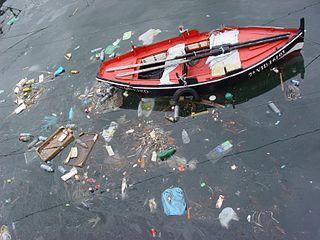
4. Don’t litter!
This one seems life a no-brainer, but the amount of litter that sits on our streets has come to an appalling level. Make sure that, when you have trash, that it goes in the trash can. Also, you can start trying to pick up after others who do not care about the environment quite as much as you do. If you see trash laying on sidewalks or streets, try to be a good Samaritan to the environment and pick up the trash that you see. The environment will thank you!
Keep in mind that these are only a few of the hundreds of thousands of ways that you can keep our environment healthier.
Author Jason Harter is a healthcare administrator in the sustainability department of his hospital. Not only does Jason’s hospital make it a priority to run the hospital sustainably, but also promote green lifestyles to patients as a way to increase their health. Jason obtained his degree from one of the Top 10 Best Online Healthcare MBA Degree Programs
Whether you are headed to the office or the grocery store, walking doesn’t always cut it. Some modes of transportation are better than others, especially when it comes to keeping your carbon footprint low.
Scooters – Not as Environmentally Friendly as You Thought
Many people today are getting scooters because they think they are ‘greener’ than almost any other option. Unfortunately, this is not always the case.
If you travel 12,000 miles in a year, and get 80 miles per gallon, it emits about 2943 lbs of CO2 per year. It would use 150 gallons of gas. If you use 1 quart of oil per oil change, and change the oil every 3,000 miles, you will use 1 gallon of oil per year. VOCs (PM10, NOx, and SOx) are about 2,500 milligrams/mile.
It has been shown that motorcycles are more fuel-efficient than cars. However, this does not necessarily mean that they are better for the environment.
If you travel 12,000 miles in a year, and get 40 miles per gallon, this emits about 5887 lbs of CO2. It uses about 300 gallons of gas.
If you use 1 quart of oil per oil change, and change the oil every 3,000 miles, you will use 1 gallon of oil per year.
VOCs created by this motorcycle would be about 6,800 milligrams/mile.
Car manufacturers are taking emissions and fuel efficiency into account more. The older the car is, the worse emissions it will have.
An average car that travels 12,000 miles in a year, and gets 25 miles per gallon emits about 9,420 lbs of CO2 per year. This car would use 480 gallons of gas.
If you use 2 quarts of oil per oil change, and change the oil every 3,000 miles, you will use 2 gallons of oil per year.
Volatile Organic Compound (VOCs) created by this car would be about 1,200 milligrams/mile.
Do you work a long distance from your home? Get a carpool going; this will help create less carbon emissions, due to fewer cars on the road. Insurance is important when you have a carpool, check AutoInsurance.us rates by state for the best deals.
Cutting down your carbon footprint is important. Making sure that your mode of transportation is ‘green’ is one of the many ways you can do your part to help improve our environment.
Shaun Chatman is a well published author on many authority sites. He lives in Dunedin, FL, and spends his free time playing with his kids or advising friends on tech, gadgets, finance and travel.
If man-made carbon dioxide emissions were not as big of a problem as it is now, then the Earth would be a lot cooler than what we’re experiencing today. The recent rise in temperature has lead two US-based researchers to conduct a study about reconstructing the climate history of the Earth.
Their study, which was published in the journal Science, stated that the planet today is warmer than it has been during 70% – 80% of the time throughout the Holocene year period which is 11,300 years. The study also projected that by 2100, global temperatures would have broken the record of the warmest temperatures ever recorded during the Holocene – this includes all plausible greenhouse gas emission circumstances.
Data Gathering
Shaun Marcott, a post-doctoral researcher in Oregon State’s College of Earth, Ocean, and Atmospheric Sciences and the lead author of the article said that the previous studies conducted about global temperature change mainly focused on the last 2,000 years and that going further into the past can put today’s climate into a larger context.
“We already knew that on a global scale, Earth is warmer today than it was over much of the past 2,000 years,” Marcott said. “Now we know that it is warmer than most of the past 11,300 years. This is of particular interest because the Holocene spans the entire period of human civilization.”
The researchers gathered data from 73 locations around the world for a much broader prospective. The team tried to reconstruct the past climates by examining isotopes from marine sediment cores, terrestrial sediments, and fossil data. From that, they assessed the trends of climate change from the beginning of the Holecene.
OSU paleoclimatologist and co-author of the Science article, Peter Clark said, “When you just look at one part of the world, the temperature history can be affected by regional climate processes like El Niño or monsoon variations,” noted Clark. “But when you combine the data from sites all around the world, you can average out those regional anomalies and get a clear sense of the Earth’s global temperature history.”
Results
As it turns out, the climate of the world is relative to its position relative to the sun.
“During the warmest period of the Holocene, the Earth was positioned such that Northern Hemisphere summers warmed more,” Marcott explained. “As the Earth’s orientation changed, Northern Hemisphere summers became cooler, and we should now be near the bottom of this long-term cooling trend – but obviously, we are not.”
Although the Earth has generally been warmer due to many man-made reasons, the study and almost every climate model predicts that by 2100, the average global temperature will be higher than at any point in time since the end of the Ice Age.
Tourism is an important part of the economy; it creates jobs and brings in outside money to a community. The problem is that by its very nature, tourism can be harsh on the environment as lots of energy and resources go into to the travel industry. The tourism industry is slow to change to green, or eco-friendly ways, however when it does, it does it in big ways. Here are some of the latest advances and changes the industry is making to be greener.
Airline Travel
Airlines are perhaps the sector of tourism most in need of renewable and eco-friendly practices. Change comes slow but as the price of fuel and other costs for the industry rises, thus causing ticket prices to rise as well, the airlines turn to renewable resources to help cut costs and lower ticket prices at the same time. Airports are moving toward using green and renewable materials for construction and maintenance of the facility. Many are adding solar panels and research into mass production of bio-fuel to replace conventional fuel is also underway.
Cruise Lines
Modern cruise lines are almost like small floating cities, they require a lot of power for engines, electricity, not to mention entertainment for the thousands of guests on each cruise liner. How can these floating marvels go green? One way is whilst docked in the port; they tap into local power girds so they burn less fuel to maintain electricity. Replacing engine and filters with modern more efficient models also helps cut down on fuel consumption, reducing the overall carbon footprint these ships have. The real innovation in renewable fuel for these massive ships is the almost unlimited access to wind and sun they have. The most advanced cruisers are being fitted with solar panels and wind turbines so they can generate their own electrical power without the need of fuel aside from engines. This will dramatically cut down on the amount of resources these ships need to function.
Accommodations
Large resorts from Las Vegas, to Disney locations, to anywhere in the world, all have massive power needs for lights and entertainment etc. and a lot of the attractions these resorts are known for all require a lot of power. Going green with renewable sources not only helps the environment, but many places are finding it helps cut costs and means lower prices and more business. Energy efficient appliances for the kitchens and laundry services are the most common preliminary step most resorts take. Replacing old lighting with compacts or LED lights is highly efficient and can cut down on power requirements. The major and most effective move to renewable power though, is a lot of resorts are installing solar, wind, or hydropower, to make their own energy.
Ski Resorts
Ski resorts have a unique relationship with the environment around them and are often the first to turn to green and renewable methods. Most are undergoing energy efficient refits and rebuilds with sustainable materials. Ski resorts are also the first to turn to solar, wind or hydropower production for their facilities to be more sustainable. Photovoltaic systems offer drastic benefits to the resorts and easy steps to renewable energy. Many responsible ski resorts are also members of green research groups and programs, for example, Aspen in the Colorado Rockies of the United States of America recently discovered how to make snow out of common dust, so they are not only recycling but this will also mark a significant decrease in need for water in the off seasons.
It may be that the tourism industry is moving towards renewable energy primarily for financial reasons, but the knock on effect for the environment is still positive, regardless of the motive behind it.
I’ll never forget one of the very first conversations I had with a cleantech innovator, shortly after the launch of 2GreenEnergy. I was in my office, speaking on the phone with Abe Collins in Vermont. Abe wasn’t an electronic engineer with a breakthrough in battery chemistry or photovoltaics; he wasn’t a fluid dynamics physicist with a set of calculations that would alter the course of the development of wind turbines or hydrokinetics. He was a simpler salt-of-the-Earth type, who claimed to have come upon a simple truth, and a technology for bringing the world’s ever-expanding deserts back into a healthy and usable condition. His secret (and I’m oversimplifying): running cattle on the land.
I listened intently, though, as this isn’t my field (pardon the pun) I really had no way of evaluating what he was telling me. Until now.
I urge you: check this out. I learned so much in 20 minutes, it was astonishing, and what’s more, now I’m completely convinced in the power of Abe’s idea. And I recall an additional detail from our conversation: Abe has developed a software package that will help the managers of large pieces of land to manage them with precision, maximizing the rate that they can be restored to their natural state – before man came on the scene, removed the native animals and their natural predators, and then proceeded to change the climate, further accelerating the process of desertification.
If you’d like to speak with Abe, just hit contact and let me know.
• Apparently, a proposal to grow a variety of huge beets as the feedstock for biofuels (perhaps the size of cantaloupes?) in California’s San Joaquin Valley is being reviewed favorable. It was hard to know what to make of this, as, last time I checked, the U.S. generally seemed dead set against using food as fuel, and some people (including me) believe that the overuse of the land, the environmental cost of water to irrigate, the ever-expanding use of chemical fertilizers and pesticides, and the erosion of topsoil make this a disaster from an ecological perspective.
• Some of these presenters are great supporters of California’s “cap and trade” program, where others are smart enough to see that it won’t work, and honest enough to say exactly that. We need regulatory certainty, and we also need price certainty. Here, only a carbon tax helps in any legitimate way. Cap and trade has a moneyed constituency behind it, and it is sure to make rich people and their lawyers richer. But if you actually care about a positive environmental outcome, it’s a sure loser. Too bad. The world looks to California as a leader in progressive thinking in sustainability – and this is the best we can do?
• One area in which California is doing well is leading in low-carbon fuel standards. But, predictably, the petroleum groups are suing the state up one side and down the other, and they may well win in the end. We heard at excruciating length from a presenter whose point, at the end of the day, was that this is held up in the courts, and that the decision, when and if it comes, will certainly be appealed. Good news for the oil companies, and fantastic news for the lawyers on both sides, but bad news for the rest of us.
• Dan Sperling of the University of California at Davis did a good presentation in which he laid out the history of what the Golden State has done vis-à-vis clean energy over a long period of time. He began with an “atta boy” for the state, in which he explained how California did a fine job in reducing air pollution in the late 20th Century, in a time in which Chrysler and Mobil were routinely running full-page ads in the New York Times, describing the state’s efforts as the “66 Billion Dollar Mistake.” Dan went on to talk about how, in a world in which the number of cars is rapidly heading from one billion to two billion, that petroleum is becoming more carbonized, i.e. the carbon impact of a gallon of gasoline is growing by the day, where the carbon footprint of electric vehicles is steadily falling.
On behalf of all of us who work to make renewable energy a reality, yet one more fond note of my sincere appreciation to Dennis McGinn, ACORE’s president, and his terrific staff for another excellent job.
There are those who think that renewable energy is overhyped, won’t scale, is doomed if federal incentives get whacked, etc. Just don’t tell Siemens. One of the world’s 50 largest companies, Siemens shows no signs of curtailing its commitment to wind; in fact, they’ve recently opened two major research & development test facilities for wind turbine technology in Denmark, including test stands for major components of wind turbines: generators, main bearings and complete nacelles (i.e., the housing that contains all of the generating components in a wind turbine, including the generator, gearbox, drive train, and brake assembly). Together, the two facilities form the world’s largest R&D test center for wind turbine technology.
Those who accept my recommendation to “follow the money” may want to ignore the disinformation on clean energy being circulated by the fossil fuel industry and realize that most of the world’s industrial giants: Siemens, General Electric, ABB, Johnson Controls, Schneider Electric, Honeywell, etc. – are driving ahead full bore.
I love to meet smart people for breakfast while my mind is sharp and so many hours remain in the day to think through the implications of the discussion. I just got back from coffee with an eco-journalist who left me with plenty of stuff to process. Here are some notes:
• The U.S. investment scene is Fabian, i.e., marked by delay. We understand that energy is the industry that will define success in the 21st Century, but we’re steering clear of it. The political machinery is owned by a traditional energy industry that sees no reason to do anything but milk the status quo. “We have the best Congress that money can buy,” my guest said with a smile that told me he knew that I had heard that hundreds of times before.
• Things are happening in Asia and the Eastern Bloc, however. When I suggested Bulgaria, my guest looked amazed. “Yes, exactly,” he replied with eyes noticeably widened, and went on to describe what they’re doing, especially with improvements in diesel technology.
• One of the non-renewable resources that goes overlooked is topsoil. Half of the topsoil in Iowa is gone, and the erosion due to mismanagement and overuse in Central California is following right behind.
• My guest does not think that renewable energy can scale effectively to deal with the planet’s needs, and I saw no reason to argue with him over the point. I know he’s a proponent of nuclear, and, in my experience, debating this subject is a sure loser. He points out, as most do, that today we have 4th or 5th generation nuclear. But, he quips, “We also have 4th or 5th generation anti-nuclear protesters, as well.”
Here’s one of a few articles I’ve come across recently that reminds me of an important, if unsettling fact: in many cases, environmentalists are their own worst enemies. The most obvious cases of this may be here in California, one of the most progressive states in the union. Anyone would look at the political demographics here, and the sheer number of people who care about the quality of our natural environment, and think that getting a permit to build something with a net positive environmental impact would take about 15 minutes. Wrong.
Want to convert the municipal solid waste that’s filling up our landfills and leaching into our groundwater into fuels or electricity? Want to build a large solar or wind farm? You better be prepared to spend a mint in legal fees, and steel yourself to battle a bureaucracy that will fight you – not for weeks or months, but for years or decades.
One would think that anything that creates 10 pounds of good for an ounce of bad would be something of a no-brainer. Now yes, of course, this is an oversimplification; I’m aware that there are important subtleties at play in certain cases.
But most of these ideas don’t strike me as at all subtle. Want gigawatts of solar, displacing the same amount of electricity from coal and gas, at the ecological expense of repatriating some desert tortoises? If that sounds like a slam dunk, think again. Such initiatives are met with the same type of vitriol as the mountaintop removers face back east.
Not to sound like a conspiracy theorist, but I don’t find it credible that intelligent and well-meaning people can think and behave like this. In fact, this subject came up in this morning’s breakfast meeting with an eco-journalist. He said something that I find eerily reminiscent of my current book project: “Just follow the money.” In particular, he suspects that the biggest donors to the Sierra Club, for example, are actually traditional energy folks who are totally thrilled to see alternative energy projects being stalled for years on end.
I need to look into this. In the meanwhile, if readers have any thoughts on the matter that they’d like to share, please have at it.
Sometimes it’s hard to believe our yards and gardens could be any greener, especially in late spring when everything is in full bloom. Nevertheless, when it comes to the environment looks aren’t everything and properties everywhere could stand to be a little more eco-friendly.
After all, what we do around our homes not only affects the immediate surroundings but as a community can have serious repercussions for the local ecosystem.
That’s why as the cool weather subsides in the coming weeks and we start spending more time outside why not try implementing a yard and garden eco-upgrade so the growing season has a deeper shade of green.
Consider the following:
Chemicals
Just because something is a chemical doesn’t mean it’s dangerous. However, there are certain substances homeowners often employ in the yard to kill insects or stop the weeds from coming up and these insecticides and herbicides are dangerous in several ways:
They contain ingredients that can cause health problems in people and interfere with children’s development.
They may get sprayed on edible plants and eaten by people or by other animals.
They may get absorbed into the earth and washed into underground aquifers.
They usually kill beneficial insects and plants as well as those which are unwanted.
That being the case there are a lot of alternative methods for dealing with unwanted pests and vegetation. Some products can be bought over the counter and others mixed together using baking soda, lemon juice, salt and a host of other household staples.
Once you find what works best for you remember it may still cause harm to beneficial bugs or plants so use carefully.
Emissions
The yard and garden is the last place you’d probably be thinking about exhaust but believe it or not if you use gasoline powered lawn mowers, weed whackers, or trimmers the chance of polluting your living room’s indoor air from just feet away are great. How so?
Studies have shown that an hour of mowing the lawn can equal as much pollution as a 100 mile car ride only worse: the person mowing is standing in the cloud. This may not be an issue in urban centers but in more rural places like outside of Inianappolis where landscapers may have to mow larger front and back yards that’s a lot of fumes to be around.
For this reason it’s important both for the environment and the health of the operator to take care of yard work with manual tools as much as possible.
Yes, there will be times when gas powered machine are necessary but outside of those occasions get excited for a little extra exercise moving your arms and pushing. Also, when it comes to yard maintenance try to keep a schedule so the lawn, bushes, and other parts of the yard don’t grow wild and out of control because then using manual tools may be more difficult.
Repurpose
Eliminating or at the very least cutting down on noxious chemicals and emissions in the yard and garden is one thing but another way to to bring out the eco-friendly colors of the season is to repurpose things for use in the garden.
Some examples include:
Food containers: Reuse cardboard food containers for planting and transplanting into the ground. They are great because they biodegrade.
Plastic pots: If you purchased plants and they came in plastic trays or pots wash them off and set them aside for future use.
Organic matter: Instead of tossing organic matter such as leaves and cut grass into the trash use it for composting.
Tree branches: Wood from fallen branches or trimmed back bushes can be turned into homemade mulch.
Jakob Barry is a green living journalist for Networx.com. Networx.com helps homeowners save time, money and frustration by connecting them with home improvement professionals. From plumbers and roofers to exterminators and handymen, Networx simplifies the process of locating a reliable professional.


 Whether you are headed to the office or the grocery store, walking doesn’t always cut it. Some modes of transportation are better than others, especially when it comes to keeping your carbon footprint low.




 I’ll never forget one of the very first conversations I had with a cleantech innovator, shortly after the launch of 2GreenEnergy. I was in my office, speaking on the phone with Abe Collins in Vermont. Abe wasn’t an electronic engineer with a breakthrough in battery chemistry or photovoltaics; he wasn’t a fluid dynamics physicist with a set of calculations that would alter the course of the development of wind turbines or hydrokinetics. He was a simpler salt-of-the-Earth type, who claimed to have come upon a simple truth, and a technology for bringing the world’s ever-expanding deserts back into a healthy and usable condition. His secret (and I’m oversimplifying): running cattle on the land.


 Sometimes it’s hard to believe our yards and gardens could be any greener, especially in late spring when everything is in full bloom. Nevertheless, when it comes to the environment looks aren’t everything and properties everywhere could stand to be a little more eco-friendly.


