Telling the OTEC Story


Frequent commenter Gary Tulie from the UK joins me in musing why the subject of clean energy is so politically divisive in the U.S. He offers the following:
I think it must only be in America that there is such an entrenched degree of animosity between the two camps. In Europe, it is not unusual for major traditional energy companies to also invest substantially in wind farms and other renewable energy opportunities. Why is this? (more…)

As always, I try to line up meetings with important industry players in advance. Here, I’ll be sitting down with solar energy hedge fund Esplanade Capital’s founder and CEO Shawn Kravetz, with an eye towards establishing some sort of working relationship. Based on our talks so far, I’m extremely impressed with the work that Esplanade has done in establishing its reputation as a winner in the burgeoning solar market.
If you happen to be in the area and want to come by for a cup of coffee, please let me know.

Each region of the world has its own issues, and as Europe struggles with its debt crisis, one can expect changes in policy that favor low-cost electricity, regardless of its source. Looks like Spain, which for a long while led the charge to solar energy, has taken a regrettable step backwards.
I’m headed back East this morning for a series of meetings in Washington DC and Philadelphia, starting with the American Council on Renewable Energy’s (ACORE) National Renewable Energy Policy Forum on Capitol Hill. While the value of listening to politicians talk about anything is dubious at best, I think this is worth my time, and the speaker line-up is very strong indeed.
Among the presenters is Bob Inglis, about whom I’ve often written, the Republican ex-Representative from South Carolina who was unceremoniously “tea partied” out of office for his belief that the concept of global climate change is scientifically valid and of significant concern. I’ve been wanting to shake Bob’s hand, if only to acknowledge his sheer bravery and all-too-rare integrity – and it looks like this will be my chance.
From there, it’s Amtrak north to Philadelphia. “All aboard!” as they say.
I sometimes look back on things I’ve written about the malice of the special interests that pervade the energy industry and think, “Man, that’s harsh. Maybe meeting this greed and evil with aggression of my own is fueling the fire. Maybe, as a few readers have suggested, I should tone this down on the basis that ‘hatred begets hatred.’”
I’m reminded that during the 27 years that Nelson Mandela was in prison, he devoted himself to learning Afrikaans, so that could speak the language of F. W. de Klerk and the rest of his oppressors. His approach wasn’t one of hatred of those who had imprisoned him and enslaved his people; it was one of peace and consilience – and he wanted to be able to practice it as perfectly as he possibly could. Perhaps I could learn a lesson from this.
On the other hand, I often think of abolitionist, lecturer, author and slave Frederick Douglass, who will always be remembered for this position:
Power concedes nothing without a demand. (more…)
I knew the power outage at yesterday’s Super Bowl would not go unnoticed. Sure enough, a reader, Johannes Schmied, comments:
Super Bowl XLVII is history – it was a thrilling game worth watching. Yet what will stay best in my mind was the power cut that caused a second half time break to the match. Even though the cause for this power outage has not been fully analyzed yet, it showed me again, how vulnerable our energy systems have become and how heavily our society is dependent on energy. We need to enhance renewable energy production, create innovative solutions for energy networks and raise environmental awareness. (more…)
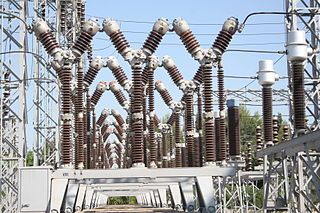
Unfortunately, I wasn’t able to attend this year’s DistribuTECH conference, arguably the most significant annual event in energy distribution, but I’ve read a few summaries. I’ve come to believe that this whole subject of smart-grid and the evolution of our power utilities lies at the very crux of our society’s ability to deploy the cutting-edge energy solutions we so desperately need.
Apparently, a number of people look at smart-grid as futuristic technology, something that will come along in later years, after we’ve met certain of our energy efficiency goals and renewable portfolio standards. I’ve started to look at this thinking as putting the cart before the horse; smart-grid really should be looked upon as the enabling technology, rather than a follow-on.
Here’s an article from Forbes.com written by my colleague Tom Konrad on Chaos Theory as it applies to the analysis of both the stock market and climate change. This subject has been at the core of Tom’s life’s work, starting with the dissertation he wrote for his Ph.D. in mathematics “a few” years ago. To put it concisely, the whole thing comes down to something that’s come up on several of our conversations: “Knowing the limits of our ability to predict is much more important than the predictions themselves, a lesson I apply to both climate science and the financial markets.” (more…)