It goes without saying that the renewable energy industry here in the U.S. drew a collective sigh of relief when President Obama was re-elected on Tuesday.  For reasons I’ve mentioned dozens of times, I remain extremely dubious that we’ll see any real help from the federal government, but we dodged a big, fat bullet that would have come from a Republican administration.  

Although Obama has disappointed so many of the people who supported him in 2008, there is no doubt that his policies vis-a-vis the environment have been far more progressive than those of his predecessor.  

Here is an article from Renewable Energy World on the subject. 


Tagged with: , , ,

I try not to miss the monthly events at The Eleos Foundation, a group that has done such a terrific job in bringing much-needed seed capital to start-ups with cleantech products in developing countries.  This afternoon it’s this presentation, to which I’m very much looking forward.

These guys have an incredible batting average in selecting winners; their investors are almost always paid off, and when they lose, they get out early and fairly painlessly.  I’m extremely impressed with their savvy, as well, of course, with their hearts. 

As I told Eleos Executive Director Andy Lower when I interviewed him recently, I’m hoping that Eleos develops an appetite for clean energy.  There is no reason that, for instance, the WindStream micro-wind turbine couldn’t be assembled in Nairobi by people who desperately need employment, and the product sent to places all over the continent, bringing electrification to hundreds of millions of people for the first time. 


Tagged with: , , , , , , ,

A friend of a friend has come across a major piece of corruption, and is unsure what to do about it.  He’s thinking of publishing an expose’, but he’s older, in failing health, and doesn’t want the stress.

I hope he doesn’t regard my response as unsympathetic:

Well thank you very much.  I’ll look forward to hearing which direction you take. 

For what it’s worth, it’s quite clear to me that our civilization is doomed if we can’t get a grasp on corruption.  To put it concisely, the private sector, left unregulated, will exploit people and natural resources until our planet fails to support any form of reasonably decent and pleasant life.  We see this everywhere we look: rich lawyers helping their super-rich clients to steal from what’s left of the middle class, declines in education, destruction of the ecosystem, Wall Street rip-offs, etc.

The public sector, on the other hand, is so monstrously corrupt and bureaucratic that only complete idiots look for real help from this arena. 

Having said this, I understand you don’t need the stress.

Again, I’ll look forward to hearing from you.  I’m sure you’ll make the right decision.


Tagged with: , , , , , ,

Occasionally I like to spread 2GreenEnergy’s wings a bit further than the confines of renewables, talking about various concerns that most of us share in sustainability more generally. In particular, I’ve written before about what Monsanto is doing to control the food supply, maximizing its profits at the expense of the health of the consumer.

Those of you in California know that, had our “Prop 37” passed on Tuesday, we would have been the first state in the nation to mandate the labeling of genetically engineered foods, joining more than 60 countries whose consumers have won the right to know if their food has been genetically modified.

According to this terrific article: (more…)

Tagged with: , , , , ,

When I was a marketing consultant to the Fortune-sized IT and industrial giants, I was proud to count Switzerland-based ABB on my client list. Having said that, the company was founded in the 19th Century, and had a reputation as a stodgy, old-line manufacturing concern without too much focus on innovation.

Yet according to this article, ABB may have just completed a development of fantastic importance to smart-grid – especially the all important aspect that deals with high voltage DC, so critical for transmitting large amounts of electrical power over long distances.  Of course, this is crucial to the integration of renewables, whose solar, wind, hydro, geothermal, and biomass resources tend to be localized in certain geographical areas – mainly those that do not have huge population centers demanding energy.

The breakthrough happens to be a circuit-breaker that can shut off the power generated by a full power plant in 5 milliseconds, 30 times faster than the blink of an eye.  Congratulations, guys.

Tagged with: , , , , , , , , , , , , , ,

Just got back from the TV studio, shooting a video of “energy and ethics.”  Here’s the script I wrote for myself.  Delivery-wise, I would give myself a B.  I was OK, but I’ve done better.

Since most of our energy comes from burning fossil fuels, the way we generate and consume energy has huge ethical implications.  That’s because our behavior affects the health and well-being of other people. 

There are over one billion cars and trucks on our roads, and we’re consuming 15 terawatts of electricity.  That’s 150 billion 100-watt light bulbs.  Think about that.  Right now, every man, woman, and child on Earth, on average, is consuming the energy equivalent of 20 hundred-watt light bulbs.  And we in the US are consuming five times the international average. 

What does this have to do with ethics?  Well, what’s happening to all that pollution?  It’s changing the climate – for everyone.  It’s damaging the lungs – of everyone.  Guess who is endangered by our addiction to oil?  Everyone.  (more…)

Tagged with: , , , , , , , , , , ,

A friend just asked me what I think of the Tesla Supercharger stations.

I think it’s a good concept overall, from the standpoint of the EV adoption curve, though this is a bit misleading.  In the middle of a sunny day, i.e., under perfect conditions, I estimate that it would take 5 – 6 hours for the PV array shown there to charge ONE Tesla-S.  I.e., implying that they are charging those cars purely with solar energy is disingenuous.

Making electric transportation work ecologically requires charging without increasing the amount of coal that’s burned, and that’s not an easy feat.  We’ll get there, but we’re not there now.


Tagged with: , , , ,

I know I harbor a great deal of pessimism/cynicism about the corruption that has engulfed our political process.  But I have to say the Move To Amend people have really kicked some major butt, to use a not-too-scholarly term, in the effort to pass a constitutional amendment to overturn the U.S. Supreme Court’s Citizens United vs. Federal Election Commission ruling and declare that only human beings – not corporations – are entitled to constitutional rights and that money is not speech and campaign spending can be regulated.

In fact, the country voted overwhelmingly in favor of this concept in yesterday’s elections.  From their newsletter: 

Residents in over 100 cities had the opportunity to vote on measures calling for an end to the doctrines of corporate constitutional rights and money as free speech, and in every single town the vote was supportive. Often by an overwhelming margin. In Eau Claire, WI the vote was 71% in favor of a measure stating, “Should the US Constitution be amended to establish that regulating political contributions and spending is not equivalent to limiting freedom of speech, by stating that only human beings, not corporations, unions, or PACs, are entitled to constitutional rights?”

I have spoken with Move To Amend spokesperson David Cobb a couple of times, including a 30-minute interview for my Clean Energy Radio show.  The man’s a human firecracker.  Keep up the good work!


Tagged with: , , , , , ,

My posts wind up (somehow) on Cleantechies Blog, where David Repka saw my article: In Renewable Energy, Things May Not Be What They Seem and commented:

The greatest point of frustration is the lack of certainty and clear, coordinated, cohesive, long-term direction in every step in the process: permitting, interconnections, planning, zoning, regulatory, environmental, taxation, etc. Every state having their own RPS (renewable portfolio standard) and tax code of incentives is maddening. There needs to be a cohesive, national energy policy with an FIT (feed-in tariff).

This is exactly right.  The fossil fuel industry is doing everything in its power (which is considerable, to say the least) to make sure that the development of clean energy is slow, uncertain, and as frustrating and unprofitable as possible.  We all know that we need a national energy policy, but we’re a million miles from it.  This is precisely why ex-Pennsylvania governor Ed Rendell said what he did. i.e., don’t expect this to happen inside the Beltway, because the money from the oil companies driving the political process never stops. 

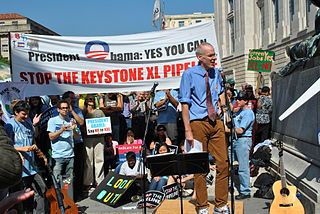
I’m sure hoping that Obama makes a liar out of me and does something honest and decent on this in his second term, but I’m not counting on it.


Tagged with: , , , , , , , , , , ,

Those of us trying to make sense of the validity of renewables versus fossil fuels are forced to deal with many different parameters.  For instance, we often talk about the externalities of coal, i.e., the cost factors that are not captured in the transaction between the utility and its customer, but passed on to society at large.  We note the build-up of mercury, ocean acidification, and greenhouse gas released into our atmosphere, etc.  Of course, there are issues with solar and wind as well, all of which need to be factored in.

Here’s an article on one kind of externality that my not receive as much attention as it’s due: the use of water in generating electricity.  Certainly this is something to be examined, as potable water becomes scarcer and thus more valuable.


Tagged with: , , , , , , , , , , , ,