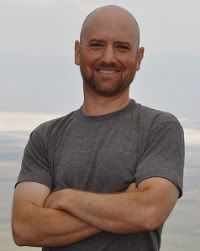
I’ve referred to my friend, Jim Boyden a few times here. Jim got his Ph.D. in high-energy particle physics from Cal Tech the same year I entered kindergarten, and generously consented to an interview for my current book project, “Renewable Energy – Following the Money.”
Several bills are making their way through the U.S. Congress that would put an end to the unfair imbalance here, but none has come up for a vote. Here, Jennifer explains how Richard Kauffman, Senior Advisor to the Secretary of the U.S. Department of Energy, who came out of the private sector, explains how such a move by Congress would dramatically reduce the cost of capital for large renewable energy projects, while simultaneously providing five other major benefits.
As always, this whole discussion goes back to the same old place: all we’re asking for is a level playing field.
In a post yesterday, I tried to tie together the work that certain humanitarian groups perform together with our need for a progressive energy policy. The connection? Both are rooted in a viewpoint of the future, along the lines of the old adages: “A stitch in time saves nine” and “An ounce of prevention is worth a pound of cure.” Just like preventing gang membership is a great deal less costly and deadly than mopping up after the damage has been done, a forward-looking energy policy that curtails our addiction to fossil fuels will be a far easier pill to swallow than dealing with droughts, famines, dead oceans, extreme weather events, and potentially hundreds of millions of climate refugees.
If you’re at all compelled by this logic, you may be interested in this presentation of El Nido, the Los Angeles-based organization I mentioned in that post, which looks at the world of gang membership as follows: The cost to society of the average criminal gang member is approximately $2 million. If we can spend less than that (in El Nido’s case, a tiny fraction of that) to get that kid through school and into an honest, productive life, we have a huge bargain.
You may want to check out slide #8 for some of the most shocking ROI calculations you’ll ever see.
It’s only been a few minutes since I posted this piece on my friend Brandi Veil and her unique approach to what she calls “humanistic sustainability.” As I’ve already gotten some positive feedback, I consider this auspicious, so I thought I’d add a bit more content.
First, here’s the introduction she wrote to her speech at the World Information Technology (WIT) Conference presenting to the United Nations on Environment and Health.
Amidst the global crisis of a dysfunctional old paradigm, a new renaissance of human culture is underway.
A blossoming phenomenon of Transformational & Music Festivals, immersive participatory realities that are having a profound life-changing effect on millions of lives.
With attendance at Festivals growing in the millions annually, many attendees have had life-changing experiences at them and are deeply passionate about sharing the culture with their friends, family and social networks. (more…)
I thought readers would be interested in a presentation that a friend of mine, Brandi Veil, made recently at the 21st United Nations Conference on Health and Environment: “Global Partners for Global Solutions.” Brandi is a wonderful person with a heart the size of Texas. She bills herself as an “Ambassador for Transformational Events,” and she really does have a considerable flair for pulling people together.
Again, here’s a transcription of her talk to the audience. If, after reading this, you’d like to get involved, please let me know.
I am here today as an Ambassador of the festival culture to present you, a new audience, with new possibilities via new systems. I am a Hollywood event producer who was influenced by transformational festivals and has now made it my life’s mission to expose the many gifts of this community! I am here to alert you to a generational shift in global society driven by art, music and dance; and, to share with you a plan to guide these individuals into your organizations and communities to create a new type of workforce with new skill sets and values along with a plan, which I call “humanitarian sustainability”. WIT has invited me to present to you a possible means of developing and sustaining resources for the programs this conference has occupied itself with for over 20 years–Health and Environment. (more…)
Here’s an article the theme of which I’ve seen before, called behavioral economics. In essence, people’s reaction to a certain subject, and their buying behavior, is to a huge degree a function of the words used to describe it.
I’m reminded of a discussion I had with economics professor Jason Scorse, Associate Professor and Chair of the International Environmental Policy Program at The Monterey Institute of International Studies, who helped me to understand the subject in preparation for my book “Is Renewable Really Doable?”
One of the key discoveries of (Nobel prize-winning behavioral psychologists) Kahneman and Tversky was this thing called “loss aversion,” meaning that the impact of losing something is much more impactful and has greater magnitude than the benefit of gaining something. (more…)
Friday afternoon I attended the holiday luncheon of the Maverick Angels, an investor club local to me here in Southern California. I really like these people; they’re sharp, articulate, and they move swiftly when they like what they see.
In addition to their for-profit activities, in which they’ve enjoyed fantastic success, they generously support certain charities. I heard a brief presentation from an older fellow with a kindly smile, a PhD in electronic engineering, long since retired. He now serves as a consultant to non-profit organizations, including this one that deserves your attention: El Nido — a group that does one heck of a good job at keeping high-risk kids out of trouble.
Btw, what would you guess to be the average cost to society (more…)
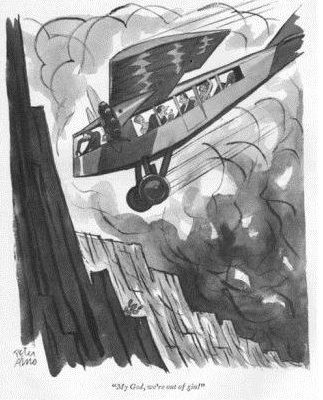
Yesterday was the birthday of Nero, the Roman emperor who is said to have fiddled while the city burned in 64 CE. It’s not clear whether the fire was a case of arson, or just an accident, which wasn’t unusual in the day.
In any case, whenever I come across a reference to “fiddling while Rome burns,” I’m compelled to think of the parallels to our civilization today, and how we as a society are so strangely uninterested in and disconnected from the dangers we face in terms of wrecking our home planet. (more…)
Linked here is a prototype Green Home just done this year in California (of course). (Note: Clicking the link downloads the file.) It has 3 bedrooms / 3 baths, is 1,700 sq. ft. and targeted to sell for $ 300,000.00. Backers of the demonstration project say that the Craftsman-style house just finished at the Orange County Great Park can be reproduced for just $85 to $125 per square foot — equivalent to what most tract homes cost to build today.
I had a terrific time introducing myself to a room full of investors yesterday at the Maverick Angels’ Christmas party. I really like these people: bright, articulate, successful, and altruistic. I got some really good engagement from half a dozen or so on our summary of cleantech business opportunities, including a few very positive email discussions and a meeting set up for next week. These angels are not exclusively into sustainability, but there’s a sufficient level of interest to make the group of great value. More soon.


 I’ve referred to my friend, Jim Boyden a few times here. Jim got his Ph.D. in high-energy particle physics from Cal Tech the same year I entered kindergarten, and generously consented to an interview for my current book project, “Renewable Energy – Following the Money.”