Relevance: Breakthroughs in waterless urinal technology save a significant volume of water, thus eliminating the greenhouse gas emissions that would have been associated with pumping and purifying. They also create far more hygenic and odor-free conditions — while saving their operators money with faster and easier maintenance. I’m not sure I could name another energy efficiency concept that has a broader array of benefits.
Recently, I’ve come across the folks at Falcon Waterfree Technologies, and have agreed to help them tell their story; it’s pretty impressive stuff.
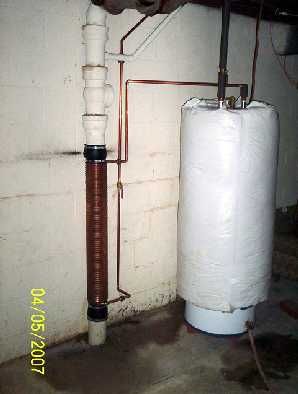
Quite a few years ago I thought it would be good to recover heat from drain water since heating water is very energy intensive. A couple of my plumber friends and I discussed several ways to do it trying to account for all the problems that might be encountered. Then one of them went to a plumbers trade show and found a simple drain water heat exchanger. It was a piece of 4” copper pipe with ½” copper water pipe wrapped around it the idea being to run cold water through the ½” pipe from bottom to top and warm it up before feeding it into the hot water heater thus recovering the heat and saving energy. When I had sewer installed in my house in 2005 I ordered one of these and had the sewer installers put it in the vertical drain line. In April of 2007, when I had time and a friend who was faster at soldering than I was could help, I hooked it up. Pictures of that installation are here. (more…)
While there is so much about the course of our civilization to drive us to despair, I often think of Emerson’s reminder: Nothing great was ever achieved without enthusiasm.
Though it’s hard to be enthusiastic when we see the forces of a small number of the greedy and dishonest triumphing over huge masses of decent people who aim to take care of one another, here’s a legitimate reason for enthusiasm: It’s the “finest hour” concept of Churchill. I.e., people 1000 years in the future will look back on what we’re doing here and now and say, “This was their finest hour.”
When I look at the world of 2012, I see exactly that. I’m firmly convinced that if we still have a civilization here in 100 years (forget 1000), with all the threats that stare us in the face, it will be because we did what currently looks to be unimaginable: we came together and made some serious commitments to sustainable uses of energy, water, food, and other resources.
But we need to be honest. Anyone who looks at the world around him at this point and thinks we’re on the brink of making this happen is a silly optimist. But anyone who throws in the towel and walks away to live out his days in an apathetic withdrawal from the needs of humankind at this point, the zenith of its need, is suffering under even worse conditions.
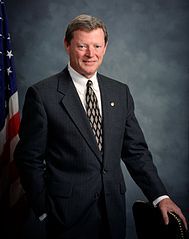
Senator Inhofe does not represent either of us, only the people of Oklahoma; therefore, what we think of him is practically irrelevant. If and when Oklahoma’s citizens tire of his rantings, he will be replaced.
If he weren’t a) chairman of the Senate Committee on Environment and Public Works, b) a member of the Senate Armed Services Committee, and c) threatening to bring criminal charges against the (mere 98%) of climate scientists who are warning us about the dangers of climate change, I’d agree with you.
In truth, however, (frequent commenter) Glenn Doty is probably right. I.e., his position is so completely ill-considered that it’s possible his antics are more an embarrassment to his cause than a support.
Creating alternative energy sources around the world is a huge priority right now, as non-renewable energy sources are harming the environment as well as rapidly deteriorating in supply. The problem for many alternative energy businesses is that the general public operates under many common misconceptions about alternative energy sources. These misconceptions can lead to troubles for companies who are creating or advocating for alternative energy sources, such as wind power and solar power. Understanding the misconceptions that abound about alternative energy can help your business combat these misconceptions with the truth! (more…)
Thanks to 2GreenEnergy aeroponics guru Rafael Quezada for sending me this recent piece on climate change in Popular Science. This sums up the picture very nicely, in my estimation. Bottom line: The outlook isn’t brilliant.
I thought readers may be interested to see a rendering of the biogas plant that I intend to help establish in Southern Pakistan to process the 8000 tons of manure that come from 400,000 tightly confined buffalo each day. Linked above is a fairly detailed description; it’s the webinar that the company’s founder and CEO Robert Orr did with me last week. (more…)
Who isn’t interested in Bill Gates’ views? Whether he’s talking about the impact of the digital revolution on society at large, his philanthropic efforts to eliminate diseases like polio and malaria, or his insights into other macro issues like global warming, his talks are always captivating and his opinions carry plenty of weight. (As a quick aside, I’m often reminded of Gates deeply studied position on global warming when I come across deniers. Are we to suppose that he needs a few bucks of government support to perpetuate something he deems a hoax? Or that he’s a liberal academic lightweight who hasn’t done his homework on solar flares and ice ages? Neither idea passes muster with me.)
20 years ago, someone who was in a position to know told me that the toughest couple of moments one could possibly face was a discussion with Gates on anything. “He has more knowledge and certainty on dozens of subjects than you have on your mother’s maiden name — and he’s completely intolerant of people who show up unprepared,” my friend told me.
Even with all the fear of God this may have inspired, I challenge Gates on a couple of points:
1) Up until very recently, he looked on solar as “cute,” something that had essentially no potential impact on the energy picture. Based on this interview (I was gratified to see), something had clearly changed his mind. What was it?
2) He obviously takes the issue of carbon and climate change quite seriously, but it’s not where his focus as a philanthropist lies. Why? I don’t think either of us will be on this Earth long enough to know for sure, but I believe climate change is going to cause far more misery than the diseases he’s trying to eradicate.
Am I proposing a dialog with the world’s most feared challenger? Let me practice for a few years first and think about it.
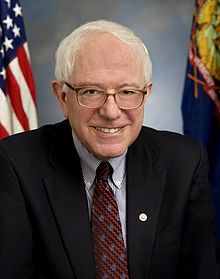
Duke Brooks writes on Independent Vermont senator Citizens United opponent Bernie Sanders as follows:
Sanders is, of course, not an independent. He is, IN FACT, a self-described socialist…. The opposition to Citizens United (granting corporations the right to spend as much as they choose, in order to influence our elections) comes NOT from the faux “moral outrage” feigned by the Green Mountain socialist and his friends, but rather from a leftist opposition to capitalism in general. Their hatred is focused on companies, which are institutions that have been the victims of marx, lenin, engels, stalin, mao, castro and Sanders for generations. (more…)
Conermex, one of the largest solar and wind power companies in Mexico, predicts that Mexico will double their capacity of solar within 2012, from 6 to 12 MW.
Mexico’s National Solar Energy Association (ANES) says that Mexico could possibly generate all their electricity with solar power in the future. (more…)