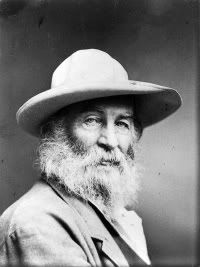
As we celebrate Independence Day here in the US, it seems a fitting time to honor the work of American poet Walt Whitman, as it applies to the type of spirit that defines humanity at its greatest.  The lessons he taught us about man’s indominable toughness apply to all of us who fight uphill battles — whether they’re about sustainability or anything else.  

Here’s a familiar section from the preface Whitman wrote in 1855 to his collected works: Leaves of Grass.

“This is what you shall do; Love the earth and sun and the animals, despise riches, give alms to every one that asks, stand up for the stupid and crazy, devote your income and labor to others, hate tyrants, argue not concerning God, have patience and indulgence toward the people, take off your hat to nothing known or unknown or to any man or number of men, go freely with powerful uneducated persons and with the young and with the mothers of families, read these leaves in the open air every season of every year of your life, re-examine all you have been told at school or church or in any book, dismiss whatever insults your own soul, and your very flesh shall be a great poem and have the richest fluency not only in its words but in the silent lines of its lips and face and between the lashes of your eyes and in every motion and joint of your body.”

Frequent commenter Phil Manke writes:

Hey Craig,

To what extent do you think retail gasoline price levels depend on these government subsidies to oil companies? Do you think gasoline prices would rise significantly if and when subsidies are cut back? Isn’t this the real reason that no politician will champion the trimming of these subsidies? Recent history shows there is significant public backlash when gasoline prices spike. Do you think the lagging development of electric autos and alternate transportation methods is throttled by the petroleum companies? If so, in what ways?

Hi, Phil. Yes, I am told that if we yank the subsidies, gasoline prices will rise somewhat; perhaps $1 – $2 from their current levels.  This would cause a significant back off in consumption, and create a real demand for electric transportation, which in my estimation is a good thing.

Regarding your question about the oil companies, I haven’t studied this thoroughly.  But look at the dynamics behind what we in California went through behind our Proposition 23 last year.  Oil giants Valero and Tesoro were the visible supporters of a bill that, if passed, would have crippled our movement for clean energy/transportation with a maelstrom of lies; they spent tens of millions of dollars in a (nearly successful) attempt to convince voters that clean energy would cause the death of our economy.

A friend told me that ExxonMobil also funded the bill, but worked hard to remain anonymous, and make sure their name would not be associated with it.  And of course a few years earlier, Exxon admitted to (and agreed to stop) funding sham research companies whose only purpose was to discredit the theory of global warming.

As I wrote here:

‘ExxonMobil has manufactured uncertainty about the human causes of global warming just as tobacco companies denied their product caused lung cancer,” said Alden Meyer, the Union of Concerned Scientists’ Director of Strategy & Policy. “A modest but effective investment has allowed the oil giant to fuel doubt about global warming to delay government action just as Big Tobacco did for over 40 years.’

If you Google the subject, you’ll find tons of material on it.

Working with the oil companies is often referred to as “going to the dark side.”  Looks like there’s a good reason for that….

Thanks for your excellent questions, Phil.

Tagged with: , , , , ,

A reader asks:

Craig, did you see that the Air Force has begun using a synthetic oil that is algal based from Solazyme in a military helicopter? Could this be the beginning of the synthetic oil era?

Personally, I’m unconvinced that biofuels can scale to make a meaningful replacement for oil. What works very well in the laboratory or at a small scale in extremely well controlled conditions falls apart quickly in large, real world applications.

Having said that, I do believe that synthetic fuels generally have a future. 2GreenEnergy client Windfuels, for example, which aspires to produce gas/diesel from off-peak wind energy, water, and carbon dioxide, implements a five-step process whose thermodynamics look quite solid and hold great promise.

All this, of course, competes with electric transportation. The need for liquid fuels disappears to the degree we can improve battery technology and lower its cost. It will be interesting to see where this all will go over the coming decades; it will most certainly be a long time before we have electric replacements for the drive train in large trucks, aircraft, etc.

Tagged with: , , , , , ,

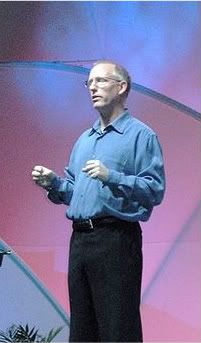
Here’s a terrific article by social satirist Scott Adams, who suggests buying stock in companies you hate the most. I’ve been a huge Adams fan for decades, I have to admit that the logic is sound: these companies are run by ruthless people doing immoral, but generally fantastically profitable things.

Having said that, I’m betting on clean energy. For once, the bad guys are going to lose, as we find better and cheaper ways to harvesting the sun’s energy. It’s just a matter of time until the world of dirty energy controlled by a few tyrants is gone — and I believe it’s coming quite soon.


A friend of mine has a T-shirt that defines the word “patriotism” as “not letting our leaders ruin our country by ignoring the principles on which it was founded.” Food for thought as we go into the 4th of July weekend.

Colorado Governor Bill Ritter told a packed house at the Renewable Energy Finance Forum a few weeks ago the following story, illustrative of the issues at hand.  The University of Colorado at Boulder recently completed a survey of many thousands of residents from around the state, in which participants provided their viewpoints on a myriad of energy-related issues.  Among other things, the study showed that an overwhelming majority favored a bill on the floor on Congress that would place a tax on carbon and create financial incentive for businesses and households to reduce their carbon footprints. To Ritter’s astonishment, one of the senators from his state, under pressure from special interests, went back to Congress and voted against the bill that his constituents had so clearly favored.

Our democracy is teetering on the edge of complete collapse under the weight of powerful corporate lobbies, and it has only one hope for success: you.   To the degree to which our leaders can perform sordid garbage (like the example above) without dealing with the outrage of voters, we’re doomed.  So this 4th of July, I hope you’ll take a moment, write your elected representatives, and express your concerns about our great country and where it’s headed.

Tagged with: , , , , , , ,

 …continued from an earlier article …

Reason #2 – Danger and Damage

This leads me to the 2nd reason why I am against nuclear energy – the danger and risks. On this point, I have had engineers and nuclear experts argue that the debate is unfair and that nuclear is “safe”, “clean” and “powerful.” They always mention the newer, better plants and that nuclear waste can be “safely” tucked away, and that it doesn’t take so much space and can be monitored. They are enamoured with the power and science of nuclear. But answer me this:

We have no idea how to destroy or neutralize nuclear waste, do you? This incredibly debilitating junk sits and pollutes the earth. It is a killer. God forbid some sort of accident occurs, like at Fukushima or Chernobyl, not to mention other “minor” accidents. So much exposure and death, large swathes of earth polluted and unusable. (more…)

Tagged with: ,

Last month, 2GreenEnergy conducted a survey in which over 300 participants provided their perception on the type of future that mankind is likely to face, given the way in which we generate and consume energy. Some are optimistic that the world can innovate itself out of the environmental mess it’s made over the last 100 years; others are deeply pessimistic – and offer their reasoning. The full report will be available on the “Truth” page shortly.

Readers will note that only 19% disagree with the proposition that climate change will have disastrous consequences by 2030. However, 62% agree that we have more pressing problems right now than worrying about what 2030 will look like in terms of energy use, climate change, etc.

While some will find this alarming, it’s hardly unexpected. Even the man who is accredited with the discovery of global warming (V. Ramanathan of Scripps Institute, who, in 1972, correctly predicted a measurable increase in the temperature of the Earth’s atmosphere by 1980) understands the lack of concern. “People have a finite capacity for dealing with disaster,” he told me in an interview. “When things are blowing up all around them right now, it is a sad truth that the majority of people are unable to process the gravity of a situation that will cause vast destruction decades hence.”

So where is all this going? I hope you’ll download the report and check it out.

Tagged with: ,

[youtube http://www.youtube.com/watch?v=ocBBrYYYYqg] 

Here’s our May 2011 webinar, in which I interview David Doty, Ph.D. Doty’s creation, Windfuels, is a recent breakthrough in synthetic fuels using off-peak wind power that holds huge promise for clean, carbon-neutral energy.

I ask some tough questions, but Dr. Doty handles himself very well.

Tagged with: , , , , , , , , , ,

When I decided to learn about the energy industry and the imperative to migrate away from fossil fuels a few years ago, a number of my friends urged me to conduct an independent and objective analysis on global warming.  But while I was flattered to have people in my life who accredited me with the skills necessary to perform such a task, I laughed the suggestion off. Imagine the amount of work associated with duplicating the terabytes of data and the thousands of man-hours that’s gone into their analysis.

But what do we know at this point? How honest is the analysis? Yesterday GreenPeace revealed:

…One of the world’s most prominent scientific figures to be skeptical about climate change has admitted to being paid more than $1 million in the past decade by major U.S. oil and coal companies. The climate skeptic — Willie Soon — works as an astrophysicist at the Harvard-Smithsonian Centre for Astrophysics. Since 2001, he has received money from ExxonMobil, the American Petroleum Institute and Koch Industries along with Southern, one of the world’s largest coal-burning utility companies.

Are there manipulations of the “facts” in the other direction as well? There sure are allegations to that effect.

My conclusion on the subject, for what it’s worth:

  1. The vast majority of climate scientists believe in the theory of human-caused global warming. Most of these people are super-academic Ph.D.-carrying “nerds” — not business people. It doesn’t seem credible – to me at least – that thousands of these people got together and decided to perpetrate a hoax on mankind.
  2. If you’re looking for a financial incentive to fudge the data, you have to think that it’s less compelling to raise money for atmospheric research than it is to support the sale of trillions of dollars of oil and coal.
Tagged with: ,

Here’s a piece from Kentucky-based consulting engineer and frequent commenter John Robbins, who provides some sobering remarks on the truth behind our current push for renewables.

Last week, I was one of 3 teaching a professional seminar about Passivhaus.  In case you don’t know, that program (from Germany) actually sets serious (aka “difficult to achieve”) limits on heating, cooling and overall annual energy, also on how much HVAC heating and cooling capacity which can be installed.  All that WITHOUT offsets from RE grid-tied storage-free energy.  Only main negative about Passivhaus is that it gives certification based on design and construction, like LEED and EnergyStar.  None of these popular programs actually require post-occupancy data to verify that designs work as estimated.

The best part of Passivhaus is it separates “reducing demand and use” from achieving net-zero by offsets like grid-tied storage-free RE as is permitted in LEED.  I’ve seen new LEED homes in Cincinnati which are merely minimum-code designs with PV on the roof for offsets.  With Cincinnati now offering a 15-yr property tax abatement for LEED structures and the local electric utility paying sRECs for grid-tied RE, homebuyers, their designers and builders are pretty much avoiding energy reductions and heading straight to RE offsets.  There’s even new “creative” marketing lingo to describe the economics, “net-zero energy cost” – net-zero cost achieved by offsetting actual energy costs with sRECs and tax abatements.  None of this would fly in Passivhaus.  More importantly, these situations do not represent much reduction in demand for conventional energy, since Cincinnati is a 50% cloudy location, with windy winters but stagnant-air summers.  Solar and wind can work here, but certainly not full-time, so structures with grid-tied RE have their un-reduced energy loads carried by conventional energy much of the time, maybe as much as 80% of the time.

We are seeing so much morphing of RE advocacy into marketing.  I guess the 1st wave was for/by us who were educated and motivated prior to or away from the current subsidy hoopla.  The massive current subsidies seem to attract folks who aren’t really much interested in the traditional movement (aka “less coal, oil and nuke”) but instead need heavy financial incentives to act.  Regardless of why or what, as a very aware member of Assn of Energy Engineers where real energy matters are known and discussed regularly, I worry we are seeing so much money, marketing and reporting about nonrealities in our energy world.  Even tracking %RE is the wrong thing to track.

As I wrote in an op-ed in SOLAR TODAY a half-dozen years ago, implementers should be tracking how much less conventional energy they demand and use, not how much of what solutions we buy or apply.  I wish we tracked how much energy use and when it is used, separately from how much and when we have RE.  The net-energy approach has simplified the process for consumers but made the education process more complicated.  A utility company rep whose company was co-sponsoring a workshop I taught last year in south-central KY took offense when I told my students about this.  All my students rated my class very good to excellent, but the utility rated it poor to very poor, adding that it would never sponsor any of my events in the future.  Similarly, a solar installer I know in central KY told me last year that when he mentions efficiency to his callers interested in a solar bid, the most common result is a lost sale or lost opportunity to bid.  So while my message is correct, very similar indeed to what we’ve heard for decades from Amory Lovins, it is a message very unpopular with many consumers and utilities, also many of our governments.

I include governments because of an experience I had in Ohio where I proposed how to cut residential energy use by a whopping %, but got no positive responses from the panel representing Ohio government.  A professor of economics from Miami University of Ohio pulled me aside after my presentation and told me that Ohio historically forms energy policies not as much based on consumers or energy as how much potential for tax collection.  Like most states, Ohio collects a lot of taxes on conventional energy.  Also like most states, Ohio’s income tax rates are progressive, going up as incomes rise.  The professor said insulators’, caulkers’ and window installers’ wages are tiny compared to union coal miners, utility workers, geothermal and solar installers.  He said this is why Ohio incentive plans subsidize the most expensive (higher sales taxes) and most high-wage energy systems.  He said this is also why we never see energy-use reduction targets and timelines.

So we cannot be naive and think we are currently implementing or describing THE ENERGY SOLUTIONS which will substantially cut coal and nuke reliance.  The current round of RE seems most abt promoting and expanding the RE retail and manufacturing sectors, which is certainly needed.  But that is not the same as solving our reliance on conventional energies, especially coal, oil and nuke.  As said before, I and my most committed 1st-wave customers and contacts are focused mostly on reducing reliance on coal, oil and nuke.  The failure of RE’s “new wave” to understand and address this, especially to accomplish any real conventional reductions, will one day come back to haunt, maybe to backlash.

I asked a colleague attending the midwest USGBC conference last week in Cincinnati how many coal and nuke powerplants will be running if all homes and buildings are net-zero by 2030?  He did not respond quickly.  So I said, maybe most that are running right now, maybe even more.   Nobody really knows, but what we know for sure is that net-zero is a merely a marketing term applied usually to part-time intermittent mostly-daytime RE surpluses applied as offsets against full-time 24-hr-per-day power use.  Baseload powerplants like nukes and large coal-fired generators cannot be turned on and off quickly.  Even coal-fired needs 10 hrs or more to shutdown and restart.  Nukes need days.  That’s why they are used for baseloads.  To reduce baseload generation, we need aggressive full-time load reduction.

The positive thing is this is possible, already demonstrated, even well written about.  We just need leadership and education to keep the information in front of governments, consumers and businesses as they consider the issues and options.  As a once-home-designer who now has very little design work in this continuing recession, I’m developing new workshops and writings to educate consumers, designers, contractors, teachers and anybody else who is interested.  However, I must report that I do not get or hear much interest from younger people and companies in the RE sector.  I suspect that’s because they are busy.  After all, there are huge amounts of subsidies in my region going to RE retailers and contractors.  That sector is certainly not in recession.

 

Tagged with: , , , , , , , , , , , , , ,