U.S. Army Embracing Clean Energy in a Big Way

In this fascinating presentation, we can see the U.S. Army changing its culture vis-à-vis energy. “Every soldier is a power manager.” Wow!

In this fascinating presentation, we can see the U.S. Army changing its culture vis-à-vis energy. “Every soldier is a power manager.” Wow!
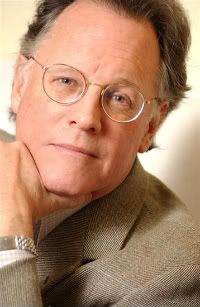
For those who may want a perspective on the migration to renewable energy that you’re extremely unlikely to find elsewhere, I present to you Stephan A. Schwartz, whose life has been spent exploring extraordinary human functioning, and how individuals and small groups can affect, and have affected, social change.
His work in parapsychology, archaeology, anthropology, medicine and healing, creativity, and social policy pair nicely with the questions I ask myself a great deal: What’s really going on behind the scenes when it comes to social phenomena? (more…)

As the name suggests, Ocean Thermal Energy Corporation, which I visited on my last trip back to the East Coast, is one of the leaders in the development of OTEC (ocean thermal energy conversion), a technology with huge potential to change the world energy picture. Best of all, these folks, while they’re true business professionals and leading scientists, are acutely aware of the environmental benefits at stake here. More than one billion people live in the tropics, close to oceans that store vast amounts of energy in their warm surface waters that can be cleanly converted to electricity, or used in desalination, providing potable drinking water to large and growing populations where this commodity is scarce. (more…)

Earlier today we had a very interesting guest-post on Religion and Renewable Energy, in which the author, Brian McGowan, begins:
Recently the subject of religion has come up several times. I try not to discuss it but it keeps coming up and it is hard to avoid.
I respond:
Thanks for this very interesting post. Yes, I try to avoid the subject as well, for fear of coming off as disrespectful to people’s beliefs. Having said that, someone needs to say something when we have elected representatives using a religious platform from which to make important decisions that fly in the teeth of science. For example, last year, Illinois Congressman John Shimkus, (more…)

Glenn Doty points out a flaw in my recent piece about electric transportation. He writes:
(The Carnegie Mellon University study) assumes a life-cycle grid emissions profile of 615 g-CO2E/kWh. That is blatant BS.
The impact of new marginal electricity demand (as represented by shifting transportation demand from liquid fuel to electricity) can only be satisfied by spare generating capacity. There is no renewable spare capacity in most of the country, and in the places where there is spare capacity (TX, IA, MN, ND, IL…) there is no benefit to be had from a constant 8+ hour nighttime demand increase, as the spare renewable capacity in these cases is curtailed wind, and the constant 8+ hour night-time demand would be satisfied by not tamping down baseload power as much each night. (more…)

Recently the subject of religion has come up several times. I try not to discuss it but it keeps coming up and it is hard to avoid.
There was a short blog entitled ”Doing the Right Thing About Climate Change – Regardless of Our Religious Beliefs” and also part two of Craig’s series “3 Brass Tacks” where Wally Rippel stated “A great deal of the evangelical world works against environmental friendliness. They seem to see fossil fuels as their allies and ecologically sound solutions as their enemies. I don’t see this as consistant with the idea that all we see around us was the creation of a loving God.” (more…)

Hey – is there a glimmer of hope that some level of sanity may come to the process of energy policy-making in Washington D.C.? I’ve often written about the folly of incentives for renewable energy that come and go, fluctuating with the volatility of women’s hem lines. There’s talk – and that’s about it, but it’s a start – of making clean energy incentives permanent.

Woody Clark is another of these supremely visible figures who is impossible to miss when one attends industry conferences. He has a warm, approachable – and often hilariously funny speaking style that belies the depth of his understanding of complex, multi-disciplinary issues.
Woody is an applied academician, a long-time advocate for the environment and renewable energy, and an internationally recognized author, lecturer and advisor on sustainable communities. He was a contributing scientist on the United Nations Intergovernmental Panel on Climate Change (UNIPCC) that won the Nobel Peace Prize in December, 2007.
I am very grateful to Dr. Clark for his help with the project, and I know readers will find his insights quite enlightening.
 It’s time to launch my second book, Is Renewable Really Doable? on Amazon.com. The big day: March 15, 2012. I hope you will mark your calendar, and buy the book on that date.
To help generate interest in the subject, we have a giveaway: a hot new report called “Insights in LCOE – The Levelized Cost of Energy,” by industry analyst Mike Hess.
Before our society can decide on a certain course for its energy policy, we need to ask ourselves a central question: What Does It Cost?
Here’s a 32-page study, dealing with tough questions about land use, externalities, the safety of fracking, food and water shortages, climate change, transmission rights, smart-grid, efficiency, conservation, consumer incentives, carbon taxes, energy storage, health hazards, feed-in tariffs, subsidies – you name it. (more…)
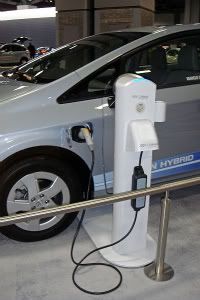
A reader asks my opinion of Envia Systems‘ lithium-ion battery. I reply:
If these claims are true, it’s a really important breakthrough — potentially even more significant than that of my friends at Eos Energy Storage.
The number one issue that electric vehicle nay-sayers throw in the face of us advocates is resistance of battery technology to rapid change: both in terms of cost and energy density. In particular, they say that where Moore’s Law (the idea that the functionality of technology increases exponentially over time) applies to things like integrated circuits, it absolutely does not apply to power systems like motors and batteries. I believe the truth is probably somewhere in the middle, and perhaps this is evidence of that. We’ll see.


