This does sound scary until you realize that whatever happens here and now in the United States is just a blip on the screen of world history. All would-be totalitarians ban the teaching of truth, but, even if they are successful in the short run, they never last. (more…)
What he appears not to understand is that people without scientific training are incapable of performing scientific research. Most hairdressers and swimming instructors are fine people, but the very highest they’ll be able to reach, in any given arena of science, is to comprehend the prevalent theories of the day.
If they go online and read about things like climate change and the pandemic and reach a conclusion that is at odds from the scientists, they are not in disagreement; they are simply incorrect.
There are two independent factors that make this universally true.
The first is the scientific method itself, with its hypotheses, experiments, data collection, analyses, and conclusions, followed by rigorous peer review, culminating in rejection, modification, or acceptance. That has no resemblance to any process of which this reader is capable.
The other is cognitive bias. I would ask the reader mentioned above to be honest with himself: Is he completely objective in what websites he selects? Is he interested in learning, or in corroborating what he already believes? I think we both know the answer.
This quote here reminds me of a time when I was running my marketing services agency. I had many personal assistants through the decades, but my favorite one called me, in tears, one morning at home shortly before I left for the office. Through her spasmodic whimpering she explained that a pet, a rabbit of all things, had died and that she couldn’t muster herself to come into work.
I told her that I completely understood, and said that, by all means, she should take the day off. I went on to say, “You are a fine human being. You’re highly intelligent and deeply compassionate. That enables people like you to have profound life experiences that are completely unavailable to the ignorant, mean jackasses of this world. Tears are the price that must be paid for the privilege of fully immersing ourselves in life.”
I hadn’t thought about that moment in many years, reminded only by these words from the great Dostoyevsky.
Considering the events of the past two years, few of us have high hopes for 2022.
I don’t feel that way. There is a very good chance that this year will see a pandemic under control, the insurrection put to bed and the guilty punished, and great strides in terms of environmental sustainability.
My wife just asked me, “Why isn’t the justice department moving against these brazen criminals who are defying congressional subpoenas?” to which I replied, “I have no more insight into this than you or the other +/- hundred million Americans who are asking that very question.” (more…)
Scientists hope the omicron variant of COVID-19 takes us to the point of herd immunity and becomes a manageable, albeit permanent, feature of human society, like the flu.
The graphic here illustrates part of the challenge, however. Decent people are surrounded by selfish, arrogant pigs.
For me, wearing a mask serves dual purposes. In addition to protection from spreading disease, those without masks can’t see my face, and the pure contempt I have for them.
Seems like a good time to remind Americans that socialism and capitalism do not exist in their pure form anywhere on this planet.
Take a moment and imagine our lives without our physical infrastructure, police, fire fighting, criminal justice, national defense, public education, labor laws, auto and food safety standards, air traffic control, TSA, libraries, emergency medical care, environmental regulation, social security, Medicare, national parks, bank regulations and deposit insurance, copyright and patent laws, federal dams to provide electrical power, flood control, the Weather Service, consulates and embassies, FEMA, veterans affairs, public water systems, monitoring of all international cargo, NASA, border protection, and the National Institutes of Health.
All progressives want to add to the list are universal healthcare, free education, greater environmental stewardship, and a few social programs to alleviate some suffering and foster productivity.
We all understand that good people outnumber bad people by many orders of magnitude. Sadly, that’s not the issue that’s going to serve as the make/break point in determining the outcome of human civilization.
The power of unchecked evil runs through a population of good “like crap through a goose,” as Patton is supposed to have said.
Keep in mind that the most powerful people in the United States plotted a coup, and are still trying to pull it off.
There is nothing vague or theoretical about this evil; it’s manifesting itself in our daily lives.


 This does sound scary until you realize that whatever happens here and now in the United States is just a blip on the screen of world history. All would-be totalitarians ban the teaching of truth, but, even if they are successful in the short run, they never last. (more…)
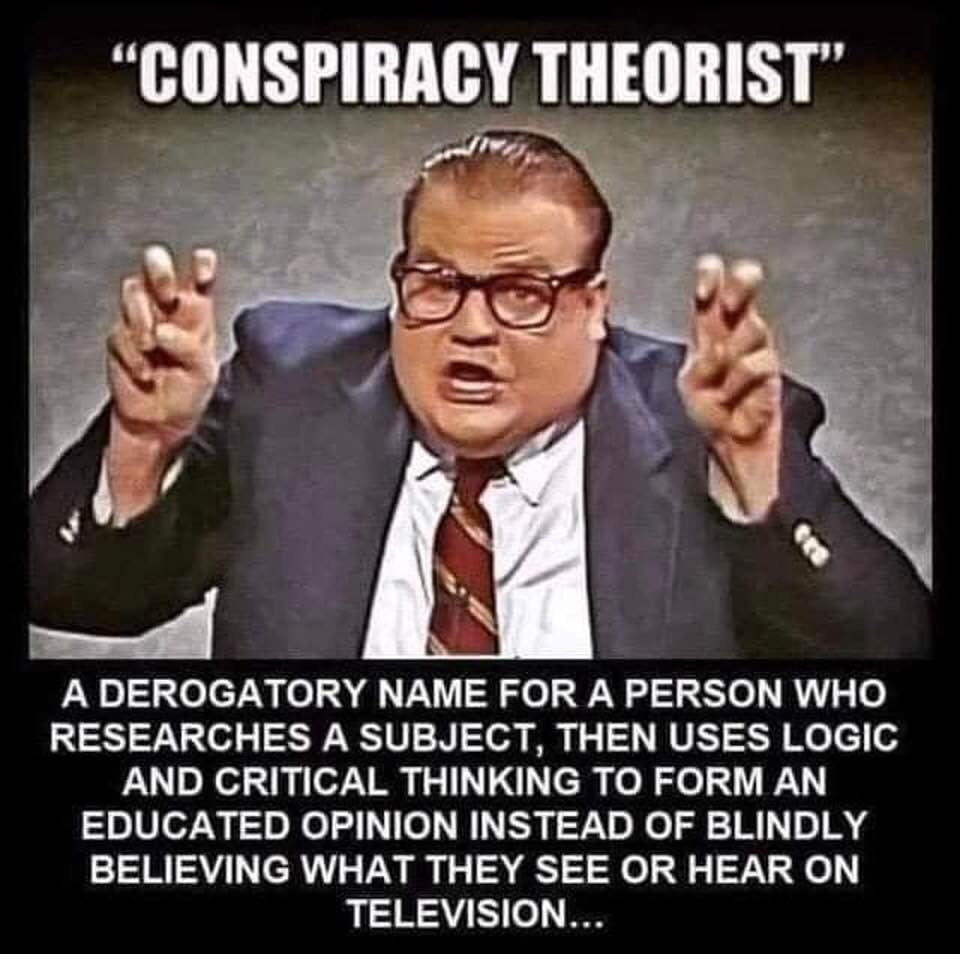 A reader sent me the meme here.
 We really do have a twisted notion of what it means to want our fellows to be healthy.
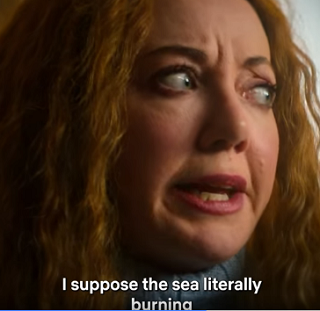 Not all of our discussions on climate change need to be dark, humorless, and overly academic.
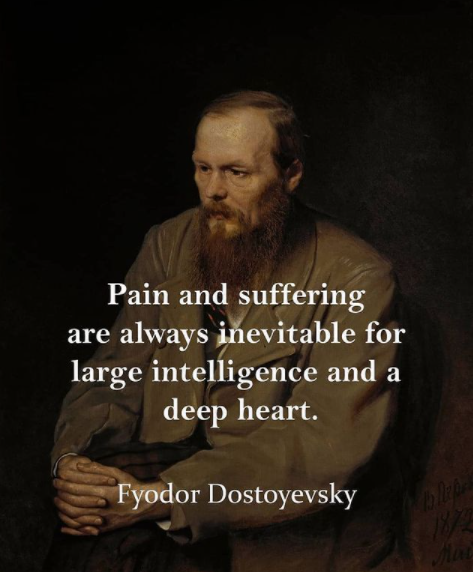 This quote here reminds me of a time when I was running my marketing services agency. I had many personal assistants through the decades, but my favorite one called me, in tears, one morning at home shortly before I left for the office. Through her spasmodic whimpering she explained that a pet, a rabbit of all things, had died and that she couldn’t muster herself to come into work.
 Considering the events of the past two years, few of us have high hopes for 2022.
 My wife just asked me, “Why isn’t the justice department moving against these brazen criminals who are defying congressional subpoenas?” to which I replied, “I have no more insight into this than you or the other +/- hundred million Americans who are asking that very question.”
 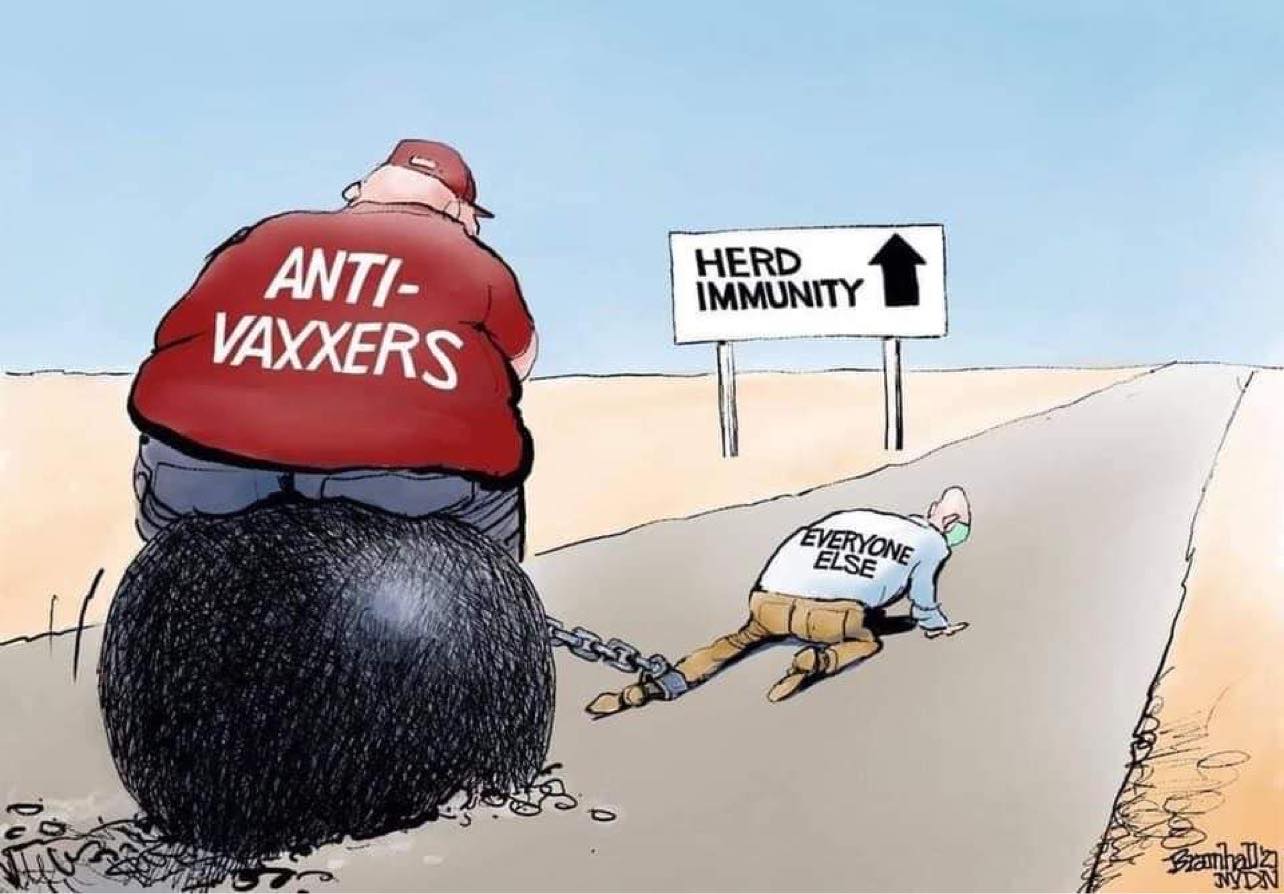 Scientists hope the omicron variant of COVID-19 takes us to the point of herd immunity and becomes a manageable, albeit permanent, feature of human society, like the flu.
 Seems like a good time to remind Americans that socialism and capitalism do not exist in their pure form anywhere on this planet.
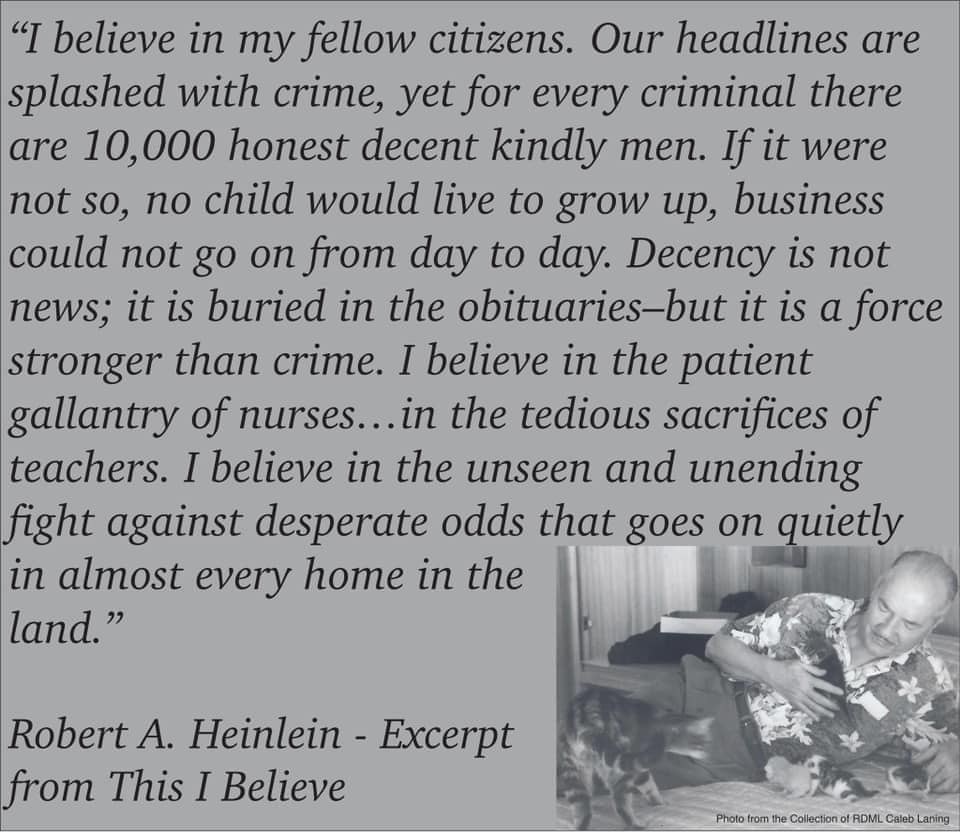 We all understand that good people outnumber bad people by many orders of magnitude. Sadly, that’s not the issue that’s going to serve as the make/break point in determining the outcome of human civilization.


