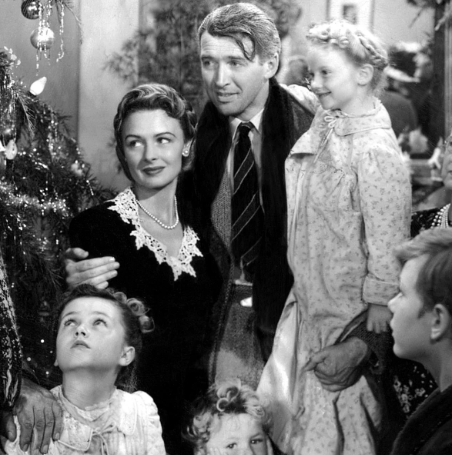
There’s a theory that most people underestimate the positive effects they’ve had on other people.
Yes, that’s the theme of “It’s a Wonderful Life,” but it’s also the core of the 1995 film “Mr. Holland’s Opus,” in which a music teacher who deemed that his life had been a failure because he never completed writing a great symphony, is gently and beautifully corrected. Please see below.
In the early days of 2GreenEnergy, my people and I were vigorously engaged in finding solid ideas in cleantech that needed funding in order to move forward.
I vividly remember a conversation with a guy in Maryland who was trying to explain the (ostensible) breakthrough that he and his team had made in hydrokinetics. When I was having trouble visualizing what he was talking about, he asked me to “think of it as a river in a box.”
“Oh!” I exclaimed. “You mean you take a box full of standing water, add energy to it and get it moving, then extract that energy, leaving you with more energy than you added to it.”
“Exactly.”
I politely explained that the laws of physics, specifically the first and second laws of thermodynamics, make this impossible.
He wasn’t through, however, and insisted that, in his office, his people had constructed a “working model.”
Here’s where my tone descended into something less than 100% polite. I told him that he may think he has a working model, but he’s wrong; if he believes this, he’s ignorant; if he doesn’t, but is conducting this conversation anyway, he’s a fraud.
“But don’t you want to come see it?” he implored.
“No. Not only would I not fly across the country to see whatever it is you claim to have built, I wouldn’t walk across the street to a “working model” of something that is theoretically impossible.”
—
I tell this story because the claim made at the upper left is essentially identical. You’re pumping water up out of a stream, and then claiming to extract more energy when the water flows back into the stream.
Of course, social media today is rife with complete crap like this. We’ve devolved to a point where defrauding money out of idiots is rapidly replacing baseball as our national pastime.
My maternal grandfather was born in southeastern Pennsylvania in 1903 and told me when I was a boy that in the 1920s, times were so good that saloon owners would offer a free lunch, consisting of bread, cheese, and cold cuts. “Sure, they were hoping you’d buy a glass of beer, but they really didn’t mind if you didn’t and simply scarfed down a free sandwich.”
He went on to tell me that nowadays, there’s a popular slogan: There’s no such thing as a free lunch, “but believe me, there was at the time.”
From today’s perspective of greed and selfishness, this whole story sounds like a fairy tale. Corporations and the congresspeople they own want one thing: to suck the life out of us.
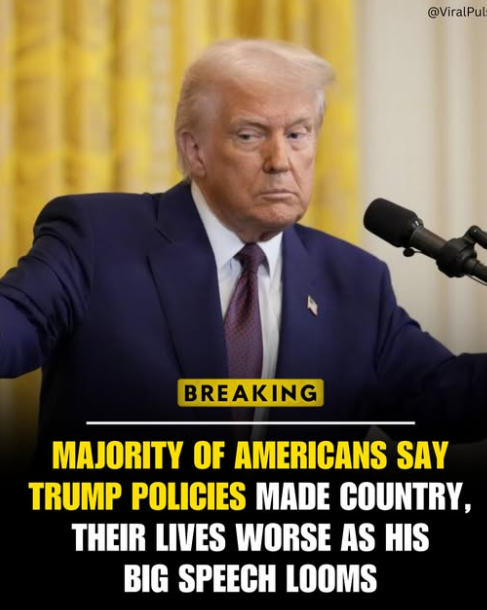
As a financially comfortable, educated, straight white male, one might think I’m impervious to any of Trump’s policies.
I have a weakness, however, and it’s one I share with virtually every other progressive on the planet–I care deeply for the well-being of other people. It disturbs me greatly to see other people suffer, especially when that suffering would be so easily avoided.
Kendrick Castillo was 18. A robotics student. College bound. Accepted into an engineering program. The final week of school felt like countdown, not crisis.
Then a weapon appeared inside a classroom.
Students froze.
Kendrick did not.
Witnesses say he moved instantly. He lunged toward the attacker. No hesitation. No calculation.
Two other students followed his lead.
Gunfire erupted.
Kendrick was fatally sh*t.
But his movement changed the room.
Classmates were able to tackle and restrain the attacker until authorities arrived. Investigators later stated that the confrontation disrupted the attack and likely prevented additional casualties.
In seconds, an 18-year-old made a decision most adults pray they never face.
Afterward, the silence was heavier than the noise.
At graduation, his name was called.
His diploma was awarded posthumously. The arena stood in collective applause. An empty seat. A cap and gown without the student inside it.
His robotics teammates remembered him as curious. Competitive. Kind. Someone who solved problems instead of avoiding them.
He had planned to build machines.
Instead, he built a moment.
A moment that classmates say gave them time.
Time to escape.
Two points:
If you can read this without tears welling up in your eyes, you’re a far more stoic person than I.
Since Big Money has made it impossible for the United States to implement the same common-sense gun laws that exist in the rest of the planet, this story will reduplicate itself into perpetuity.


 There’s a theory that most people underestimate the positive effects they’ve had on other people.
 In the early days of 2GreenEnergy, my people and I were vigorously engaged in finding solid ideas in cleantech that needed funding in order to move forward.
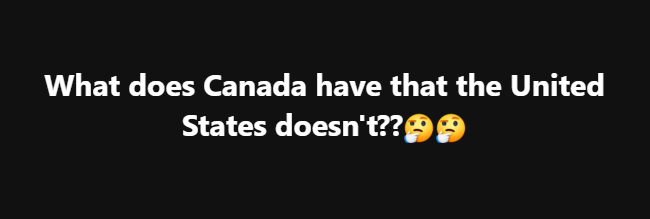 Until recently, I would have said: moose, maple syrup, and frozen tundra.
 I’m ready to live in a country with zero hateful morons, if that counts.
 As shown here, people have an infinite variety of ways to express their loathing of Trump.
 My maternal grandfather was born in southeastern Pennsylvania in 1903 and told me when I was a boy that in the 1920s, times were so good that saloon owners would offer a free lunch, consisting of bread, cheese, and cold cuts. “Sure, they were hoping you’d buy a glass of beer, but they really didn’t mind if you didn’t and simply scarfed down a free sandwich.”
 As a financially comfortable, educated, straight white male, one might think I’m impervious to any of Trump’s policies.
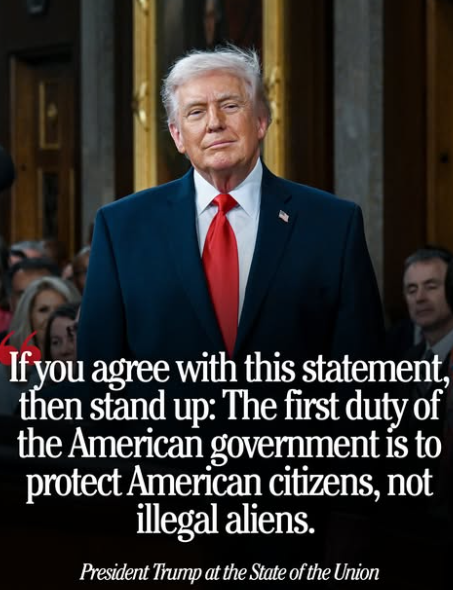 At left is a great example of a fallacy called a “false dichotomy.”
 What would one expect a sycophant to say?
 Here’s a story:


