2Greenenergy’s infographic “The Pros and Cons of Renewable Energy” has been downloaded tens of thousands of times, and I hope it’s helped create a good understanding of some of the promises of the industry, as well as a few of the challenges.

Here’s something I just came across: “The Benefits and Challenges of Floating Solar” that I thought was well done.  Rightfully, the subject is getting a great deal of positive attention at this point.

Pictured here is the world’s largest floating solar array, which happens to be in Singapore.

Tagged with:

We talk a great deal about climate change mitigation, but less about adaptation.  The Netherlands, with about one-quarter of its land area below sea level, has always been subject to flooding.  Linked above is a cool video that presents what the Dutch have done to deal with this–the largest engineering project on Earth.

This all came to be, following an enormous storm in 1953 that flooded many cities and killed 2000 people.

It can’t help make one wonder what the United States would do if such a massive undertaking were to be required here.  One thing’s clear: if a Democrat were in the White House, the Republicans would oppose it, regardless of how horrible the effect of doing so might be.


Tagged with: ,

That’s the way it look to me, as well. But then again I’m not a Harvard Law Professor.

From his Wikipedia page:

Laurence Henry Tribe (born October 10, 1941) is an American legal scholar who is the Carl M. Loeb University Professor at the Harvard Law School of Harvard University.  Tribe is a constitutional law scholar and co-founder of the American Constitution Society. He is the author of American Constitutional Law (1978), a major treatise in that field, and has argued before the United States Supreme Court 36 times.


Tagged with: , ,

Aftermath of Hurricane Harvey in Houston, Texas
From The Hill:

U.S. climate envoy John Kerry on Tuesday said he believed the private sector was more likely to find solutions to climate change than government.

“I was convinced, and I remain convinced, no government is going to solve this problem,” Kerry said in remarks at the Institute of International Finance’s 2021 Washington Policy Summit.

“The solution is going to come from the private sector, and what government needs to do is create the framework within which the private sector can do what it does best, which is allocate capital and innovate and begin to take the framework that’s been created. … We need to go after this as if we’re really at war.”

Well, let’s be real.  Consumers have to demand low-carbon energy and eat less meat.  The private sector needs to build products whose LCAs (lifecycle analyses) are eco-friendlier.  And government needs to use taxation and subsidies to make all this more attractive.  One can’t work without the other two.

The problem here in the U.S. is that our Congress is essentially owned by corporate entities, including, infamously, the fossil fuel industry.  We’re still subsidizing oil exploration, a 100-year-old industry, that is the wealthiest in human history.  Maybe that’s what Kerry meant by “no government is going to solve this problem.”

Tagged with: ,

The little girl here makes an important point.  Obviously all lives matter, but black lives didn’t matter for 350 years, and it’s time to turn that around.

That some people find this controversial is sickening.  When George Floyd was murdered, I joined people all around the world who were marching in protest.  To feel solidarity with many millions of people with a common objective was a wonderful thing; I highly recommend it.

We talk about a sustainable society.  It’s hard to imagine sustainability when entire races of people are treated as second-class citizens, based purely on the color of their skin.

There is no peace without justice.


Tagged with: , , ,

A great deal of what progressives believe vis-a-vis their conservative counterparts.  Do immigrants take away American jobs? Does the death penalty deter crime? Is late-term abortion “murder?”

Certain other items, however, are far more cut and dried.  When we look at the graph below, we see a clear correlation between gun ownership and gun-related deaths.  There is no wiggle-room here; more guns means more dead people.


Tagged with:

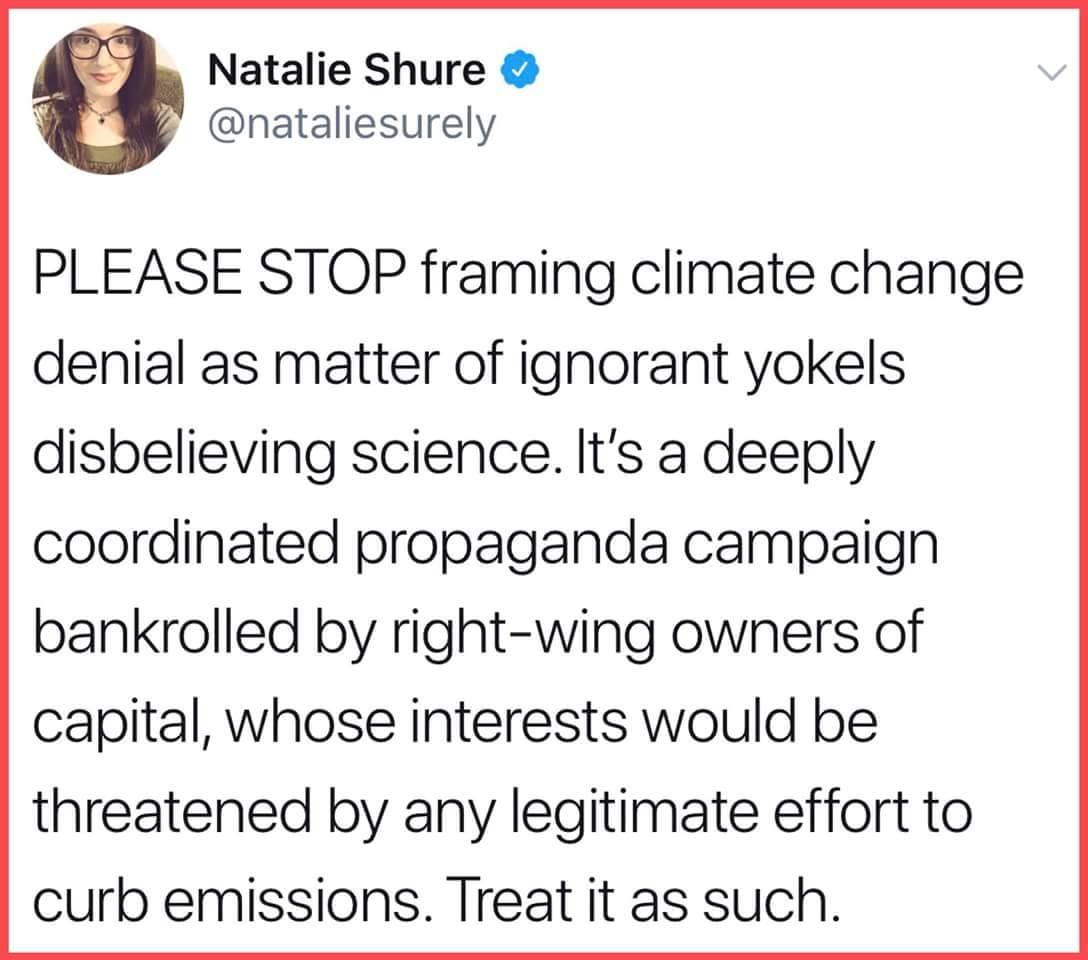
Sometimes we progressives wonder if we have the wrong message to persuade others to come on board.  Are we coming on too strong with ideas like Black Lives Matter?  Should we back off a bit with some of our demands about environmentalism and social justice? It’s a hard call to make.

What isn’t a hard call to make, from a messaging point of view, is the ad here.  The recent college graduate is walking on train tracks in heels, in the direction of what looks like an oncoming train.

I invite whomever did this to call me for a free consultation on marketing basics.

Tagged with:

Arkansas’ governor has signed into law a measure that would allow doctors to refuse to treat someone because of moral or religious objections.  From ABC News:

LITTLE ROCK, Ark. — Arkansas Gov. Asa Hutchinson on Friday signed into law legislation allowing doctors to refuse to treat someone because of religious or moral objections, a move opponents have said will give providers broad powers to turn away LGBTQ patients and others.

I’ll grant that this a distinctly anti-human rights law (remember this is Arkansas), but here’s my question: To whom does this apply?  How many people are sufficiently intelligent and diligent to become a practicing physician, but so small and petty to refuse to treat someone in need?

This seems like a symbolic gesture to all the hateful morons who live in the state.


Tagged with:

Freedom House is a democracy watchdog group that, among its other functions, publishes an annual report, ranking the relative level of freedom in countries around the world.  I look forward to checking it out, though the United States has fallen further behind in the report each year.  From The Guardian:

The US has fallen to a new low in a global ranking of political rights and civil liberties, a drop fueled by unequal treatment of minority groups, damaging influence of money in politics, and increased polarization, according to a new report by Freedom House, a democracy watchdog group. (more…)

Tagged with:

At left is a reference to the new voter suppression laws in Georgia making it a crime to bring water for people standing in line waiting to vote.  Gotta love this guy.

Here’s a discussion I’m having with a couple of old friends.  “David” was the dean of the Columbia Law School and is now the president of Rice University.  “Gregg” is a professor of law at Georgetown.

Craig: May I ask one of you Constitutional scholars to explain why what’s going on with the Georgia voting laws isn’t a clear violation of the 14th and 15th Amendments? (more…)

Tagged with: