
Making the Insanity Stop

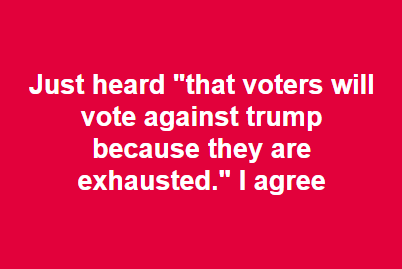 At left is an interesting thought someone had. Trump, in addition to all the other effects his selfish greed and insanity has on people, is exhaustion. Just being on the same planet with him is sapping our strength.
When was the last time our lives weren’t disrupted by lies, corruption, disease, stock market volatility, war, disrespecting an ally, coddling a dictator, torturing children, inciting violence, extortion, impeachment, destroying the environment, conflating centrist Democratic politics with socialism, denying science, white nationalism, or treason?
Who’s enjoying this s***?
Life used to be enjoyable. Let’s make this go away.
 Developing “herd immunity” to COVID-19 sounds like a reasonable idea, until we realize that it would mean approximately 180 million cases, which would result in about 9 million deaths.
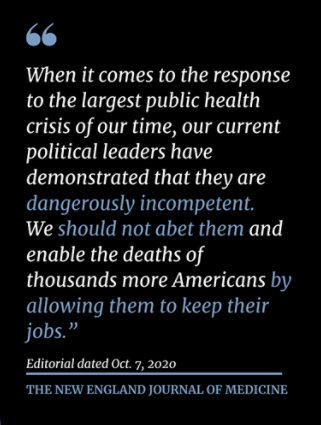 How are Trump supporters responding to this recommendation from the entire medical community?
 From
From 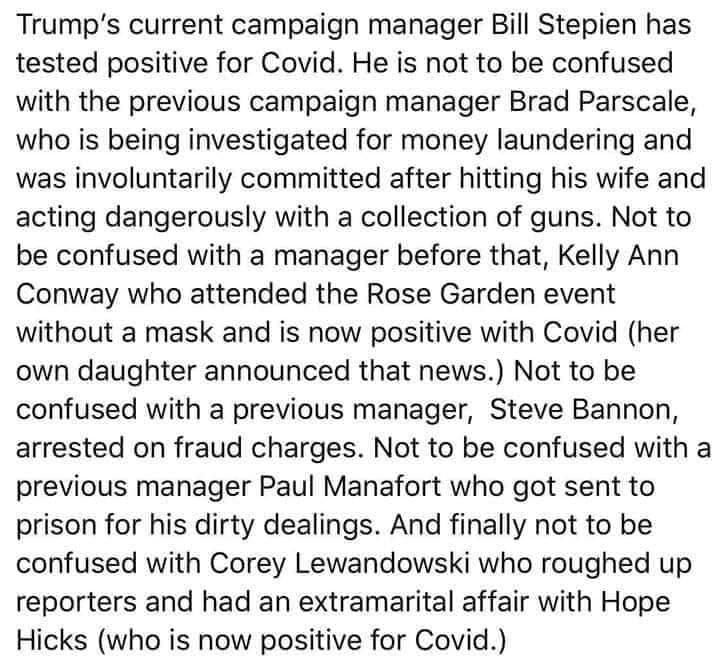 What’s new in the Trump administration today? What’s the latest outrage?
 The meme here is a reminder that Antifa didn’t start with the BLM movement; it’s been around ever since a group of people first rose up against a tyrant.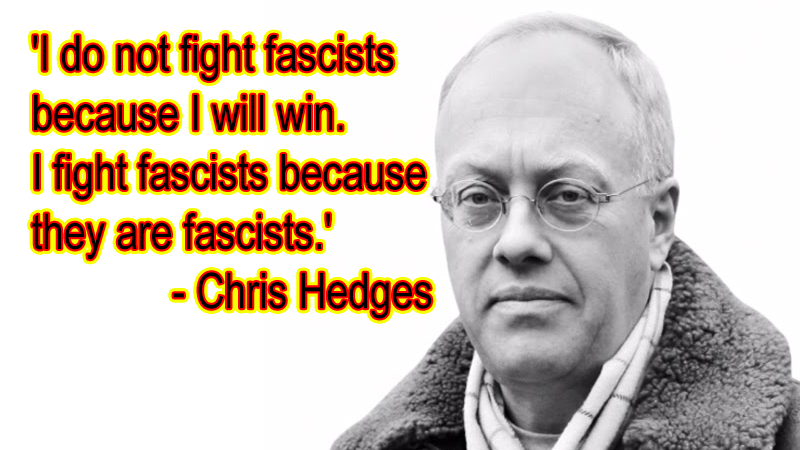
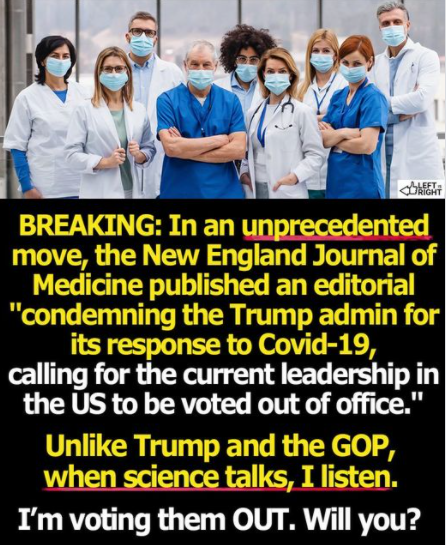 The New England Journal of Medicine, which began publishing in 1812, took the unusual step of making a political comment.
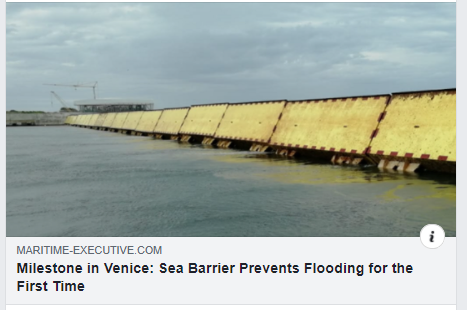 Fully 85 percent of Venice was flooded by a near-record 74-inch high tide last November, leading to renewed calls for action on a flood protection system. Here it is: Venice’s long-awaited sea barrier system was deployed successfully for the first time on Saturday, holding back the tide and keeping the city flood-free.
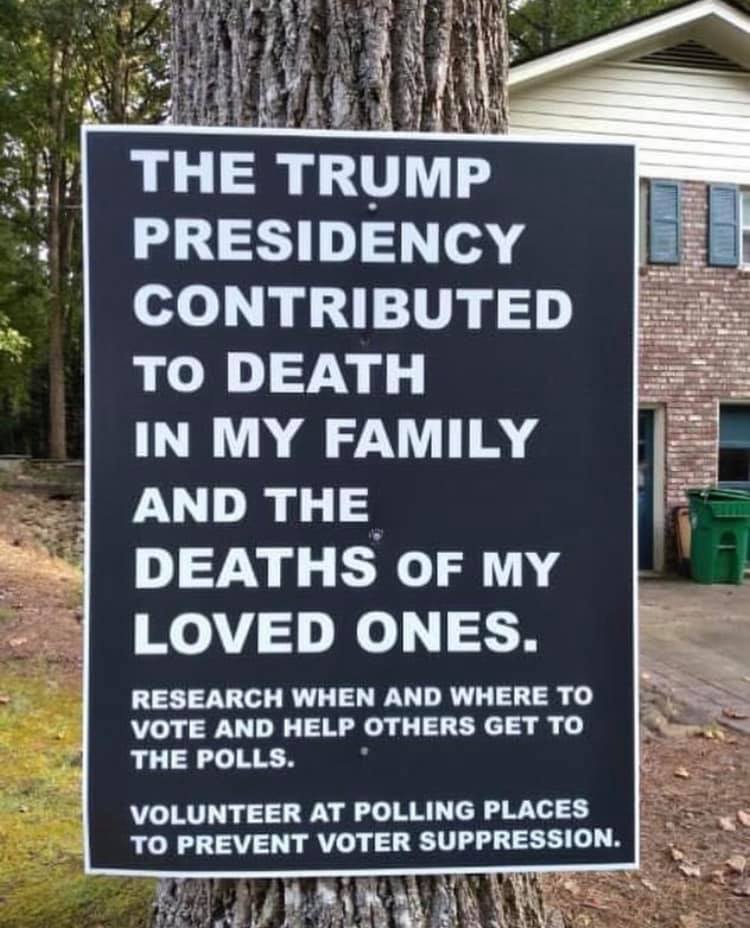 Here’s a sign that’s painful to read.
 I thought I’d post this, since there seems to be so much conversation on the topic of wishing suffering on others.


