
Four Grammar Rules You Don’t Need Anymore

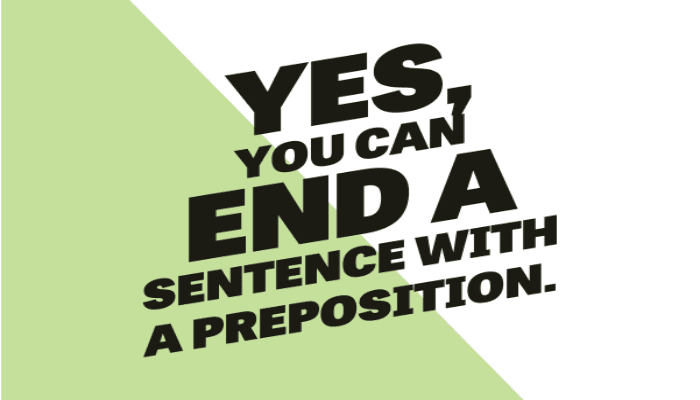 Here’s a cool piece for those of us who concern ourselves with English grammar, along with my comments, for what they’re worth:
1. Don’t end sentences with prepositions.
This was never really a rule in the first place; the rule is don’t end a sentence with an unnecessary preposition. Winston Churchill mocked those who don’t really understand this when he said, “This is something up with which I will not put!” And yes, “This is something I won’t put up with” is fine. “Where’s the library at?” on the other hand, is not at all fine. “Where will this road take me to?” should be simply, “Where will this road take me?”
2. Don’t split infinitives.
This is a legitimate rule, but it’s one that has its limits. “I want to slowly cook the chicken” should be rewritten as “I want to cook the chicken slowly.” But there are cases in which no such rearrangement of the sentence is possible without making it terribly awkward, in which case, go for it. Few people are going to notice in any case. Seventy-five years ago, splitting infinitives was a real no-no; now it’s no big deal.
3. Never begin a sentence with a conjunction.
This is just poppycock. Because a friend once criticized me for doing this, I often review my writing with an eye towards losing that “and” or “yet” at the beginning of a sentence, but I almost uniformly find that I would be sacrificing some level of clarity in what I’m trying to get across by doing so.
4. Never start a sentence with hopefully.
This one’s correct. “Hopefully, the meeting will start immediately” means that the meeting is hopeful, which, of course, it isn’t. Try: “I hope the meeting will start immediately.” The only exception would be one in which the subject of the sentence actually is hopeful, e.g., “Hopefully I trudged on,” but this is best avoided altogether.


