
Resolution in the Chevron-Ecuador Case Doesn’t Appear To Be Right Around the Corner

Having said this, I don’t want to dissuade readers from checking out the article; it’s very well prepared, and it’s full of human drama.
Having said this, I don’t want to dissuade readers from checking out the article; it’s very well prepared, and it’s full of human drama.

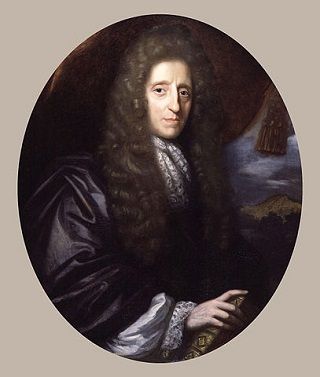
Of course, as always, the “devil is in the details,” and this becomes obvious as the world population expands (there are 14 times more people on Earth today than there were in the 17th Century), and technology develops to the point that these “rights” begin to put pressure on one another. Do people have a right to clean drinking water, or should water be private property? To what degree do people have rights to behave in ways that have adverse effects on the environment?
One can argue that Locke’s ideas raise more questions than they answer, yet we nonetheless need to credit him with getting us started off in a productive and fair-minded direction.

Good. It’s exciting stuff. When Wind/CAES takes off, it’s going to be a rocket-ride; I can tell you that much. The gating factor to the integration of huge amounts of wind (already almost 5% of the U.S. grid mix) is cost-effective storage, and CAES just could be the answer.

And that fact is not lost on the world of traditional energy. (more…)


By supporting Ruben Gallego, voters made it clear that they want to fundamentally change the way elections are funded. Our experiment is working. And last night’s victory will be the first of many.

It’s the birthday of the philosopher Georg Wilhelm Friedrich Hegel (pictured), born in Stuttgart, Germany (1770). He started out studying Christianity, and he was particularly interested in how Christianity is a religion based on opposites: sin and salvation, earth and heaven, church and state, finite and infinite. (more…)

Here’s an excellent article on the subject, which I came across in this morning’s edition of SmartGridNews, edited by our colleague Jesse Berst, who was the subject of our webinar on Smart Cities.


ANAHEIM, Calif., Jan. 29 (UPI) — Five trains in operation at Disneyland Park in Anaheim, Calif., are running on biodiesel created from cooking oil taken from tourist venues, an official says.
Disney Director of Environmental Affairs Frank Dela Vara said the biodiesel fueling five Disneyland Railroad trains was created from oils once used at the California resort’s various hotels and eateries, The Orange County (Calif.) Register said Wednesday.
“The improvement here is that it’s no longer using food for fuel. There are no soybeans grown in the Midwest to fuel our trains, just cooking oil that we’re already generating,” Dela Vara said.