Many companies both large and small have been successfully saving money after becoming more environmentally friendly, and, in today’s uneasy and somewhat lean economic times, being a little more financially responsible will do wonders for the inherent success of your business. Although people may typically imagine that doing this will involve a large amount of stress and turmoil for all concerned, businesses are gradually becoming both eco-friendly and fiscally accountable, and all with no huge company-wide headaches. (more…)
With people across the UK leading ever more hectic lives, finding the time to take care of our environmental responsibilities can be increasingly difficult. Although the world of technology is often forced to take much of the blame when it comes to environmental damage, in many ways it is working incredibly hard to right the wrongs it has perhaps been unfairly burdened with.
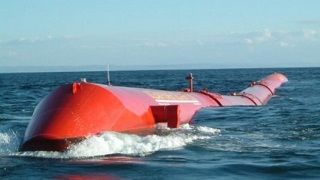
I just reviewed another in a long series of attempts at ocean wave energy. This one is similar to a Pelamis, but, because it requires less material it will be less expensive, thus offering a lower levelized cost of energy (LCOE).
I wrote back: It’s hard for me to evaluate these claims re: LCOE. I’m reminded of something a wise-cracking engineer at Black and Veatch told me a few years ago when I showed him one of my client’s ideas and told him how inexpensive it would be to build. “We have a saying around here, Shields,” he retorted. “It’s always cheap until you build it.”
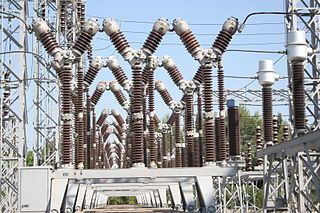
The problem, of course, is that this leaves fewer (and less affluent) people as the utilities’ remaining customers.
Perhaps it’s time to take an obvious but much resisted step: rethink the relationship we have with our utilities from the ground up. We’ll always need them around, just not in the way we wanted them when we laid the rules down 100 years ago.
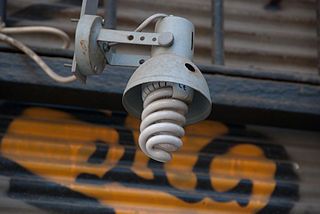
Each one of us uses energy in some way or other all day long, throughout our entire lives. We depend on energy for almost everything to make our life more comfortable, and enjoyable. Unfortunately what we don’t realize is that we are wasting energy unnecessarily. (more…)
There’s a green revolution going on. More and more people are making their homes energy efficient. Some of them are doing this to protect the environment, while others are doing it to save money. Either way, the environment is benefiting from this. You too should join this green revolution and transform your home. It’ll benefit you and the environment simultaneously. Here are 6 tips to make your house energy efficient and save money at the same time.
Here’s another short essay from one of our interns, Nikita Rao. Thanks, Nikita. -ed
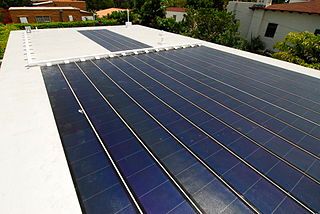
The need for renewable resources is increasing tremendously in several regions of the world, due to its limitless availability. Solar power is one among the many resources that has gained a stable place in the market; it is expanding massively.
The increase in solar power is due to many reasons, one of which being the incentives provided to solar power generators by the utilities. (more…)
Here’s an article that summarizes a recent presentation on energy trends conducted by Pulitzer prize-winning author and energy analyst Daniel Yergin. About a year ago, I saw Yergin present at the University of California at Santa Barbara, and I appreciate his breadth of knowledge on the subject. But then, as again here, he barely touches on the many environmental issues, and he doesn’t mention climate change at all. That’s an enormous elephant in the room.
Of course, let’s keep in mind that he’s a consultant to the industry, and his clients are primarily the big oil companies. How much can we suspect they really want to hear about global warming, ocean acidification, loss of biodiversity, and the rest? I’m sure the consultants to the tobacco companies keep the discussion of lung cancer to an absolute minimum.
About a month ago, I mentioned that I had run across a very interesting group of folks in Brazil. The team, captained by an extremely senior financial/energy professional, has assembled a package of 13 “small” (1 – 30 MW) and “micro” (less than 1 MW) run-of-river hydrokinetics projects in Southeastern Brazil, and is well-positioned to move quickly. They’re looking for investors, and are prepared to make an attractive offer.
Again, if you happen to be an accredited investor, and you’d like to learn more about the project, just click here. Please contact me if you’d like to get in touch with the principals, and I’ll make that happen.
Note: Sorry about the error you may have received: mW (milliwatts) vs. MW (megawatts).
One thinks of Apple CEO Tim Cook as being an extremely calm person, but he drew a hard line against a conservative faction of shareholders who complained that the company should focus entirely on its bottom line, and knock off its demand for renewable energy and its participation in other sustainability initiatives aimed at stemming climate change and reducing other forms of environmental damage. (more…)


 Many companies both large and small have been successfully saving money after becoming more environmentally friendly, and, in today’s uneasy and somewhat lean economic times, being a little more financially responsible will do wonders for the inherent success of your business. Although people may typically imagine that doing this will involve a large amount of stress and turmoil for all concerned, businesses are gradually becoming both eco-friendly and fiscally accountable, and all with no huge company-wide headaches. (more…)