I’d like to thank our wonderful intern from France, Olivier Goavec, for this very interesting piece on the challenges associated with integrating large volumes of variable resources into the grid-mix.  I hope readers enjoy it. – ed

When the Kyoto protocol was signed in 1997 in an effort to slow the pace of global warming, many countries began to change their approach toward energy. For example, the EU adopted in 2008 an internal agreement to produce 21% of its electricity from renewable sources by 2020. The region follows an economic policy to provide incentive to investors, by providing an attractive kWh feed-in tariffs.  Read Complete Article Here.
Tagged with: , , , , ,

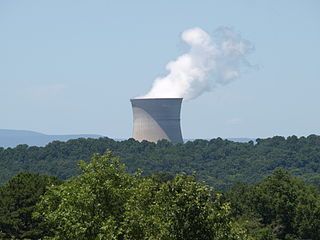
Nuclear energy is the world’s largest source of emission-free energy. Nuclear power plants don’t produce air pollutants, sulfur or greenhouse gases.

The United States has 65 commercially operating nuclear power plants with 104 nuclear reactors in 31 states around the country. 36 of the plants have two or more reactors. These plants have generated about 20% of U.S. electricity each year since 1990. (more…)

Tagged with: , , , , ,

Recently, Science Daily published an article based on the research of scientists from the University of North Carolina and John Hopkins, outlining the results of adding renewable energy sources to the grid, and offering ideas on how to mitigate issues associate with this.

The developing renewable energy sources have a very high capital cost input, which in comparison with natural gas is hard to compete with. These renewable resources are abundant, and unlike natural gas will be available for many more years. (more…)

Tagged with: , , , ,

Within ten minutes of one another, I:

1) Got a call from someone with a perpetual motion machine that involves the movement of buoyant objects in water (I see at least two of these per year), and

2) Encountered this video in which U.S. Representative Jerry Anderson (R-UT) claims we need more carbon dioxide in the atmosphere – as much as twice our current levels, because a) it’s less than 0.5% of the air, b) (more…)

Tagged with: , , , ,

I just did a phone interview for a young lady writing a paper for a course she’s taking in college, which reminded me of how passionate the youth of today is about climate change and the environment more generally.  She seemed really cheesed off that the IPCC (International Panel on Climate Change) is having such a tough time bringing the nations of the world together to form a meaningful and binding agreement that would limit greenhouse gas emissions. 

You and me both, kid.  🙂

Tagged with: , , ,

One person trying to become greener is great, but if they can persuade their entire neighborhood to do it we’ll all be able to make a much bigger difference.

Are you old enough to remember what neighborhoods used to be like decades ago? These days they’re completely different and this isn’t a good thing. They’re becoming a lot dirtier, but I’m not talking about the trash lying in the middle of the street. We’re wasting tons of energy and we’re polluting the environment at a frightening rate. Instead of trying to tackle our anti-green problems on your own I’m going to look at a few ways you can do it with the help of the lovely people who live in your neighborhood. (more…)

Tagged with: ,

Here’s a popular video that makes an extremely important point: in problem solving – and in life in general – we tend to confirm what we believe, even though disconfirming our beliefs is so much more productive.  This, of course, is reflected in the source of news we select; it explains why Fox News viewers tend to be climate change deniers: they choose a source of information that will re-enforce what they already believe. 

But to be fair, am I any better?  I tend to read things that confirm my belief that climate change is real and that we have an obligation to do something about it, etc. Having said that, there has been an enormous amount  of work — for a variety of purposes – that’s gone into the process of disproving the concept of human-caused climate change, and, according to the vast majority of scientists who have reviewed that work, it has not been successful in discrediting the theory.

Tagged with:

It’s the 95th anniversary of the tax on gasoline, in the U.S., at least (Oregon, 1919). Of course, its original justification was the idea that those who drove should pay for the construction of roads, which seems as reasonable today as it did back then. 

Now, however, we have a whole new set of issues, associated with the externalities of burning oil, including long-term environmental damage, challenges to national security, and threats to our health.  For example, the people living within a mile on either side of the San Diego Freeway out here in sunny California have cancer rates that are many times the national average.

Perhaps a larger tax, perhaps in addition to a price floor, could help defray some of these costs, when providing incentives for people to rethink their approach to transportation.

Tagged with: , , , ,

Tiny particles that penetrate lung tissue called “PM 2.5” come largely as exhaust from burning coal to generate electricity, and have been linked to hundreds of thousands of premature deaths in certain parts of China, where their concentrations are often over 500 micrograms per cubic meter, more than 20 times the levels that the World Health Organization deems safe.  Small wonder these people are upset with their government.  I certainly wouldn’t want to live in air that looks like you can cut it with a knife, watching my family and friends drop like flies.     

The world really needs to get rid of coal as soon as possible.  We need a plan in place to do that.  Why can’t we have one?

Tagged with: , , , , ,

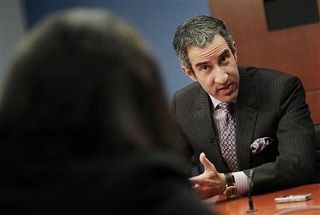
Here’s an article on the solar photovoltaics industry written by my colleague Shawn Kravetz (pictured), with whom I conducted a webinar on solar investing last year.  By way of introduction to the article, Shawn writes:

We wanted to share two timely and important updates on a unique investment opportunity we brought to light in recent weeks. Renewable Energy Trade Board Corporation (EBODF) is detailed in the following article, but two items merit investor attention. (more…)

Tagged with: , , , , ,