South America’s energy demands can be met in different ways, but most countries lean to hydro in one form or another. One of the reasons I’m so excited about the run-of-river hydro projects I’m trying to put together in Southern Brazil is that, in their absence, that country will soon commence work on what will become the second-largest hydroelectric dam on the planet. (more…)
In the last few years, people have realised the importance of living in eco-friendly homes. With technological advancements, green homes have become a lot easier to design and build. In fact, designers and architects can even hide eco-friendly and economical features of your two storey house in a very inconspicuous way. Making your two storey house green helps not only your finances, but also your surroundings. (more…)
Had Steve Jobs survived cancer, he would have celebrated his 59th birthday today. In addition to his other merits, Jobs led a very philosophic life; he once observed, “Remembering that you are going to die is the best way I know to avoid the trap of thinking you have something to lose. You are already naked. There is no reason not to follow your heart.” (more…)
Last Friday was the anniversary of the publication of the Communist Manifesto in 1848. Of course, communism isn’t regarded very well in the world today as a workable political philosophy.
But here’s something that also seems broken: (more…)
As someone who has been involved in water and flood management for several decades the ongoing delay to SUDS legislation in the UK has been an intriguing saga to follow.
But firstly, I would like to get one thing straight. The small role I play in helping to improve the water management systems of the UK is conducted very much within the heavy engineering and manufacturing sector of the industry. (more…)
Here’s a video just posted on the ARPA-E (Advanced Research Projects Agency – Energy) YouTube video channel, presenting a bit of information on the U.S. Department of Energy’s involvement in smart grid. By design, it’s not very detailed; it covers a great deal of turf in less than five minutes. I’m particularly impressed with the progress that Harvard University is making in flow batteries for large-scale energy storage, and the work being done with power electronics to facilitate high-voltage/current transmission over long distances.
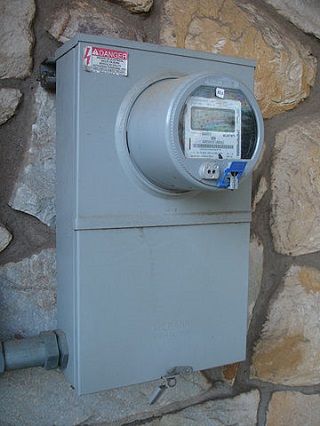
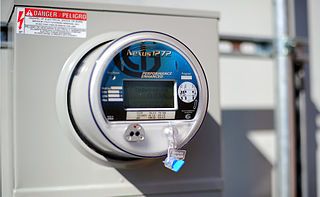
It’s hard to imagine anyone’s objecting to smart grid, a subject that holds so much potential to enable a more efficient and environmentally friendly way to generate, transmit, distribute and consume electrical energy. When I first heard that there were people who proffered up serious concern about health and privacy issues, I recall asking, “How many? Four?” Sadly, the answer is that a lunatic fringe movement has grown up around this point, and that fringe, contrary to the definition of the word, is actually fairly robust. (more…)
Mazda has recently announced its breakthrough i-ELOOP Brake Energy Regeneration System, which is the first in the world of its kind. The system’s three main functions are to REGENERATE, STORE, and USE kinetic energy from the vehicle’s deceleration as electricity.
When your car brakes, even if quickly, the system captures that energy and converts it to electricity and stores it in a capacitor. With the i-ELOOP system, the high-capacity electric double layer capacitor’s main component is made of charcoal and doesn’t require heavy or precious metals, making it environmentally friendly in comparison. The active charcoal carries electricity through its micropores through a Using a capacitor instead of a battery extends the life of the electricity held within it by not using chemical reactions to withdraw it, which in turn, promotes a higher fuel economy. Using a variable voltage alternator which generates up to 25V in comparison to the conventional 12V allows for energy to be continually supplied to the capacitor.
This system is a game changer for the automotive and trucking industry’s move toward higher fuel efficiency. Although capturing kinetic energy is nothing new to the automotive industry, Mazda has created a system which seems to be able to do so while also requiring less manufacturing costs with the change in parts composition. If this technology concept carries through commercially, transportation and fleets will see a an overall savings in fuel costs and vehicle longevity. From big rigs to service trucks, fire trucks to rental vehicles, the utilization of kinetic energy through this system and systems which develop in competition with this is one more way to squeeze all that we can out of our fuel resources.
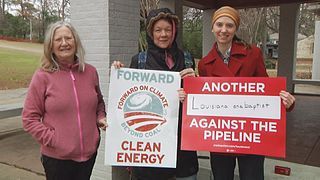
A few years ago, someone told me never to be sarcastic in my writing, but I find it tough; sometimes I think it can be quite persuasive. Here’s a case in point: an animated video about the American Petroleum Institute and the Keystone XL Pipeline. It’s almost two full minutes long, it’s 100% sarcasm, and I thought it was terrific. Congratulations to Mark Fiore, a Pulitzer Prize-winning editorial cartoonist.
Here’s a brilliant article that discusses and compares different ways of measuring energy consumption. If I say I generated a gigawatt-hour of energy, does that mean the amount I sent to the consumer? If so, and that energy came from a coal plant, I probably burned about 2.5 gigawatt-hours’ worth of coal, as the plants are about 40% efficient. In other words, there was another 1.5 gigawatt-hours of energy that was converted into heat that was wasted in this process, but probably needs to be counted somehow.
But what about renewable energy, e.g., solar PV. Nothing is burned there, of course, so what do we do here? As it turns out there are two equally correct answers: We can either count the energy content of the electricity generated, or we can ask how much fossil fuel energy would have been required to produce the same amount of electricity.
The author, Robert Wilson, does a really good job explaining a complicated subject.


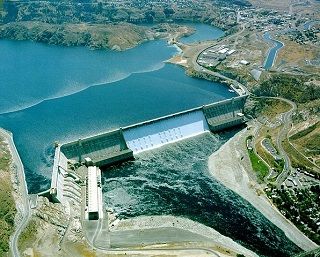 South America’s energy demands can be met in different ways, but most countries lean to hydro in one form or another. One of the reasons I’m so excited about the run-of-river hydro projects I’m trying to put together in Southern Brazil is that, in their absence, that country will soon commence work on what will become the second-largest hydroelectric dam on the planet. (more…)


 Mazda has recently announced its breakthrough