
A Couple of Thoughts on Transportation and Climate Change

 I urge readers to check out today’s issue of “The Writer’s Almanac,” in particular the article on the anniversary of the first street car in New York City (in 1832). To me, it calls upon two important ideas, the first, obviously, is the concept of mass transit, and how important it has been to local residents and visitors, even in the early 19th Century. Why anyone in “The City” would want to own a car is beyond me. (more…)
 The benefits of the so-called “green” cleaning has long been discussed in certain society and professional circles mostly by people, who work for different cleaning companies and people who provide households and specialized businesses with a variety of detergents, but also by a great number of housewives, who really care about the health and well-being of their families.
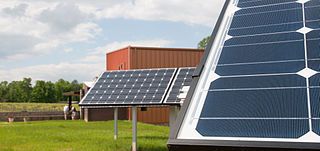 Solar energy continues to gain traction as a mainstream idea for both homeowners and businesses alike. The rush to move to sustainable and green energy has begun to become entrenched deeper in America; who happens to be far behind the green movement as opposed to European countries. Although solar technology has been around for decades, most Americans have relied on the electric grid and fossil fuels to power their homes; with the costs of powering homes and businesses rising, the quest to access efficient, cheap and unlimited power is growing.
  It’s been a while – too long, actually – since I mentioned my friend Bill Paul and the amazing work he’s doing at
  The idea of cordless charging for electric vehicles has been around for more than a decade now, and several car makers, including Nissan, GM and Volvo, have tried to develop a system that would be able to charge cars without having to plug them in. But, wireless charging is still far from becoming a reality, as the technology is too expensive at the moment, and needs to be further developed so that it can be as fast, as convenient and as efficient as plug-in charging. However, Volvo has made significant progress in this regard recently, and hopes to be able to implement the technology in production cars by 2016.
 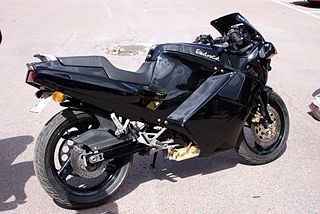 Electric Avenue Scooters + Motorbikes is a company that has been operating in Austin, Texas for almost 4 years now, and has been helping people avoid the need for using cars by selling them high quality electric scooters. It is the firm belief of founder, Mark Sze-To, that the best way to mitigate global warming and other environmental crises is to provide alternative consumer products that out-mode those that exacerbate pollution and global warming most significantly.
  The world is a wonderful place and one should traverse its surface in order to enrich life or rejuvenate the mind, body and soul. However, the endeavor of an exploration should not be undertaken at the cost of the beauty, sustenance of a particular place and its people.
 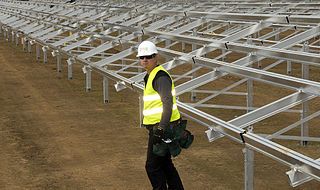 The solar power movement has seen a lot of advancement in the recent years. In Australia, there is more than 2,412 MW of installed photovoltaic power. Approximately 1,000 MW of that came about in 2012 alone. These massive changes occurred even though the masses aren’t yet convinced by the benefits.
 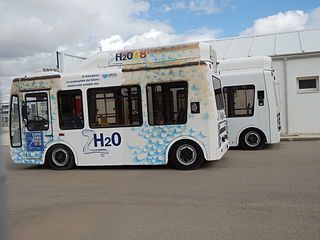 My colleague Jon Lesage just published this


