As I’ve written many times, I believe we’ll be seeing several OTEC plants put into operation over the next few years, rapidly replacing diesel generators as the main source of electricity for the one billion people who live near tropical oceans. (more…)
I hope readers will check out EmpowerTheOcean, a new website I helped establish. The content for its main “news” page is written mostly by a very clever woman in the Northern UK, Emma Websdale; I think she does a good job reporting on the top issues of the day in renewable energy and the related subject areas: climate change, job growth in the energy sector, the migration from fossil fuels, the top investors in clean energy, etc. (more…)
I have a few excellent prospects for summer interns in 2014, the latest of whom, a young man from West Virginia, just sent a resume and spoke with me on the phone this morning. Naturally, people wonder what this internship is all about, yet this is a hard question to answer, as it depends entirely on the person’s strengths and interests.
I direct “math/science” people into research on one of hundreds of topics that can be explored in emerging technologies, climate science, battery chemistries, projections for energy consumption by region, etc. (more…)
Frequent commenter and colleague Tim Kingston sent me this piece about the burden that environmentalism places on the poor and asks: Are things really this bad in CA?
I respond:
Of course, a tax on our consumption of energy hits the poor hardest. (more…)
At the end of the day, however, it really comes down to how EVs are charged, and it’s unclear if the author of this article understands this fully. From his comments about solar and wind, he seems to think that the average grid mix is important here, and that’s false. What matters is the typical response to incremental load onto the grid in the middle of the night when we charge our cars. If that’s met with coal, the results are far worse than if it’s met with anything else.
The Tennessee Valley Authority, the nation’s largest public utility, is shuttering eight coal-fired boilers at plants in Alabama and Kentucky, and more reductions could be in store over the next few years. At issue, apparently, is the high cost of retrofitting these plants with modern technology to minimize emissions.
I can understand that it’s emotionally hard to close plants and displace workers. (more…)
My colleague Stuart Smits, who’s all over the financial world as it applies to solar energy, just sent me this piece on SolarCity’s sales of asset-backed securities at 4.8% (far less than was expected), and wrote tersely, “A very big deal.”
Though I’m not a finance guy, it’s clear that anything that lowers the cost of capital associated with expanding the world of solar is very good news, in that it means lower levelized cost of energy and power-purchase agreements at lower rates, i.e., more competitive with fossil fuels.
The 2014 Clean Business Investment Summit (which we abbreviate CBIS and pronounce “C-Biz”) held its first planning meeting this morning. I’ve been proud of the role I’ve played here (member of the Board of Advisors) since I joined in 2010, chiefly because this event, held in late summer, has been fairly effective in helping cleantech start-ups raise the seed capital they need to go forward. (more…)
Yesterday was the birthday of St. Augustine (354 CE). I remember laughing out loud when I came across this in his “Confessions” (ca. 400 CE) in a “History of Philosophy” class in college:
‘What did God do before he made heaven and earth?’ I do not give the answer that someone is said to have given, evading by a joke the force of the objection: ‘He was preparing hell for those prying into such deep subjects.’ I do not answer in this way. I would rather respond, ‘I do not know.’
I’m with you, Augustine. I think it’s up to all of us to figure out what’s going on here – including the notion, for those who believe in the Supreme Being, of what a loving God asks from the race of people He created. I happen to like what a friend of mine told me recently: “I view God, the Creator, as the Supreme Artist. How can we expect Him to regard humankind, defecating, as we are, on His artwork?”


 As I’ve written many times, I believe we’ll be seeing several OTEC plants put into operation over the next few years, rapidly replacing diesel generators as the main source of electricity for the one billion people who live near tropical oceans. (more…)
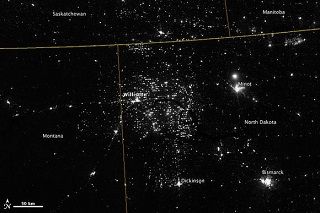 In a state of utter exasperation, guest blogger Brian McGowan sent me this report on
 I have a few excellent prospects for summer interns in 2014, the latest of whom, a young man from West Virginia, just sent a resume and spoke with me on the phone this morning. Naturally, people wonder what this internship is all about, yet this is a hard question to answer, as it depends entirely on the person’s strengths and interests.
 Frequent commenter and colleague Tim Kingston sent me

 The 2014