I occasionally like to write something purely for the 43% of 2GreenEnergy readers who reside outside the United States and may have difficulty understanding how profoundly broken our legal and political processes are here, or who may think I’m exaggerating when I discuss our government’s flagrant disregard for the clearly expressed will of the people it ostensibly represents. Previously I wrote:
Colorado Governor Bill Ritter told a packed house at the Renewable Energy Finance Forum a few weeks ago the following story… The University of Colorado at Boulder recently completed a survey of many thousands of residents from around the state, in which participants provided their viewpoints on a myriad of energy-related issues. Among other things, the study showed that an overwhelming majority favored a bill on the floor on Congress that would place a tax on carbon and create financial incentive for businesses and households to reduce their carbon footprints. To Ritter’s astonishment, one of the senators from his state, under pressure from special interests, went back to Congress and voted against the bill that his constituents had so clearly favored. (more…)
I’m not sure how people in the wind industry react to news like this concerning the Production Tax Credit (PTC); I guess it’s hard to look a gift horse in the mouth. Personally, I find the continuing flip-flopping of incentives for renewable energy to be incredibly irritating, as it’s an in-my-face reminder of what’s so sickeningly wrong with the U.S. approach to energy.
I.e., we have no energy policy. We hand the oil companies tens of billions of dollars per year in subsidies; that’s a deeply rooted aspect of our laws dating back almost a century; it will take an (incredibly unlikely) act of Congress to overturn. Meanwhile, the plants that manufacture wind turbines produce, shutter, produce, then shutter again, as Congress turns on and off the subsidies for wind energy. Investors don’t like this type of unpredictability, and, understandably, run away as fast as their legs will carry them.
If I were in the fossil fuel industry, I couldn’t ask for anything more favorable. It would even be hard to buy. Wait…..you don’t suppose….?
Here’s a good article that discusses the pressures India faces to install more electricity generation capacity. In many respects, the issues are altogether different than those in the U.S. In particular, India is a nation in which supply doesn’t generally meet demand, resulting in things like the world’s largest blackout, in which the lights recently went out on 600 million people, almost 10% of the world’s total population. Friends tell me that in the course of an average day the power goes out at least once, even in the most cosmopolitan sections of the country. Though coal is perceived to be the lowest cost answer, fortunately, it’s not nearly as abundant there as it is in the U.S. (more…)
Energy demands are a hot topic in today’s society. Everyone is looking for a better way to conserve and live without sacrificing the creature comforts they have become reliant on. As a small business owner, you have the ability to assist your community by providing means to reduce the consumption of electricity within your establishment. The eco-friendly ramifications aside, a great deal can be accomplished by moving your system over to solar generation. Even the smallest, and most affordable, solutions can be beneficial to your community in a variety of ways.
1. Less Demand – By putting less demand on the power grid, you could essentially be helping your community in terms of power conservation. For each kilowatt-hour your business doesn’t use at its location, there is one kilowatt-hour of use in a private residence. If more businesses were like-minded, the price per kilowatt-hour could decrease as less of a demand is present, theoretically. Indirectly, this could help the economies of those locations as consumers are now able to spend more money instead of paying higher energy bills.
2. Decreasing Overhead – Even installing a few panels at a low cost to cover some of the energy demands of your business will decrease your monthly utility bills. With these bills decreasing, your business will have more money readily available for improvements, technological business advancements, payroll, or anything else you could use the extra money for. An eco-friendly establishment doesn’t just imply you are helping save the environment. It also implies you are helping to save your checkbook.
3. Promotional – Reducing your overhead means you are able to provide promotional discounts to customers with less fear of losing too much money. As you are saving money on the utilities, you could offer discounts on a regular basis which could turn into regular sales from consumers. People like a sale and offering such could greatly increase the business income. You could even go so far as to strike a deal with the solar power installation company to promote its work with a “we save so you save, thanks to…” type of campaign. Some organizations will consider the aspect of affiliate marketing and could create an additional revenue stream for your business. However you wish to spin the marketing campaign, you can use eco-friendly conscientious decisions to your benefit for creating a strong customer-base.
4. The Nights – Some will argue that solar power is lower at night greatly reducing the efficiency of photovoltaic cells. While this is true, consider how much power is actually used during the night compared to the amount of power you could feed into the grid during the day. While some businesses operate specifically at nighttime, the savings during the day should be more than worth the investment to you. Even if you close your business for the weekends, power is still generated that is being fed back into the grid which could possibly grant you a check from the electric company.
Being an eco-responsible business, you could very well become a trend-setter within your community. It’s in your best interest to at least investigate the possibilities of renewable energy sources for monetary benefits and reputation. You don’t have to spend thousands of dollars right away as you can slowly add panels piecemeal until your organization becomes a power-plant of its own putting far more into the grid than you are using.
This is a guest post by Liz Nelson from WhiteFence.com. She is a freelance writer and blogger from Houston. Questions and comments can be sent to: liznelson17 @ gmail.com.
Maybe it’s a “guy-thing,” but I’ve always loved tree houses. One of the first books I ever loved was Swiss Family Robinson – and not for the plot or the characters; I just enjoyed how the author totally transported me to the safe, cozy charm of life many yards above the forest floor. For those who share my passion, here’s a cool piece that the Sierra Club did on the world’s top tree houses, in the larger context of eco-tourism.
But, as we all know, the Sierra Club takes on subjects that are not at all about making the reader feel good. Here’s a fairly aggressive video, yet equally well-made, on our civilization’s consumption of oil and the direction it’s taking us.
Here’s a webinar I conducted yesterday on Advanced Rail Energy Storage, or ARES, a new concept in cost-effective, grid-scale energy storage. I interviewed ARES CEO Jim Kelly, and covered a range of issues spanning the physics and economics of energy storage, ancillary grid services, and the challenges facing those of us who advocate for the integration of massive amounts of renewable energy onto the grid.
I’m helping my daughter with her macroeconomics this semester, and really enjoying the moment for so many reasons. I love spending the time with her, and the whole process of reviewing basic economics has been quite valuable to me as an observer of the energy industry.
We just came across this quote from mid-20th Century economist Arthur Okun, in the chapter on supply-side fiscal policy:
High tax rates are followed by attempts of ingenious men to beat them as surely as snow is followed by little boys on sleds.(more…)
Did these people just come back from a Sierra Club meeting, at which they “got religion?” I doubt it; in fact, they don’t even claim that themselves – and they can greenwash with the very best. No, the issue is pure economics. They can make or source 7 billion kWhs of renewable energy cheaper than they can buy it from the power utilities.
Many times the subject of power storage has come up on this forum. Today it becomes an issue for me personally again and this is an ongoing issue.
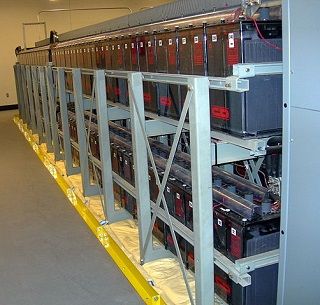
Not quite 3.5 years ago I purchased 4 deep cycle 12 volt 125 Amp hour (Ah) batteries for my little system to replace the ones I was using that had gone bad. That amounts to 500Ah of batteries for $400.00. These batteries are once again shot and I am in search of a replacement for flooded lead acid (FLA) batteries. With an expected life of 3-7 years at the very best these batteries are, in my humble opinion, completely unsuitable for the renewable energy industry. Also the recommended depth of discharge for a “long” life is 30% and preferable less meaning a 500Ah pack is really only good for about 166Ah. Add to that temperature considerations, max rate of charge and discharge and various other factors and the suitability goes downhill very fast. I am loath to go for FLA batteries again as they are unsuitable for renewable energy in so many ways, however, the alternatives are far more expensive in the short term. (more…)
The resort and hotel business is extremely competitive and costly. As more and more hotels become increasingly extravagant, they require evermore energy to run. Many are switching to green renewable energies to cut costs and in theory they could eventually become self-sufficient, or even produce an energy surplus. The easiest way to start to do this is with the addition of solar power. (more…)


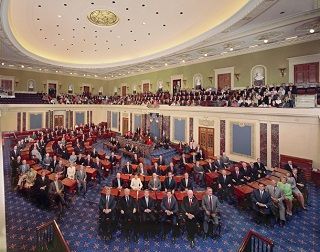 I occasionally like to write something purely for the 43% of 2GreenEnergy readers who reside outside the United States and may have difficulty understanding how profoundly broken our legal and political processes are here, or who may think I’m exaggerating when I discuss our government’s flagrant disregard for the clearly expressed will of the people it ostensibly represents. Previously I wrote: