Those of us who listen to Al Jezeera can’t help notice that the deplorable quality of the air in China is a really big deal, not only to the Chinese, but to people all around the globe. In addition to long-term environmental damage, the proliferation of coal-fired power plants has created immediate and dire health consequences for hundreds of millions of people, hoards of whom are flocking to stores to buy air purifiers and face-masks.
Thoughtful and compassionate people all over the world understand that we’ve come to a fork in the road. We either cooperate with one another and come together to develop sustainable solutions to our planet’s energy-related problems, or we’re all in for a world of hurt.
Of course, those who get their news from the mainstream media in the U.S. could easily miss this issue altogether, as it’s being largely ignored over here.
In any case, I’m saddened to hear this, not because this administration has done what I hoped it would vis-à-vis energy, but because it certainly represented a quantum improvement over its predecessor, and it seemed to understand, for the first time since the days of Jimmy Carter in the late 1970s, the importance of considering the environmental impact of our energy consumption.
For those with even the remotest concerns about climate change, ocean acidification, loss of biodiversity, lung damage, wars fought over oil, etc. – consider for a moment where we’d be now if Romney had won the presidency.
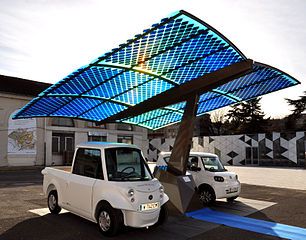
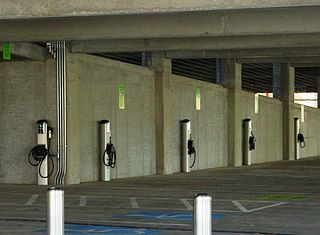
As you may already know, Portland is a major market for electric vehicles. According to the U.S. Department of Energy, for every 1,000 households in Portland, there are 8.8 EVs. That’s more than any other metropolitan area in the nation. So, if you’re looking to jump on the low-emission bandwagon, we’ve got some helpful information about charging your EV at home.
If having an electric car is going to be as convenient as it is eco-friendly, you’re going to need to charge it at home. Most plug-in electric cars come with a Level 1 charger that you can plug into any electrical outlet, which carries an ordinary current of 110 volts. (more…)
You’ve purchased a city recycle bin; you’ve changed your light bulbs to be more efficient, and you’ve been repurposing all of your old things instead of buying new things. You’re green and you’re proud. It’s not easy, after all, and you pride yourself on making sacrifices for the air. You’ve cut back on your driving habits, but you definitely need to keep the family car. There are ways for you to make sure that your car insurance company is on the same green page as you. Here are some ways to make sure that your auto insurance is rewarding your green driving habits and practicing eco-friendly habits that help to cut down on our collective carbon footprint. (more…)
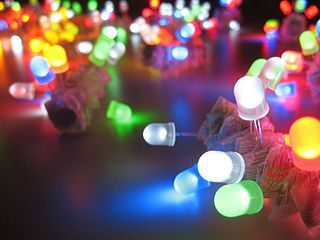
Initially just an innovative way to provide the lights on indicator lamps and remote controls, and then developed into an exciting way to add colour to interior design projects and modern venues, the light emitting diode is now wending its way through the lighting market on an eco-warriors mission to replace the standard incandescent bulb.
Industry and large businesses have been catching on to the environmental and practical benefits of LED bulbs for a while now, but were afraid to make the transition as it seemed like a whole lot of extra work and expense to replace incompatible standard light fittings. (more…)
The move to alternative energy is a crucial one! The news that we will surpass 4 degrees in global temperature is dire news. How do you feel with a 4 degree temperature, that’s 102 degrees? Life cannot sustain that. We ALL live in a fairly narrow temperature band.
As critical as removing carbon is, there is more than one way to skin a cat…the use of biochar is very promising! This is an example of reframing problem from energy to carbon reduction. Understanding the depth and breadth of the change we need to make is critical. (more…)
Here’s a hopeful piece on climate change, suggesting that warming may be capped at less than 2 degrees C, even though our emission of greenhouse gases continues to grow. Though obviously I’d like to accept any good news, I have to say that I don’t understand this. If X causes Y, and we’re producing more X, aren’t we going to get more Y?
Here’s a presentation from The Energy Collective on a “breakthrough” solar technology that sounds like complete malarkey to me (though I’d be interested in readers’ take). In any case, it raises a larger issue: don’t reporters have some responsibility to look into the validity of what they’re covering and representing as real innovation?
Trust me, you’d be pretty unimpressed with me if I promoted all the ideas I come across in a given week as legitimate “breakthroughs” just because that’s what their “inventors” want me to do.
How credible is it that a spinning cone of PV is going to represent a huge improvement in efficiency in converting light into electricity? Does it make sense that all the gadgetry involved in getting the thing to spin is going to be cost-effective and trouble-free? Isn’t the fact that there are no real-world working models a blindingly bright red flag?
Can solutions like this work? I guess we have to define “work.” Obviously, there is nothing theoretically impossible about the idea, but that doesn’t make them practical. The price tag of one of these bad boys is well into six figures, making the process of justifying the investment a considerable challenge.


 Here’s yesterday’s press release from ACORE (American Council on Renewable Energy) regarding the resignation of Dr. Steven Chu from his post as U.S. Secretary of Energy. Note that it differs from the article I wrote on the subject, in that the ACORE piece is uniformly glowing with praise about Chu’s accomplishments.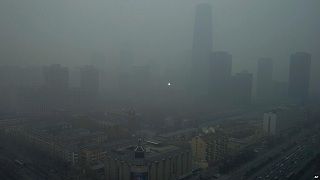

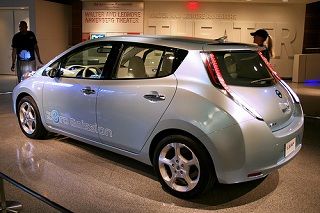 You’ve purchased a city recycle bin; you’ve changed your light bulbs to be more efficient, and you’ve been repurposing all of your old things instead of buying new things. You’re green and you’re proud. It’s not easy, after all, and you pride yourself on making sacrifices for the air. You’ve cut back on your driving habits, but you definitely need to keep the family car. There are ways for you to make sure that your car insurance company is on the same green page as you. Here are some ways to make sure that your auto insurance is rewarding your green driving habits and practicing eco-friendly habits that help to cut down on our collective carbon footprint.